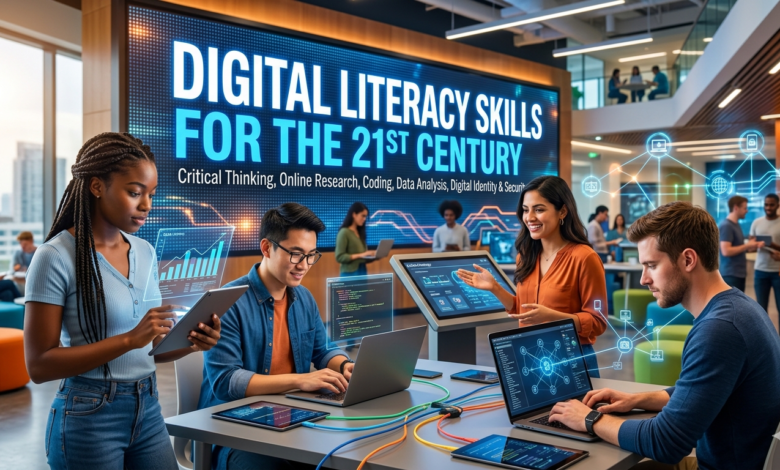
In today’s modern world, technology plays an important role in almost every part of life. From education to jobs and communication, people use digital tools daily. Because of this, digital literacy skills for the 21st century have become essential for success in the 21st century. These skills help individuals use technology effectively, safely, and responsibly.
This article explains in detail the meaning, importance, types, benefits, challenges, and future of digital literacy skills, using simple and easy words based on authentic academic research.
TABLE OF CONTENTS
ToggleIntroduction to Digital Literacy
Digital literacy means the ability to use digital tools such as computers, smartphones, and the internet to find, understand, create, and share information. It is not only about basic computer skills but also about thinking, communication, and problem-solving in a digital environment.
According to research, digital literacy includes the ability to find, evaluate, create, and communicate information using technology . Over time, this concept has expanded to include online collaboration, media understanding, and cybersecurity awareness.
In simple words, digital literacy helps people use technology in a smart and meaningful way.
Importance of Digital Literacy in the 21st Century
Digital literacy is one of the most important skills in modern education and the workplace. As technology continues to grow, people need these skills to succeed in their personal and professional lives.
Research shows that 21st-century skills include communication, collaboration, critical thinking, creativity, and digital literacy . These skills are necessary to deal with complex tasks in today’s digital world.


Digital literacy is important because:
- It helps students learn effectively
- It prepares people for modern jobs
- It improves communication and collaboration
- It supports lifelong learning
Without digital literacy, individuals may struggle to keep up with the fast-changing digital environment.
Core Digital Literacy Skills
Digital literacy is made up of several important skills. These skills help individuals work efficiently in a digital world.
1. Technical Skills
Technical skills include using computers, software, and digital devices. Students must know how to operate tools like word processors, presentations, and online platforms.
2. Information Literacy
Information literacy means finding and evaluating information online. People must be able to identify reliable sources and avoid false or misleading information.
3. Communication Skills
Digital communication includes emails, chats, and video calls. It is important to communicate clearly and respectfully in online environments.
4. Collaboration Skills
Collaboration means working with others using digital tools. Students and professionals use online platforms to share ideas and complete group tasks.
5. Critical Thinking and Problem-Solving
Digital literacy requires thinking carefully about information and solving problems using technology. This helps individuals make better decisions.
6. Creativity and Innovation
People can use digital tools to create content such as videos, presentations, and designs. Creativity is an important part of digital literacy in the modern world.
7. Digital Safety and Ethics
This includes protecting personal information, avoiding cyber threats, and using technology responsibly. Ethical use of digital tools is very important today.
Research highlights that these skills—technical, communication, collaboration, creativity, and critical thinking—are key components of digital literacy in the 21st century .
Role of Digital Literacy in Education
Digital literacy plays a major role in improving education. It helps students learn more effectively and prepares them for future careers.
According to studies, digital literacy improves teaching and learning by enhancing communication, increasing student participation, and supporting the use of modern tools .
In education, digital literacy helps students:
- Access online learning materials
- Participate in virtual classes
- Complete digital assignments
- Develop research skills
Teachers also use digital literacy to create interactive lessons and improve classroom engagement.
Benefits of Digital Literacy Skills
1. Better Learning Opportunities
Students can access a wide range of online resources, making learning easier and more interesting.
2. Improved Communication
Digital tools allow people to communicate quickly and easily across the world.
3. Career Development
Digital literacy is essential for most modern jobs. It helps individuals compete in the global job market.
4. Increased Productivity
People can complete tasks faster using digital tools and software.
5. Global Awareness
Digital literacy allows individuals to connect with people from different cultures and learn about the world.
6. Independent Learning
Students can learn on their own by using online resources and educational platforms.
7. Easy Access to Information
Digital literacy helps people find information quickly on the internet. Students can learn any topic easily by searching online resources, videos, and digital libraries.
8. Better Learning Opportunities
Students can use online courses, educational apps, and digital tools to improve their learning. This makes education more flexible and interesting.
9. Improved Communication
Digital skills allow people to communicate through emails, messaging apps, and video calls. It makes communication faster and easier across the world.
10. Job Opportunities
Many jobs today require computer and internet skills. Digital literacy helps people get better job opportunities and succeed in their careers.
11. Creativity and Innovation
People can create videos, presentations, designs, and other digital content. This helps develop creativity and new ideas.
Challenges of Digital Literacy
Although digital literacy has many benefits, it also has some challenges.
1. Digital Divide
Not everyone has access to technology or the internet. This creates inequality in education and opportunities.
2. Lack of Skills
Some people do not have enough knowledge to use digital tools effectively.
3. Cybersecurity Risks
Online threats such as hacking and scams can be dangerous if users are not aware of safety practices.
4. Information Overload
There is too much information available online, making it difficult to find reliable sources.
5. Misuse of Technology
Some users misuse digital tools, leading to problems like plagiarism or cyberbullying.
Not everyone has access to computers or the internet. This creates inequality between people who have technology and those who do not.
7. Lack of Proper Training
Some people do not know how to use digital tools properly. Without training, they may find it difficult to use technology effectively.
8. Cybersecurity Risks
People can face online threats like hacking, scams, and data theft if they are not careful while using the internet.
9. Information Overload
There is too much information available online. It can be confusing for users to find correct and useful information.
10. Misuse of Technology
Some people use digital tools in the wrong way, such as cyberbullying, cheating, or spreading false information.
Future of Digital Literacy
The importance of digital literacy will continue to grow in the future. As new technologies such as artificial intelligence and automation develop, people will need advanced digital skills.
Research shows that education systems must focus on teaching digital literacy to prepare students for future careers and lifelong learning .
In the future:
- Digital skills will be required in almost all jobs
- Online learning will become more common
- Technology will continue to shape education and society
Therefore, developing digital literacy skills is essential for everyone.
Conclusion
Digital literacy skills are a key part of education and life in the 21st century. They help individuals use technology effectively, think critically, communicate clearly, and solve problems.
Although there are challenges such as lack of access and cybersecurity risks, the benefits of digital literacy are much greater. It improves learning, supports career growth, and helps people succeed in a digital world.
In simple words, digital literacy is not just a skill—it is a necessity for modern life.
Short Answer Questions (30–45 words each)
1. What is digital literacy?
Digital literacy is the ability to use digital tools like computers and the internet to find, understand, create, and share information. It also includes communication, problem-solving, and using technology safely in everyday life.
2. Why are digital literacy skills important in the 21st century?
Digital literacy skills are important because they help individuals succeed in education, work, and daily life. These skills allow people to communicate, solve problems, and use technology effectively in a fast-changing digital world.
3. What are technical skills in digital literacy?
Technical skills refer to the ability to use digital devices, software, and applications. These include basic computer operations, using online tools, and managing digital files, which are essential for learning and working efficiently.
4. What is information literacy?
Information literacy is the ability to find, evaluate, and use information from digital sources. It helps individuals identify reliable content and avoid false or misleading information available on the internet.
5. How does digital literacy improve education?
Digital literacy improves education by helping students access online resources, participate in virtual classes, and develop research skills. It also allows teachers to use modern tools to make lessons more interactive and engaging.
6. What is one major benefit of digital literacy?
One major benefit of digital literacy is better communication. People can easily connect with others through emails, chats, and video calls, making it easier to share information and collaborate globally.
7. What is one challenge of digital literacy?
One major challenge is the digital divide, where some people do not have access to technology or the internet. This creates inequality and limits opportunities for education and personal growth.
8. Why is digital safety important?
Digital safety is important to protect personal information and avoid online threats like hacking or scams. It helps users stay secure while using digital platforms and ensures responsible use of technology.
9. What role does digital literacy play in careers?
Digital literacy is essential for most modern careers. It helps individuals use technology, communicate effectively, and perform tasks efficiently, making them more competitive in the job market.
10. What is the future of digital literacy?
The future of digital literacy is very important as technology continues to grow. Advanced digital skills will be required in almost all fields, making it necessary for individuals to keep learning and adapting to new technologies.