Public vs Private Schools: Which One Actually Gives Better Results in 2026?
Public vs private schools compared for 2026: real data on test scores, class size, teacher quality, cost, and college outcomes.
Every year, millions of parents sit down at the kitchen table and ask the same question: public school or private school? It sounds like a simple choice, but it rarely is. The answer touches money, values, geography, and what you actually want your kid’s day-to-day life to look like.
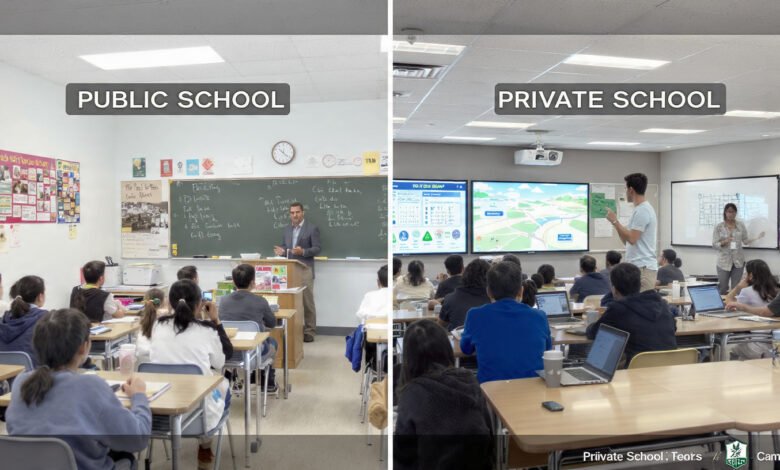
Public vs private schools is one of those debates that never really gets settled, because both sides have decent arguments and both sides have real weaknesses. Private schools tend to have smaller classes and more resources per student. Public schools serve almost everyone, come with no tuition bill, and often have more support staff for kids who need extra help. Neither one is automatically “better” once you strip away the marketing.
In 2026, the conversation has shifted a bit. School choice programs have expanded in several states, tuition at private schools keeps climbing, and new research keeps chipping away at the old assumption that private automatically means superior academics. At the same time, public school funding and staffing look different district by district, so a blanket answer doesn’t really hold up.
This article walks through what the current data actually says about academic performance, class size, teacher quality, cost, special education support, and long-term outcomes, so you can make a decision based on facts rather than reputation.
What the 2026 Data Actually Shows
Before getting into specifics, it helps to know the basic numbers. Public schools currently educate roughly 49 to 50 million K-12 students in the U.S., while private schools serve around 4.6 to 5.5 million, or roughly 10% of the school-age population. That gap matters, because it means private school research often comes from a smaller, more self-selected group of families, which skews comparisons in ways that are easy to miss.
A recurring theme in recent research, including a widely cited University of Virginia review, is that once you control for family income, parental education, and home environment, the academic gap between public and private schools mostly disappears. In some cases, public school students perform as well or better on specific metrics after those adjustments. That doesn’t mean school type is irrelevant, but it does mean the “private school effect” is smaller than most people assume.
Academic Performance: Test Scores and Grade-Level Proficiency
Standardized Test Scores
On raw numbers, private school students often post higher average test scores. That’s the headline stat you see in brochures and rankings. But raw scores mix two different things together: what the school actually teaches, and who is sitting in the classroom.

Private school students, on average, come from households with higher income and more parental education, both of which are strongly linked to test performance regardless of where a kid goes to school. When researchers adjust for these background factors, the private schools vs public schools test score gap shrinks dramatically, and in several studies it flips in favor of public schools.
According to NCES data, 44% of public school students started a recent school year behind grade level in at least one subject, with that number rising to 56% in high-poverty neighborhoods. This isn’t a private-versus-public issue as much as it’s a poverty issue. Public schools serve a much wider range of family incomes, including nearly 17% of students from households below the poverty line, compared to about 11% in private schools.
Why Raw Scores Can Mislead
A few reasons raw test score comparisons don’t tell the whole story:
- Selection bias – Private schools choose their students through admissions, interviews, or entrance exams, while public schools must accept everyone in their district.
- Cost as a filter – Tuition alone screens out lower-income families before a child ever sits for a test.
- Attrition – Struggling students are sometimes counseled out of private schools and back into the public system, which quietly boosts private school averages over time.
- Curriculum variance – Public schools follow state standards and standardized testing requirements more uniformly, making year-over-year comparisons more reliable.
None of this means private schools are bad. It means the scoreboard is measuring more than teaching quality.
Class Size and Individual Attention
This is one area where private schools have a genuine, measurable edge. The average student-to-teacher ratio in private schools sits around 12 to 1, compared to roughly 16 to 1 in public schools, based on NCES figures. Smaller classes generally mean:
- More one-on-one time with teachers
- Faster feedback on assignments and behavior
- Easier identification of a struggling student before they fall behind
- More opportunities for classroom discussion and participation
Smaller class size is a real advantage, but it isn’t automatically decisive. Some public schools, especially in wealthier districts or specialized magnet programs, match or beat private school ratios. And plenty of research shows that teacher skill and classroom management matter more than headcount alone. A great teacher with 22 students can outperform a mediocre one with 14.
Teacher Quality and Experience
Here’s something that surprises a lot of parents: teacher experience is nearly identical across both systems, averaging around 15 years in both public and private schools. The real differences show up elsewhere.
Public school teachers are almost always required to hold state certification and complete ongoing professional development, along with subject-specific credentials for the grade levels they teach. This creates a more standardized floor for teacher qualifications nationwide.
Private school teachers are not always required to hold the same certifications, since private schools operate independently of many state licensing rules. Some private schools compensate by hiring subject-matter specialists, such as a professional scientist teaching AP Chemistry, even without a formal teaching license. Others simply have less oversight over instructional quality.
Both systems currently face a teacher shortage. Roughly one in three vacancies for subjects like special education, foreign languages, and physical sciences goes unfilled in both public and private settings, and more than half of current teachers say they’re considering leaving the profession in the next few years. That staffing pressure is a shared problem, not a private-versus-public advantage.
College Admissions and Long-Term Outcomes
Private schools frequently highlight impressive college matriculation lists, and it’s true that many private school graduates head to selective universities. But this circles back to the same selection issue from the test score section: students admitted to private schools often arrive with advantages in preparation, family resources, and college counseling access that shape outcomes independent of the classroom itself.
That said, private schools do offer some structural advantages worth naming honestly:
- Dedicated college counseling with lower counselor-to-student ratios
- Broader AP and IB course access, though selectivity about which courses are offered varies by school
- Alumni networks that can open doors for internships and recommendations
- Extracurricular depth in areas like debate, robotics, or the arts
Public schools, particularly well-funded ones or those with magnet and honors tracks, can offer comparable opportunities, especially in districts that have invested in AP programs, dual-enrollment partnerships with local colleges, and strong guidance departments. The gap here depends far more on individual school funding and culture than on the public-versus-private label itself.
Cost vs Value: What You’re Really Paying For
Money is the most obvious difference between the two systems, and it’s worth being blunt about the numbers.
Average private school tuition in 2026 typically falls between $12,000 and $17,000 a year, though it varies widely by region and school type, with elite prep schools running well beyond that range. Meanwhile, public schools are funded through local, state, and federal dollars, with per-student spending that has climbed to around $17,000 in many districts due to inflation-adjusted budget increases.
That comparison surprises people: public schools often spend more per student than the average private school tuition, once federal and state funding are factored in. The difference is that public spending covers a wider range of services, including transportation, free or reduced lunch programs, special education mandates, and building maintenance, whereas private tuition often only partially covers operating costs and relies on donations or endowments to fill the gap.
When weighing cost versus outcomes, ask yourself:
- Is the private school’s tuition buying smaller classes, specific programs, or religious/values-based education you actually want?
- Would that same money be better spent on tutoring, extracurricular enrichment, or a college savings account while your child attends a solid public school?
- Does the private school offer meaningful financial aid, since sticker price and actual cost are often very different?
There’s no universally correct answer here. It depends on your specific district’s quality and your family’s priorities.
Special Education and Support Services
This is an area where public schools have a clear, legally mandated advantage. Public schools are required under federal law to provide special education services, individualized education plans (IEPs), and related accommodations to any student who qualifies, regardless of cost.
Private schools are not bound by the same federal special education mandates. Some private schools do offer strong support services, but many are not equipped, staffed, or legally required to serve students with significant learning differences or disabilities. Research from advocacy groups has also flagged concerns that private school voucher programs don’t guarantee equal access, since private schools can decline admission or dismiss students for behavioral or academic reasons in ways public schools generally cannot.
For families with a child who has an IEP, a 504 plan, or a diagnosed learning difference, this is one of the most important practical factors in the decision, arguably more important than test scores or class size.
Diversity, Equity, and Social Development
Public schools serve a much broader cross-section of society by design. They enroll students across every income bracket, ethnicity, and ability level within their district boundaries. Private schools, by contrast, tend to skew toward specific demographics; recent data shows a notably higher share of White students enrolled in private schools compared to the overall student population.
This matters beyond politics. Exposure to socioeconomic and cultural diversity has been linked in multiple studies to stronger social skills, reduced bias, and better preparation for diverse workplaces and communities later in life. Private schools can offer a tighter-knit community and shared values, which some families genuinely want, but it often comes with less exposure to different backgrounds and life experiences.
Rural areas add another wrinkle: more than 90% of K-12 students in rural communities attend public school simply because there often isn’t a private alternative nearby. For a large share of American families, this entire debate is somewhat theoretical, since public school is the only realistic option in their area.
So Which One Actually Gives Better Results in 2026?
Based on the current research, there is no consistent, broad academic advantage for either system once you control for family background. The honest answer is that school quality varies more within each category than between them. A strong public school can outperform a mediocre private school, and vice versa.
When Public Schools Tend to Win
- Special education and legally mandated support services
- Access to diversity and broader social exposure
- Overall value per dollar spent, especially in well-funded districts
- Availability, since there’s no admissions process or tuition barrier
When Private Schools Tend to Win
- Smaller class sizes and more individualized attention
- Specialized programs, religious education, or a specific educational philosophy
- More flexible curriculum design outside state mandates
- Tight-knit school communities with strong parent involvement
The smarter framing isn’t “which system wins,” but “which specific school, public or private, best fits this specific child.” Visiting schools, talking to current parents, checking actual outcomes data (not just marketing brochures), and being honest about your budget will tell you far more than any general public-versus-private debate ever will.
Conclusion
The debate over public vs private schools doesn’t have a single winning answer in 2026, no matter how confidently either side argues otherwise. Private schools generally offer smaller classes, more curriculum flexibility, and closely managed communities, while public schools offer legally guaranteed support services, broader diversity, and, in many districts, comparable or even higher per-student funding than private tuition suggests.
The research is fairly consistent on one point: family background and individual school quality shape outcomes far more than the public-or-private label itself. Rather than assuming one category is automatically better, the more useful approach is comparing specific schools against your child’s actual needs, your family’s budget, and the support services that matter most to you.