Education in 2030: 7 Powerful Shifts Experts Predict Will Transform Learning Forever
Education in 2030 will look different: AI tutors, skills-based learning, and flexible classrooms. Here's what experts actually predict.
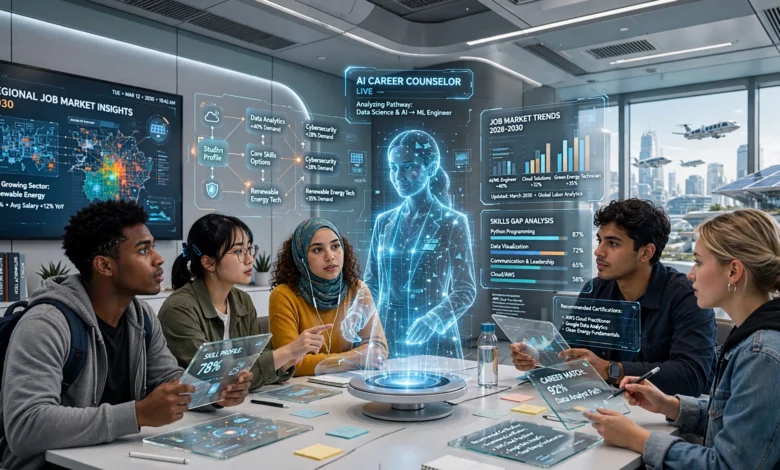
Education in 2030 won’t look like a science fiction movie, but it also won’t look like the classrooms most of us grew up in. Talk to enough teachers, policy researchers, and university administrators, and a pattern starts to show up again and again: the next few years are going to reshape how people learn, where they learn, and what counts as a “good education” in the first place.
This isn’t about robots replacing teachers or every kid getting a VR headset instead of a textbook. The real story is quieter and more practical. It’s about personalized learning paths replacing one-size-fits-all curriculums, artificial intelligence handling the repetitive parts of teaching so educators can focus on actual mentorship, and a growing recognition that skills matter more than diplomas in a lot of hiring conversations.
Some of these changes are Education in 2030 will look different: AI tutors, skills-based learning, and flexible classrooms. Here’s what experts actually predict.already underway. Schools in Finland, Singapore, and parts of the US are piloting programs that would have sounded far-fetched a decade ago. Universities are rethinking what a degree even means. And employers are quietly changing what they look for on a resume.
This article breaks down what experts in education policy, ed-tech, and workforce development are actually predicting for the future of education, why these shifts are happening now, and what they mean for students, parents, and teachers trying to plan ahead.
Why the Conversation About Education in 2030 Matters Now
Every few years, someone predicts education is about to change forever. Most of the time, the classroom looks basically the same a decade later. So why does this round of predictions feel different?
A few reasons keep coming up in research and interviews with education experts:
- Artificial intelligence has crossed a usability threshold. Tools that were experimental five years ago are now sitting inside everyday classroom software, grading platforms, and tutoring apps.
- The job market has shifted faster than curriculums have. Employers increasingly care about demonstrated skills, not just credentials, which puts pressure on schools to change how they measure learning.
- Remote and hybrid learning proved something. The pandemic forced a global experiment in flexible learning, and while it wasn’t perfect, it showed that education doesn’t have to happen in one physical room, on one fixed schedule.
- Mental health data is impossible to ignore. Rising rates of student anxiety and burnout have pushed wellbeing from an afterthought to a core part of how schools design their programs.
Put those together, and you get an education system that’s under real pressure to adapt, not because it’s trendy, but because the old model is straining under new expectations.
The Biggest Shifts Educators and Policy Experts Are Predicting
Artificial Intelligence as a Teaching Partner, Not a Replacement
The most common misconception about AI in education is that it’s going to replace teachers. Experts largely disagree with that framing. What they describe instead is AI taking over the parts of teaching that eat up time without adding much value: grading routine assignments, flagging students who are falling behind, generating practice problems tailored to a specific skill gap.
That frees teachers to do the parts of the job that actually require a human: building relationships, reading a room, adjusting a lesson on the fly when something isn’t clicking. Several education researchers point to AI-assisted tutoring as one of the more promising applications, since it can give a struggling student immediate, patient, one-on-one help in a way that’s hard to scale with staffing alone.
There are real concerns here too. Data privacy, algorithmic bias in grading tools, and over-reliance on AI-generated content are all issues experts flag as needing stronger guardrails before 2030, not after.
Personalized Learning Paths Become the Norm
Personalized learning is one of the phrases you’ll hear most often when experts talk about where education is headed. The idea is simple: instead of every student in a class moving through the same material at the same pace, software and teacher input combine to adjust the pace, format, and difficulty of lessons to fit each learner.
This looks different depending on the school:
- Adaptive software that changes the difficulty of math problems based on a student’s recent performance
- Reading assignments matched to a student’s actual reading level rather than their grade level
- Project-based units that let students choose a topic within a broader learning objective
- Flexible pacing that allows faster learners to move ahead without waiting on the rest of the class
Critics point out that personalization requires good data and thoughtful implementation, otherwise it just becomes a fancier version of tracking students into “smart” and “slow” groups. Done well, though, experts see it as one of the more meaningful improvements to how kids actually learn.
Skills-Based Learning Overtakes Traditional Grading
A growing number of employers have already dropped degree requirements for certain roles, favoring demonstrated skills instead. Education experts expect schools to respond by shifting toward skills-based learning, where students build a portfolio of demonstrated competencies alongside, or sometimes instead of, traditional letter grades.
This shows up as:
- Competency badges for specific skills, like data analysis or public speaking
- Portfolio-based assessment where students submit real projects instead of taking a single test
- Capstone projects that mimic real workplace problems
The shift isn’t universal, and plenty of institutions will keep traditional grading well past 2030. But the direction of travel, according to most workforce and education researchers, is toward proving what you can actually do.
How Classrooms Will Physically and Digitally Change
Hybrid and Flexible Learning Models
Hybrid learning isn’t going away just because the pandemic ended. Many schools and universities kept some version of flexible scheduling because it worked for certain students, particularly older learners balancing jobs or family responsibilities, and students in rural areas with limited access to specialized courses.
Expect more schools to offer a mix of:
- In-person instruction for hands-on or discussion-heavy subjects
- Recorded or live-streamed lessons for content that works fine asynchronously
- Flexible attendance policies for students managing outside commitments
The goal isn’t to replace physical classrooms. It’s to stop treating “everyone in the same room at the same time” as the only valid way to teach.
Virtual and Augmented Reality in Everyday Lessons
Virtual reality (VR) and augmented reality tools are moving out of novelty demos and into actual lesson plans, particularly for subjects that benefit from spatial or hands-on learning: anatomy, chemistry, historical reconstructions, engineering design.
A VR headset that lets a student walk through a 3D model of the human heart or practice a lab experiment without safety risks isn’t replacing textbooks. It’s giving teachers another tool for the topics where seeing and doing beats reading and memorizing. Cost remains the biggest barrier to widespread adoption, and experts expect wealthier schools and districts to adopt this technology well before it becomes standard everywhere.
The Changing Role of Teachers in 2030
If AI and personalized software take over more of the routine instructional work, the role of teachers shifts too. Experts describe the 2030 teacher less as a lecturer delivering the same material to thirty students at once, and more as a facilitator, mentor, and emotional anchor for the classroom.
This means:
- More time spent on one-on-one and small-group support
- Greater emphasis on social-emotional learning and classroom culture
- New training requirements around how to use AI tools responsibly and effectively
- A shift in how teacher performance gets evaluated, moving away from standardized test scores alone
This is also where a lot of the tension in education policy shows up. Teachers unions and education researchers generally support giving teachers more mentorship-focused roles, but funding for smaller class sizes and additional training hasn’t kept pace with the ambition of these plans in most regions.
Higher Education and the Rise of Microcredentials
Colleges and universities are facing their own pressure to change. Tuition costs have outpaced wage growth for years, and more students are questioning whether a traditional four-year degree is worth the price tag for every career path.
Microcredentials, short, focused certificates in specific skills, are one response experts point to repeatedly. Instead of committing to a multi-year degree, students can stack shorter, targeted credentials that map directly to job requirements. According to the World Economic Forum, employers are increasingly recognizing these stackable credentials alongside, and sometimes instead of, traditional degrees, particularly in tech, healthcare support, and skilled trades.
Universities aren’t disappearing. But expect to see more:
- Shorter, stackable certificate programs alongside full degrees
- Partnerships between universities and employers to design curriculum around actual job needs
- Increased focus on apprenticeships and paid, hands-on learning
- More flexible transfer and credit-recognition systems between institutions
Equity and Access: The Challenge Experts Keep Raising
Almost every expert conversation about the future of education eventually circles back to the same concern: none of this matters if it only benefits students who already have resources.
The digital divide is the most obvious example. Personalized software, VR tools, and AI tutoring all require reliable internet access and modern devices, resources that aren’t evenly distributed across income levels or geography. Rural districts and lower-income communities risk falling further behind if funding doesn’t keep pace with the technology.
According to guidance from UNESCO, closing the digital and resource gap is one of the central challenges facing global education systems as they move toward more technology-driven models. Their work highlights that access to devices and connectivity, on its own, doesn’t guarantee equitable outcomes without matching investment in teacher training and infrastructure.
Experts generally agree on a few things that need to happen for these changes to actually reduce inequality rather than widen it:
- Public investment in device access and broadband for underserved communities
- Teacher training that goes beyond wealthy or well-resourced districts
- Policies that prevent AI tools from reinforcing existing biases in grading or placement
- Continued funding for public education even as private ed-tech options expand
Mental Health and Student Wellbeing Take Center Stage
Student mental health has become a core part of how schools plan for the future, not a side conversation. Rising anxiety, burnout, and reports of loneliness among students have pushed wellbeing in education into curriculum design itself, not just the counselor’s office.
Expect schools in 2030 to weave this in more directly through:
- Built-in social-emotional learning blocks, not just occasional assemblies
- Reduced homework loads in some districts, based on research linking excessive workload to burnout
- More mental health staff per student, where funding allows
- Schedules designed around adolescent sleep research, including later start times in some regions
This is one of the areas where experts are most cautious about overpromising. Adding wellbeing programs to a school’s mission statement is easy. Funding enough counselors and support staff to make a real difference is harder, and it’s an area where policy and budget haven’t fully caught up with the stated priorities.
Lifelong Learning Becomes a Career Requirement
Lifelong learning used to be a nice phrase people used in graduation speeches. By 2030, experts expect it to be a practical necessity, driven largely by how fast job requirements are changing.
Instead of finishing school and being “done” learning, workers across most industries will likely need to regularly update their skills to stay relevant, particularly as automation and AI change what tasks look like in existing jobs. This is already showing up as:
- Employer-sponsored upskilling programs becoming more common
- Online courses and certificate platforms growing as a normal part of career development
- Community colleges expanding adult education and re-skilling programs
- A cultural shift away from treating education as something that only happens before age 22
What This Means for Parents, Students, and Educators Today
None of these shifts happen overnight, and plenty of schools will keep operating largely the way they always have well past 2030. Change in education tends to move unevenly, faster in well-funded districts and slower where resources are tight.
That said, a few practical takeaways are worth acting on now:
- Parents can look for schools or programs that already incorporate personalized learning tools and ask how the school evaluates AI software before adopting it.
- Students planning for college or a career should pay attention to skills and portfolios, not just grades, since more employers are weighing demonstrated ability alongside credentials.
- Educators can push for training on AI tools now, rather than waiting until it’s mandatory, since early familiarity tends to translate into more confident, effective use in the classroom.
- Policymakers need to treat equity funding as part of any technology rollout, not an afterthought added later.
The future of education isn’t a fixed destination. It’s a direction, shaped by the choices schools, families, and policymakers make over the next several years.
Conclusion
Education in 2030 is shaping up to be less about flashy new gadgets and more about a fundamental rethinking of how learning fits into people’s lives: personalized rather than standardized, skills-focused rather than purely credential-based, and flexible enough to support students at different paces and life stages.
AI, VR, and hybrid learning models will play a real role, but the experts who study this space consistently point back to the same core issues: making sure these tools reach every student, not just the ones already well-resourced, and making sure teachers have the support and training to use them well. The schools and systems that get this right won’t just look different by 2030, they’ll actually serve students better.