Australian Curriculum Explained: 8 Critical State-by-State Differences in 2026
Australian curriculum rules differ by state. Here's a clear, practical breakdown of what's taught where, and why it matters for families.
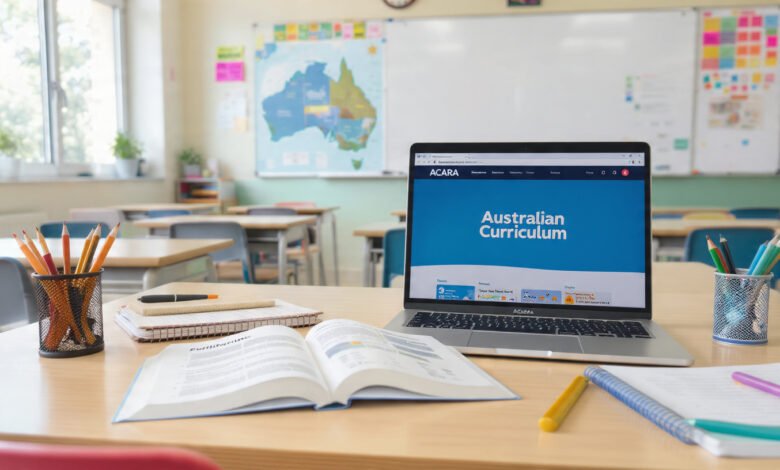
Ask a parent who’s just moved from Perth to Sydney whether their kid’s school year will look the same, and most will tell you it’s not that simple. The Australian curriculum is meant to be a single national framework, but the way it actually shows up in classrooms depends heavily on which state or territory you’re in. Some jurisdictions teach it almost word for word. Others rework it into their own syllabus documents, on their own timeline, with their own grading systems layered on top.
If you’ve ever tried to compare a NSW school to a Victorian one, or wondered why your cousin in Queensland sits a completely different final exam than your daughter in Adelaide, you’re not imagining things. Australia runs on a federal model for schooling. The Australian Curriculum, Assessment and Reporting Authority (ACARA) sets the national content, but each state and territory education authority decides how that content gets delivered, assessed, and reported.
This guide walks through what the national curriculum actually covers, how each state and territory adapts it, and what that means for families comparing schools, moving between states, or just trying to make sense of report cards that don’t quite match. We’ll also cover senior secondary certificates like the HSC and VCE, since that’s where the differences become most obvious for older students.
What Is the Australian Curriculum, Exactly?
The Australian curriculum is a national set of learning standards developed by ACARA, covering Foundation (the first year of school) through Year 10. It defines what students should know and be able to do in subjects like English, Mathematics, Science, Humanities and Social Sciences (HASS), the Arts, Technologies, Health and Physical Education, and Languages.
The current version, known as Version 9, was released to streamline content and put a stronger focus on literacy and numeracy fundamentals, including a heavier emphasis on structured, systematic phonics instruction in early English teaching. Version 9 also reorganised some learning areas and clarified achievement standards so teachers have a clearer picture of what “on track” looks like at each year level.
Here’s the part that trips people up: ACARA writes the curriculum, but it doesn’t run schools. That job belongs to eight separate state and territory curriculum authorities, and each one has its own name, its own syllabus documents, and its own implementation schedule. This is why the phrase “Australian curriculum by state” gets searched so often. Parents want to know whether their state teaches the national content directly, or whether it’s been filtered through a local system first.
Why the Curriculum Looks Different in Every State
There are a few reasons the same national framework produces different classroom experiences depending on where you live.


- Adoption method. Some states teach ACARA’s content directly. Others, most notably New South Wales, rewrite the national content into their own syllabus format, a process often described as “adopt and adapt.”
- Implementation timing. States don’t roll out a new curriculum version all at once. Learning areas get phased in over a few years, so a subject fully mandated in one state might still be a year away in another.
- Assessment and reporting. How progress gets measured, whether that’s A–E grades, word-based descriptors, or something else, is a state-level decision, not a national one.
- Senior secondary certificates. Once students reach Years 11 and 12, the national curriculum mostly steps back and state-based certificates like the HSC, VCE, and QCE take over completely.
Keeping those four factors in mind makes the rest of this guide much easier to follow.
New South Wales: NESA Syllabuses
In New South Wales, the curriculum authority is the NSW Education Standards Authority, or NESA. Rather than publishing the Australian curriculum as-is, NESA converts national content into NSW-specific K–10 syllabus documents for each subject.
This matters because NSW schools don’t refer to “the Australian curriculum” day to day. They refer to the NESA syllabus for that subject and year. New syllabuses are being aligned with Version 9, but the rollout is staggered, and NESA has been clear that consultation, release, and implementation dates vary by subject. If you’re a NSW parent trying to figure out what your child is actually being taught, the safest move is to check the current NESA syllabus for that specific subject rather than relying on the national ACARA website, since NSW content can differ in structure and sequencing even when the underlying standards are aligned.
At the senior end, NSW students work toward the Higher School Certificate (HSC), which we’ll cover in more detail further down.
Victoria: The Victorian Curriculum F–10
Victoria takes a similar “adapt, don’t just adopt” approach through the Victorian Curriculum and Assessment Authority (VCAA). The current document is the Victorian Curriculum F–10, Version 2.0, and VCAA describes it as incorporating much of Australian Curriculum Version 9 while still reflecting Victorian priorities and using its own structure.
In practice, that means Victorian teachers are working from a curriculum that overlaps heavily with the national one but isn’t identical to it. Learning areas like HASS and Science have generally been phased in first, with other subjects following on a rolling schedule. Government, Catholic, and independent schools in Victoria all work within VCAA’s framework, though independent schools sometimes have more flexibility in how they deliver it.
Victorian senior students complete the Victorian Certificate of Education (VCE), administered by VCAA.
Queensland: The QCAA Approach
Queensland’s curriculum authority, QCAA, supports schools through what’s known as the Australian Curriculum in Queensland (ACiQ), a set of resources designed to help teachers implement the national content directly rather than rewriting it into a separate syllabus, unlike NSW and Victoria.
Queensland has been phasing in Version 9 learning areas gradually, so it’s worth checking which subjects are fully mandated for a given year level before assuming the whole curriculum has switched over. Senior students in Queensland complete the Queensland Certificate of Education (QCE), a system that replaced the older OP ranking model and brought Queensland in line with the ATAR-based approach used in most other states.
Western Australia: SCSA and a Longer Rollout
Western Australia delivers the national curriculum through the School Curriculum and Standards Authority (SCSA), adapting it to the Western Australian context rather than publishing it unchanged.
WA’s rollout of Version 9 has been staged across several years. English and Health and Physical Education were mandated first, Mathematics, Science, HASS, and Technologies followed, and the Arts are scheduled to come later. If you’re comparing a WA school to one interstate, it’s worth checking exactly where WA sits in that staged rollout, since a subject that’s fully embedded elsewhere might still be transitioning in WA.
Senior secondary students in WA work toward the Western Australian Certificate of Education (WACE).
South Australia: A Seamless Birth-to-Year-10 Model
South Australia is often described as one of the more straightforward states to follow, because its curriculum aligns closely with the national framework across the birth-to-Year-10 span, with less of the local rewriting seen in NSW and Victoria. That doesn’t mean there’s zero local flavour, South Australian schools still work within their own reporting and assessment structures, but the underlying content tracks the Australian curriculum fairly directly.
At senior secondary level, SA students complete the South Australian Certificate of Education (SACE). Only Stage 2 SACE subjects count toward the ATAR; Stage 1 subjects, typically completed in Year 11, don’t contribute to the final ATAR aggregate.
Tasmania, the ACT, and the Northern Territory
The remaining jurisdictions round out the picture:
- Tasmania follows the Australian curriculum through its own implementation arrangements, with senior students completing the Tasmanian Certificate of Education (TCE).
- The Australian Capital Territory has fully implemented Version 9 and is one of the jurisdictions that tends to track the national content most closely, without the heavy local rewriting seen in NSW or Victoria.
- The Northern Territory also follows the national curriculum, with particular attention paid to remote and Indigenous community contexts, given the NT’s unique mix of urban, regional, and remote school settings.
Comparing the Senior Secondary Certificates
This is where state differences become impossible to ignore, because by Year 11 and 12, each state runs its own certificate with its own assessment philosophy.
HSC (New South Wales)
The HSC blends school-based assessment with final external exams into a single combined mark, reported in bands from 1 to 6, where Band 6 represents a mark of 90 or above. A student’s internal school marks are moderated against how their school performs in the external exam, so cohort performance plays a real role in the final result. Most NSW schools also run trial HSC exams, usually in July or August, which typically make up a meaningful share of a student’s internal assessment mark.
VCE (Victoria)
The VCE gives each subject a study score out of 50, with a cohort average of around 30. That score comes from School-Assessed Coursework completed across the year, combined with end-of-year VCAA exams. Study scores are then scaled by the Victorian Tertiary Admissions Centre before being combined into an ATAR, and only Unit 3 and 4 studies (the Year 12 component) count toward that calculation.
QCE (Queensland)
The QCE, Queensland’s newer model, combines three internal assessments set and marked by the student’s own school with one external assessment set and marked by QCAA. The internal-external weighting depends on the subject. Humanities, arts, and English subjects tend to run 75% internal and 25% external, while maths and science subjects are typically weighted 50/50. QCAA checks the quality of school-based assessment through endorsement before the fact and confirmation after, rather than using the external exam purely to scale internal results.
WACE, SACE, and TCE
Western Australia’s WACE, South Australia’s SACE, and Tasmania’s TCE follow broadly similar principles to the above, blending school-based and external assessment, though the exact weighting and subject structures differ. In SA and the NT, as noted earlier, only Stage 2 SACE subjects feed into the ATAR calculation.
A practical note for families: subject classifications and weightings can shift from year to year in any state, so if a specific ATAR outcome matters, it’s worth confirming current rules directly with the school or the relevant curriculum authority rather than relying on last year’s information.
Where NAPLAN Fits In
Regardless of which state syllabus a student follows, NAPLAN provides one of the few genuinely national measuring sticks. It tests literacy and numeracy for students in Years 3, 5, 7, and 9, and because every state and territory participates using the same test, it’s one of the clearest ways to compare outcomes across different curriculum systems. NAPLAN doesn’t replace state-based reporting or grading, but it does give parents, schools, and policymakers a consistent reference point that sits above the state-by-state variation described throughout this guide.
Practical Tips If You’re Comparing Schools Across States
If you’re relocating, considering a school in another state, or just trying to make sense of a curriculum document that doesn’t match what you remember from your own schooling, a few habits make this much easier:
- Go to the state authority, not just ACARA. NESA, VCAA, QCAA, SCSA, and the other state bodies publish the documents that actually govern classroom teaching.
- Check the subject and year level specifically. Because implementation is staged, a subject that’s fully rolled out in one state might still be transitioning in another.
- Ask the school which certificate applies. If your child is heading into senior secondary years, the certificate (HSC, VCE, QCE, WACE, SACE, or TCE) matters more than the underlying national curriculum content.
- Don’t assume grading systems match. A-to-E grades, word descriptors, and study scores all mean different things, and a “good” result in one state’s system doesn’t automatically translate to another.
- Use NAPLAN as your common reference point if you want a genuinely apples-to-apples comparison of literacy and numeracy outcomes.
For the most current, authoritative detail on the national framework itself, the Australian Curriculum, Assessment and Reporting Authority is the primary source, and for NSW-specific syllabus documents, the NSW Education Standards Authority publishes the current syllabus timeline and subject-by-subject details.
Final Thoughts
The Australian curriculum gives the country a shared foundation, but no two states teach it in quite the same way. NSW and Victoria rework national content into their own syllabus systems, Queensland and South Australia stay closer to the original ACARA framework, and Western Australia, Tasmania, the ACT, and the Northern Territory each bring their own timelines and local priorities to the table. By the time students reach senior secondary school, that variation becomes even sharper, with six different certificates, six different assessment structures, and six different paths to an ATAR.
For families comparing schools, moving between states, or simply trying to understand a report card, the safest approach is always to check the specific state or territory authority for the subject and year level in question, rather than assuming what’s true in one part of Australia holds true everywhere else.