Benefits and Challenges of E-Learning
E-learning, also known as online learning, is a modern method of education that uses the internet and digital technologies to deliver knowledge. It allows students to learn without being physically present in a classroom. According to educational research, e-learning has become widely popular, especially after global changes in education systems, and it continues to reshape how teaching and learning take place .
Introduction to E-Learning
E-learning refers to the use of electronic devices such as computers, tablets, and smartphones to access educational content. It includes online classes, recorded lectures, virtual discussions, and digital assignments. Research shows that e-learning supports learning even when students and teachers are physically separated, making education more flexible and accessible .
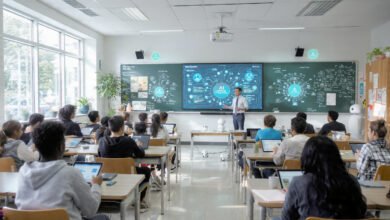
Today, many schools and universities use e-learning along with traditional classrooms, creating a blended learning system.
Benefits of E-Learning
1. Flexibility and Convenience
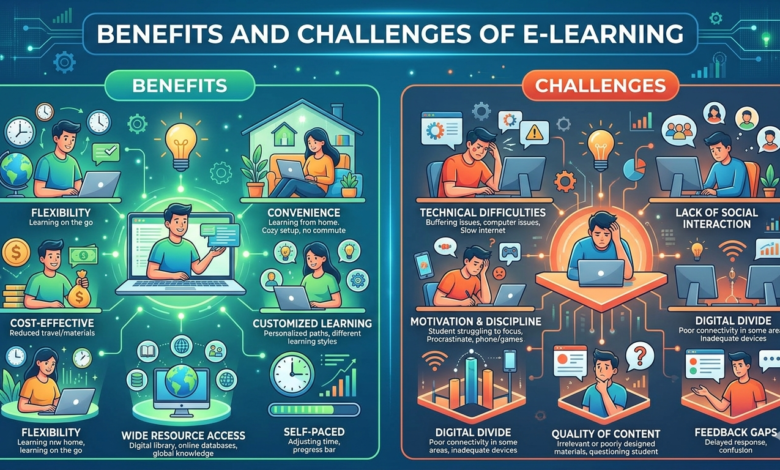
One of the biggest advantages of e-learning is flexibility. Students can study anytime and from anywhere. They are not limited by fixed schedules or locations. This helps learners manage their studies along with work or personal responsibilities.
2. Access to Global Education
E-learning removes geographical barriers. Students can join courses from different countries and learn from international teachers. This increases educational opportunities and allows learners to gain global knowledge and experience.
3. Personalized Learning Experience
Online learning allows students to learn at their own pace. They can repeat difficult topics and skip easy ones. Research shows that this personalized approach improves understanding and helps students perform better .
4. Cost-Effective Education
E-learning is often more affordable than traditional education. Students save money on travel, accommodation, and printed materials. Institutions also reduce costs by using digital platforms instead of physical classrooms.


5. Development of Digital Skills
E-learning helps students develop important digital skills. These include using computers, online communication, and searching for information. Such skills are essential for success in modern careers and professional life.
6. Wide Range of Courses
Online platforms offer a large variety of courses in different fields. Students can choose subjects according to their interests and career goals. This makes education more diverse and inclusive.
7. Improved Time Management
Research shows that e-learning encourages students to manage their time effectively. They learn to plan their study schedule, complete assignments independently, and take responsibility for their learning .
8. Easy Access to Study Materials
Students can easily access notes, videos, and books online anytime. They do not need to carry heavy books, and all learning materials are available in one place for quick and easy use.
9. Learning from Expert Teachers
E-learning allows students to learn from experienced and expert teachers from different parts of the world. This helps them gain better knowledge and understand topics more clearly.
10. Environment Friendly
E-learning reduces the use of paper because most work is done online. This helps save trees and protects the environment, making education more eco-friendly.
Challenges of E-Learning
1. Lack of Face-to-Face Interaction
One major challenge of e-learning is limited social interaction. Students do not meet teachers and classmates physically, which may affect communication skills and reduce engagement in learning activities .
2. Technical Problems
E-learning depends on technology and internet access. Problems like slow internet, power failure, or device issues can interrupt learning and create difficulties for students and teachers .
3. Need for Self-Discipline
Online learning requires strong self-motivation and discipline. Without a structured classroom environment, some students may lose focus, delay assignments, or fail to complete their courses on time .
4. Social Isolation
Students may feel lonely because they do not interact physically with others. Research shows that lack of communication can lead to stress, anxiety, and reduced motivation in some learners .
5. Limited Immediate Feedback
In traditional classrooms, students can ask questions and get instant answers. In e-learning, feedback may be delayed, which can affect understanding and slow down the learning process .
6. Inequality in Access
Not all students have access to proper devices or internet connections. This creates a digital divide, where some learners benefit more than others, leading to inequality in education.
7. Difficulty in Practical Subjects
Subjects that require hands-on practice, such as science experiments or medical training, are difficult to teach fully online. This limits the effectiveness of e-learning in some fields.
8. Distractions at Home
Students may face many distractions at home, such as noise, mobile phones, or family activities. These distractions make it difficult to concentrate on studies and reduce the effectiveness of online learning.
9. Health Problems
Spending long hours in front of screens can cause eye strain, headaches, and poor posture. This can affect students’ physical health and make learning uncomfortable over time.
10. Lack of Practical Experience
Some subjects need hands-on practice, like science experiments or technical work. In e-learning, students may not get enough practical experience, which can affect their understanding of real-life applications.
Conclusion
E-learning is an important part of modern education. It provides flexibility, accessibility, and personalized learning opportunities. At the same time, it also presents challenges such as lack of interaction, technical issues, and the need for self-discipline.
Research clearly shows that e-learning is most effective when combined with traditional classroom methods. This balanced approach, known as blended learning, helps overcome challenges while maximizing benefits.
In simple words, e-learning is not replacing traditional education but improving it and making it more suitable for today’s digital world.
Short Answer Questions (30–45 words each)
1. What is e-learning?
E-learning is a form of education that uses electronic devices and the internet to deliver lessons. Students can attend classes, complete assignments, and communicate with teachers online without being physically present in a traditional classroom environment.
2. What is one major benefit of e-learning?
One major benefit of e-learning is flexibility. Students can learn anytime and anywhere according to their schedule. This allows them to balance education with work, family responsibilities, or other activities more easily.
3. How does e-learning improve access to education?
E-learning improves access by allowing students from remote or distant areas to study online. It removes the need for travel and provides opportunities for learners who cannot attend physical schools or universities.
4. What is personalized learning in e-learning?
Personalized learning means students can study at their own pace and focus on their individual needs. They can review difficult topics, skip easy ones, and follow a learning path that suits their abilities and understanding.
5. What digital skills do students gain from e-learning?
Students develop digital skills such as using computers, navigating online platforms, communicating through emails or chats, and searching for information. These skills are important for both academic success and future careers.
6. What is one challenge of e-learning?
One major challenge of e-learning is the lack of face-to-face interaction. Students may miss direct communication with teachers and classmates, which can affect their understanding, participation, and overall learning experience.
7. Why is self-discipline important in e-learning?
Self-discipline is important because students must manage their own time and stay focused without direct supervision. They need to complete tasks independently and avoid distractions while studying online.
8. How do technical issues affect e-learning?
Technical issues such as poor internet, device problems, or software errors can interrupt online classes. These problems make it difficult for students to attend lessons, complete assignments, and communicate effectively.
9. Why can e-learning cause social isolation?
E-learning can cause social isolation because students do not meet others physically. Limited interaction with teachers and peers may lead to feelings of loneliness, reducing motivation and affecting emotional well-being.
10. What is the best way to use e-learning effectively?
The best way to use e-learning is by combining it with traditional classroom methods. This approach, called blended learning, provides flexibility along with face-to-face interaction, making education more balanced and effective.