Peer Pressure in High School: 7 Shocking Truths Teens Face Today
Peer pressure in high school now runs through group chats, feeds, and hallways. See seven forms teens face and practical ways families can respond.
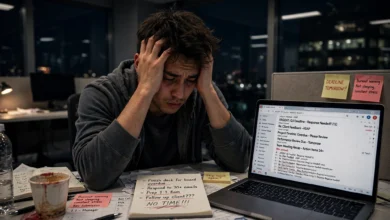
Peer pressure in high school used to mean a classmate daring someone to skip fourth period or sneak a cigarette behind the gym. That picture still exists, but it now covers only a sliver of what teenagers deal with. Today, peer pressure in high school follows students home, sits on their lock screens at midnight, and shows up as a silent group chat, a missing tag, or a post that earned too few likes. The pressure is often unspoken, which makes it harder for parents, teachers, and even students themselves to name.
That matters because the teenage years are when belonging feels as essential as sleep. Adolescents are wired to read social cues closely, and the opinions of friends carry real weight in the brain’s reward system. When approval becomes measurable through views, streaks, and followers, the teen peer pressure that was once occasional becomes a constant hum.
This article breaks down what peer pressure looks like in classrooms, locker rooms, and phone screens right now. You will see the main types, the newest forms driven by social platforms, the effects on mental health and grades, the warning signs adults miss, and the positive side that rarely gets credit. You will also find practical scripts and strategies for students and families. Whether you are a parent, an educator, or a teenager trying to make sense of your own social world, the goal is the same: replace guesswork with a clear picture of how peer influence really works today.
What Peer Pressure in High School Actually Means
At its simplest, peer pressure is the push people feel from others their own age to think, dress, speak, or act in a certain way. In a high school setting, that push comes from classmates, teammates, club members, online followers, and sometimes a single friend whose approval matters more than anyone else’s. Peer pressure in high school is not limited to dramatic moments. Most of it is quiet, repeated, and woven into ordinary routines.
Peer Pressure vs. Peer Influence
The two terms overlap, but they are not identical. Peer influence is the natural, often unconscious way teens copy the habits of people around them. A student sees friends wearing a certain style of sneakers and wants the same pair. Nobody said a word. Peer pressure adds a sense of obligation or fear: go along, or risk being teased, excluded, or ignored.
Understanding that difference helps families avoid an overreaction. Not every shared interest is a threat, and not every friend group is a bad one. The concern begins when the cost of saying no feels higher than the cost of doing something a teen knows is wrong.
Why Teenagers Are So Sensitive to Peer Pressure
Researchers who study adolescent development point to a mismatch in brain maturation. The emotional and reward-seeking systems become highly active early in the teen years, while the prefrontal cortex, which handles planning and impulse control, keeps developing into the mid-twenties. The result is a stage of life when social approval feels powerful and long-term consequences feel distant.


Add a few more ingredients and the sensitivity makes sense:
- Identity formation: Teens are deciding who they are, and peers act as mirrors.
- Fear of rejection: Exclusion hurts in a way that can feel physical.
- Group status: Reputation in a school community can shape daily life for years.
- Reduced parental visibility: Teens spend more unsupervised time with friends than they did as children.
7 Forms of Peer Pressure in High School Today
The core need has not changed, but the delivery has. These seven forms show up repeatedly in what students, counselors, and researchers describe.
1. Group Chat and Social Media Pressure
The group chat is now the hallway. Plans are made, jokes are shared, and reputations are built or damaged in threads that never close. A student who leaves a chat, mutes it, or answers late may be read as distant or disloyal. This is social media peer pressure in its everyday form: no one demands anything, yet everyone feels expected to respond, react, and stay visible.
The scale is large. Data from the CDC reported that 77 percent of high school students in 2023 used social media frequently, meaning several times a day. When most of a grade is online at once, the norms set there become hard to ignore.
2. The Pressure to Perform for Likes
Posting is no longer casual. According to a Pew Research Center survey on teens, social media, and mental health, many teens say social platforms leave them overwhelmed by drama, and a meaningful share feel pushed to post content that attracts likes and comments. Pew also found that nearly half of teens, 48 percent, believe social media has a mostly negative effect on people their age.
This kind of pressure is mostly self-generated but peer-shaped. Teens curate a version of life that looks fun, successful, and effortless, then compare it with everyone else’s highlight reel.
3. Fear of Missing Out (FOMO)
FOMO turns a normal desire to belong into an alarm. When a student sees photos from a party they were not invited to, or a trip everyone else seems to be on, the message is clear without a single word being said. To avoid that feeling again, some teens say yes to plans, behaviors, or purchases they would otherwise skip.
FOMO is especially powerful because it works on a schedule that never ends. There is always another story, another event, another group that appears to be having a better time.
4. Academic Comparison and Achievement Pressure
Not all peer pressure in high school pushes toward rule-breaking. Some of it pushes toward overwork. Students compare GPAs, test scores, class rank, advanced course loads, and college acceptances. Some schools’ student publications have described how public posts about post-graduation plans raise the stakes even further, since achievement becomes visible to the whole grade.
The result can be a quiet arms race. A student who might be happy in two advanced classes signs up for five because friends did. Sleep shrinks, stress grows, and the original interest in learning fades.
5. Appearance, Brands, and Body Image
Clothing, hairstyles, skincare routines, fitness habits, and brand choices all carry social meaning in high school. Online beauty standards, filtered photos, and influencer routines raise the bar. A teen may feel pressure to buy a certain item, follow a certain diet, or edit photos before posting.
Watch for subtle signals here: sudden interest in extreme dieting, constant negative self-talk, or distress about photos. These can point to deeper struggles and deserve a calm, caring response.
6. Substances and Risky Behavior
This is the classic form, and it has not disappeared. Offers to try vaping, alcohol, cannabis, or other substances still arrive through friends, parties, and sometimes online. Pressure can also involve reckless driving, dares, or risky online challenges. Social platforms add another layer by normalizing these behaviors, because teens who see peers casually posting risky activity may assume it is far more common than it is.
7. Social Exclusion and Loyalty Tests
Many teens describe pressure that has nothing to do with substances or grades. It involves proving loyalty: joining in when someone is mocked, cutting off a friend because the group has, or staying silent when a line is crossed. Refusing may mean becoming the next target. This form of peer pressure in high school can be the most painful because it asks students to choose between their conscience and their friendships.
The Main Types of Peer Pressure Teens Experience
Experts often sort peer pressure into pairs of categories. Knowing them helps adults and students recognize what is happening.
- Direct peer pressure: An explicit request or dare. Example: “Just try it, don’t be boring.”
- Indirect peer pressure: Influence from observing what others wear, post, or do, without anyone asking.
- Spoken peer pressure: Persuasion, teasing, or insults used to change a decision.
- Unspoken peer pressure: A silent expectation to match the group’s style, habits, or views.
- Negative peer pressure: Pushing toward harmful or rule-breaking choices.
- Positive peer pressure: Encouraging healthy, kind, or productive choices.
In modern high school life, indirect and unspoken pressure dominate because feeds and group chats display group norms around the clock.
How Peer Pressure in High School Affects Mental Health and Grades
The effects depend on the teen, the situation, and the support nearby, but patterns appear again and again.
Emotional and Mental Health Effects
Chronic peer pressure can feed anxiety, low self-esteem, irritability, and a persistent sense of not measuring up. Teens who constantly adjust themselves to fit in may lose touch with their own preferences. Public health reports have linked heavy social media use with higher rates of bullying and persistent sadness among adolescents, though the relationship is complicated and runs in more than one direction. Stressed teens are also more likely to give in to pressure, which creates a loop.
Academic and Behavioral Effects
Falling grades, skipped classes, lost interest in activities, and a sudden change in friend groups can all connect to pressure from peers. On the other end, relentless achievement pressure can cause burnout. Both extremes damage learning.
Long-Term Effects
Habits formed under pressure can last. A teen who learns to ignore their own judgment may carry that pattern into college and work. A teen who learns to hold a boundary calmly carries that skill instead.
Warning Signs Adults Often Miss
Teens rarely announce that they are struggling with peer pressure. Parents and teachers can watch for changes such as:
- A sudden shift in clothing, language, or music that seems out of character
- New secrecy around phones, accounts, or friends
- Dropping long-time friends or favorite activities
- Declining grades or frequent absences
- Mood swings, withdrawal, or trouble sleeping
- Unexplained money problems or missing belongings
- Anxiety whenever a notification arrives
One sign alone does not prove anything. A cluster of changes lasting more than a few weeks is the signal to start a gentle conversation.
The Positive Side of Peer Pressure in High School
Peer pressure deserves a fairer reputation. Peers can push each other toward studying together, joining teams, volunteering, standing up to bullying, and choosing healthy habits. As the KidsHealth guide to handling peer pressure points out, peers can lead each other toward kindness, fairness, and friendship, and a group of students can influence one another to do what is right.
Positive peer pressure looks like:
- A study group where everyone holds each other accountable
- A team culture that celebrates effort over ego
- Friends who check in when someone seems down
- A club that normalizes kindness and inclusion
The practical takeaway for parents is to support healthy friend groups and not just warn against bad ones. A teen surrounded by encouraging peers has built-in protection.
How Teens Can Handle Peer Pressure in High School
Saying no is a skill, and skills improve with practice. Preparing before a tough moment is far more effective than improvising during it.
Step-by-Step Strategies for Students
- Know your limits in advance. Decide what you will and will not do before you are in the room.
- Use a short, steady refusal. “No thanks, I’m good” works better than a long explanation.
- Blame a rule when needed. “My coach drug tests” or “my parents check my location” gives an easy exit.
- Find one ally. Having a single friend who also says no takes much of the force out of the pressure.
- Change the scene. Suggest another activity, step outside, or leave.
- Use an agreed code word. Many families set a text code that means “call me and pick me up, no questions asked.”
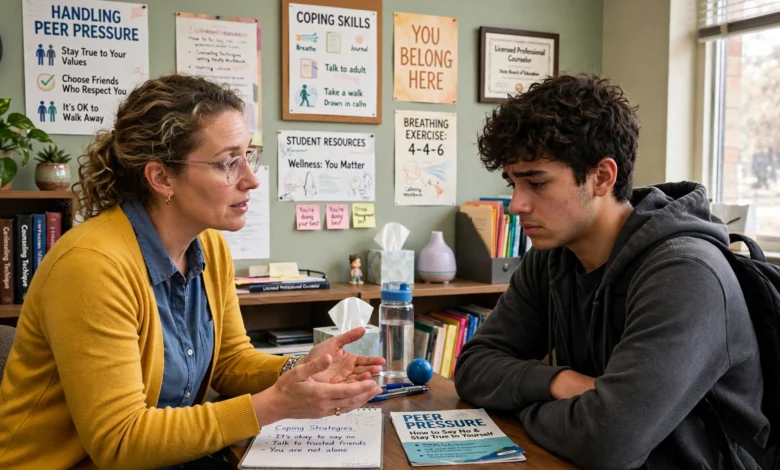
- Talk to a trusted adult. A parent, teacher, or school counselor can help with pressure that feels too heavy.
Handling Digital Pressure
Digital pressure calls for its own tools. Mute noisy group chats during homework and sleep. Unfollow accounts that leave you feeling worse. Remember that online posts are curated, and that a screenshot is not the whole story. Setting daily time limits can also lower the urge to keep up with everything.
How Parents and Schools Can Reduce Negative Peer Pressure
Adults still matter. Most teens say they want honest guidance even when they act as though they do not.
What Parents Can Do
- Listen first. Ask open questions and avoid lectures; teens talk when they feel safe.
- Know the friends. Welcome them home and learn their names.
- Rehearse scenarios. Role-play how to decline an offer so the words come easily.
- Model healthy boundaries. Teens notice how adults handle social pressure.
- Stay calm after mistakes. A punishing reaction teaches secrecy; a steady one teaches honesty.
What Schools Can Do
- Teach refusal skills and digital literacy in health classes
- Train staff to spot exclusion and cyberbullying early
- Build clubs and teams that reward belonging without hazing
- Make counselors easy to reach and visible
- Encourage student-led campaigns that highlight positive norms
Some school communities have noticed that students are more willing to discuss peer pressure openly than in the past, which is a promising shift. Talking about it removes much of its power.
Frequently Asked Questions About Peer Pressure in High School
Is peer pressure in high school always bad?
No. It can be harmful when it pushes teens toward risky or unkind behavior, but it can also support studying, sports, volunteering, and healthy routines.
At what age is peer pressure the strongest?
Susceptibility to peer influence tends to rise in early adolescence and stay high through the high school years. Some research even suggests that pressure around certain risky behaviors can peak in middle school.
How can I tell if my teen is being pressured?
Look for sudden changes in mood, friends, habits, grades, or phone behavior. Then start a calm, nonjudgmental conversation instead of an interrogation.
Conclusion
Peer pressure in high school has moved from the cafeteria table to the group chat, and it now includes subtle forces such as likes, FOMO, achievement comparison, and loyalty tests alongside the classic dares involving substances. Teenagers feel it strongly because their brains prize belonging while their impulse control is still maturing, and the effects on mood, grades, and long-term habits can be significant when pressure goes unnoticed. Yet peer influence is not purely harmful: supportive friends and healthy group norms can lift a teen toward better choices.
The most effective response combines preparation and connection, meaning students who rehearse short refusals and find one ally, parents who listen without panic, and schools that teach refusal skills and digital awareness. When adults treat the topic as a normal part of growing up and not as a scandal, teens are far more likely to ask for help before a small problem becomes a big one.