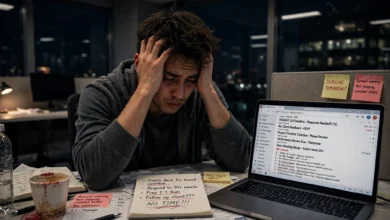
Exam Anxiety: 7 Proven Ways to Deal With It Before It Takes Over
Exam anxiety before it takes over? Learn practical, research-backed ways to calm your nerves and walk into any test with confidence.

Exam anxiety has a way of sneaking up right when you need your head clearest. Maybe it starts as a tight chest a week before finals. Maybe it’s the blank stare at question one, even though you knew the material cold the night before. Either way, it’s one of the most common experiences students go through, and it doesn’t mean something is wrong with you.
This kind of stress is your body’s alarm system doing exactly what it’s designed to do, just at the wrong volume and the wrong time. The good news is that test anxiety is manageable once you understand what triggers it and what actually helps. This isn’t about pretending you’re not nervous. It’s about giving your brain and body enough support that the nerves stop running the show.
In this article, we’ll walk through what exam anxiety actually looks like, why it happens, and seven practical strategies you can start using today, whether your test is tomorrow morning or three weeks away. We’ll also cover what to do in the moment if panic hits mid-exam, because sometimes the best preparation still isn’t enough to stop that one bad wave of nerves. By the end, you’ll have a toolkit you can actually use, not just another list of vague advice like “just relax.”
What Is Exam Anxiety, Really?
Exam anxiety (also called test anxiety) is a form of performance anxiety that shows up specifically around testing situations. It’s not the same as general nervousness. It’s a specific stress response tied to the fear of being evaluated, the fear of failing, or the fear of not living up to expectations, whether those expectations come from parents, teachers, or yourself.
It shows up differently for everyone, but common signs include:
- A racing heart or sweaty palms right before or during a test
- Going blank on information you clearly know
- Trouble sleeping the night before an exam
- Nausea, headaches, or an upset stomach on test day
- Racing thoughts that jump straight to worst-case outcomes
- Avoiding studying altogether because it feels overwhelming
Research suggests this is far from rare. According to Coursera’s overview of test anxiety research, up to 55 percent of students may experience some form of test anxiety, which makes it one of the most common academic struggles out there. If you’ve felt this, you’re in the majority, not the exception.
Why Does Exam Anxiety Happen?
Before jumping into fixes, it helps to understand the root of the problem. Test anxiety usually stems from a mix of a few things:


Fear of Failure and High Stakes
When a test feels like it will define your future, whether that’s a grade, a college acceptance, or a career path, your brain treats it like a real threat. That triggers the same fight-or-flight response you’d get from actual danger, even though nothing physically dangerous is happening.
Poor or Inconsistent Preparation
Uncertainty breeds anxiety. If you’re not sure how well you know the material, your mind tends to fill that gap with worst-case scenarios rather than confidence.
Past Negative Experiences
If you’ve frozen up or done poorly on a test before, your brain can start associating exams with that same bad outcome, even if this time is different.
Perfectionism and Self-Criticism
Holding yourself to an impossibly high standard, or comparing yourself to classmates, adds pressure that has nothing to do with actually knowing the content.
Understanding which of these apply to you is useful because it changes where you focus your energy. Someone dealing with poor preparation needs a different approach than someone dealing with perfectionism.
7 Ways to Deal With Exam Anxiety Before It Takes Over
Here are seven strategies that address exam anxiety from different angles, covering preparation, mindset, and physical wellbeing.
1. Start Studying Early, Not All at Once
Cramming feels productive, but it usually makes anxiety worse, not better. When you space your studying out over days or weeks instead of one long night, you give your brain time to actually absorb the material instead of just recognizing it briefly.
- Break your material into smaller chunks and study a bit each day
- Use a calendar or planner to mark test dates as soon as you know them
- Review older material periodically instead of only focusing on what’s new
Early preparation directly reduces the “unknown” factor that fuels most exam anxiety, because you walk in already familiar with the material rather than hoping it sticks overnight.
2. Practice Under Test-Like Conditions
One reason tests feel so intimidating is that the format itself is unfamiliar, timed, quiet, no notes, someone watching the clock. You can reduce that shock by practicing the same way you’ll be tested.
- Take practice tests or past exams under a timer
- Study in a quiet space similar to your actual test room when possible
- Avoid using notes during practice if your real exam won’t allow them
This kind of rehearsal builds genuine confidence, because you’re not just familiar with the content, you’re familiar with the experience of retrieving it under pressure.
3. Use Breathing and Relaxation Techniques
Your body’s stress response is physical, so a physical tool can help interrupt it. Mindful breathing is one of the simplest, most effective ways to calm a racing heart or a tight chest before or during a test.
Try this simple pattern:
- Breathe in slowly through your nose for four counts
- Hold for four counts
- Breathe out slowly through your mouth for six counts
- Repeat three to five times
This slows your heart rate and signals to your nervous system that you’re not actually in danger, which helps quiet the panic response tied to exam anxiety.
4. Take Care of Your Body in the Days Before
It’s easy to sacrifice sleep, food, and movement when you’re stressed about a test, but doing so tends to backfire. Your brain needs rest and fuel to function well, especially under pressure.
- Aim for seven to nine hours of sleep, particularly the night before your exam
- Eat a balanced meal with protein before the test instead of skipping breakfast
- Keep caffeine intake moderate, since too much can mimic anxiety symptoms like a racing heart
- Add light exercise, even a short walk, to help burn off nervous energy
According to Healthline’s guide on overcoming test anxiety, being well-rested and prepared makes a real difference in how in control you feel walking into an exam, which lowers the odds of panic taking over.
5. Reframe Negative Thoughts
A lot of exam anxiety comes from catastrophic thinking, the jump from “I’m struggling with this question” to “I’m going to fail everything.” Learning to notice and interrupt that pattern is one of the most useful long-term skills you can build.
- When a negative thought pops up, name it: “this is anxiety talking, not fact”
- Replace all-or-nothing thoughts with more balanced ones, like “I don’t know this one question, but I’ve prepared for most of this test”
- Keep a short list of past successes to remind yourself you’ve handled hard tests before
- Have a backup plan in mind, like retaking a class or exam, so the outcome feels less catastrophic
Having a realistic fallback plan can actually reduce anxiety in the moment, because your brain no longer treats the test as an all-or-nothing event.
6. Build a Pre-Test Routine
Routines give your brain a sense of predictability, which is calming when everything else feels uncertain. A consistent pre-test routine trains your body to associate those steps with focus rather than panic.
- Pack your bag and pick out what you’re bringing the night before
- Set an alarm that gives you extra time so you’re not rushing
- Do a short, calming activity the morning of, like stretching, music, or a few minutes of quiet
- Arrive early enough to settle in without feeling rushed
Feeling rushed on test day tends to spike anxiety fast, so building in extra time is one of the simplest fixes available.
7. Address Anxiety in the Moment, Not Just Before
Sometimes despite all your preparation, panic still hits mid-exam. Having a plan for that moment matters just as much as your prep beforehand.
- If your mind goes blank, pause, close your eyes, and take a few slow breaths instead of pushing harder
- Skip the question you’re stuck on and come back to it later instead of losing time and confidence
- Read directions slowly and carefully rather than rushing through them
- Try viewing the exam as a challenge or a game rather than a threat, which can shift your mindset from fear to focus
The goal isn’t to eliminate every ounce of nervousness. A little bit of adrenaline can actually sharpen focus. The goal is to keep it from spiraling into something that blocks your ability to think clearly.
When Exam Anxiety Needs More Support
Most test anxiety responds well to the strategies above, but if you’re dealing with anxiety that feels constant, overwhelming, or tied to a broader pattern of worry that shows up outside of testing too, it’s worth talking to a school counselor, therapist, or doctor. Persistent anxiety that interferes with daily functioning is a different situation than the pre-test jitters most students experience, and support is available. Academic support centers, like the one run by Harvard’s Academic Resource Center, also offer resources specifically designed to help students work through these patterns with a professional.
Frequently Asked Questions
Is exam anxiety the same as being unprepared? Not always. Plenty of well-prepared students still experience anxiety, because the fear is often tied to performance and evaluation, not just knowledge gaps. That said, solid preparation does reduce one major source of the stress.
Can exam anxiety actually lower my grade? Yes, it can. When anxiety spikes, it can interfere with memory recall and focus, meaning your score may not reflect what you actually know. This is exactly why managing it matters as much as studying the material itself.
What’s the fastest way to calm down right before a test? Slow, controlled breathing is one of the quickest tools available. It won’t erase every nerve, but it can bring your heart rate and thinking back to a manageable place within a couple of minutes.
Final Thoughts
Exam anxiety is common, understandable, and, most importantly, manageable. It usually comes down to a mix of uncertainty, fear of failure, and a stress response that’s a little too loud for the situation. By studying early instead of cramming, practicing under realistic conditions, using breathing techniques, protecting your sleep and nutrition, reframing negative thoughts, building a steady pre-test routine, and having a plan for in-the-moment panic, you give yourself real tools to walk into any exam with more calm and more control. None of this means the nerves disappear completely, and that’s okay. The goal is simply to keep exam anxiety from taking the wheel, so the knowledge you’ve actually worked hard to build has the chance to show up on the page.