Introduction
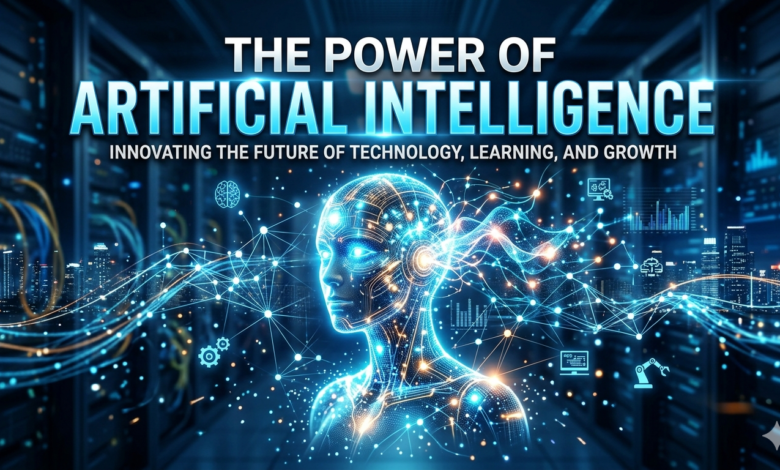
Artificial Intelligence (AI) is one of the most powerful and rapidly growing technologies in the modern world. It is transforming many sectors, including healthcare, business, transportation, and especially education. In simple terms, AI refers to machines or computer systems that can perform tasks that usually require human intelligence, such as thinking, learning, problem-solving, and decision-making.https://www.entertostudy.com/ai-in-healthcare-diagnostics-drug-discovery-and-predictive-biomarkers-a-comprehensive-evidence-based-guide/
In the field of education, AI is bringing a revolutionary change. It is improving the quality of teaching, making learning more engaging, and helping students achieve better results. Countries like the USA and the UK are already using AI tools in schools, colleges, and universities to enhance the learning experience. This article explains in detail how Artificial Intelligence is impacting education, its benefits, challenges, and future possibilities.https://www.entertostudy.com/ethical-ai-explainable-ai-xai-how-to-make-ai-decisions-transparent-and-accountable/
What is Artificial Intelligence in Education?
Artificial Intelligence in education means the use of smart technologies, software, and systems to improve teaching and learning processes. These systems can collect and analyze student data, understand learning behavior, and provide customized support.
Unlike traditional classrooms where all students are taught in the same way, AI allows a more flexible approach. It helps in creating a learning environment where every student can learn at their own pace. AI tools can adapt to the needs of individual learners, making education more effective and efficient.
Personalized Learning with AI
One of the most important contributions of AI in education is personalized learning. Every student is different. Some students understand concepts quickly, while others need more time and practice. Traditional teaching methods often fail to address these differences.


AI solves this problem by providing personalized content. It tracks student performance and identifies strengths and weaknesses. Based on this analysis, it suggests lessons, exercises, and quizzes that match the student’s level.
For example, if a student struggles with algebra, the AI system will provide simpler explanations, additional examples, and practice problems until the student gains confidence. This approach not only improves understanding but also reduces frustration and increases motivation.
AI-Powered Tutoring Systems
AI-based tutoring systems are becoming very popular in modern education. These systems act as virtual tutors that can guide students at any time. Unlike human tutors, AI tutors are available 24/7, making learning more flexible.
These systems can answer questions, explain difficult topics, and provide instant feedback. They also track progress and adjust teaching methods accordingly. For students who hesitate to ask questions in class, AI tutors provide a comfortable and private learning environment.
Moreover, AI tutors can break complex topics into smaller steps, making them easier to understand. This improves learning efficiency and helps students achieve better academic results.
Automation of Administrative Tasks
Teachers often spend a lot of time on administrative tasks such as grading assignments, preparing reports, and managing student records. AI can automate many of these tasks, saving time and effort.
For example, AI systems can automatically grade multiple-choice questions and even evaluate short answers using advanced algorithms. They can also organize data, track attendance, and generate performance reports.
By reducing workload, AI allows teachers to focus more on teaching, mentoring, and interacting with students. This improves the overall quality of education.
Enhanced Student Engagement
Keeping students engaged is one of the biggest challenges in education. AI helps solve this problem by making learning more interactive and interesting.
AI-powered tools use multimedia content such as videos, animations, and simulations to explain concepts. Technologies like Virtual Reality (VR) and Augmented Reality (AR) allow students to experience learning in a more practical way.
For example, students can explore the solar system in a virtual environment or perform science experiments digitally. This type of learning is not only fun but also improves understanding and retention.
Data-Driven Decision Making
AI systems collect large amounts of data about student performance, behavior, and learning patterns. This data is analyzed to provide useful insights.
Teachers can use this information to identify students who need extra help. They can also understand which teaching methods are most effective. Educational institutions can use data to improve curriculum design and teaching strategies.
Data-driven decision-making leads to better outcomes, as decisions are based on real evidence rather than assumptions.
Accessibility and Inclusive Education
AI is playing a key role in making education accessible to everyone, including students with disabilities. It provides tools that support different learning needs.
For example:
- Speech-to-text tools help students who have difficulty writing
- Text-to-speech tools assist visually impaired students
- Language translation tools help students who speak different languages
AI also helps students in remote areas access quality education through online platforms. This reduces the gap between urban and rural education and promotes equal opportunities.
Role of AI in Online Learning
Online learning has become very popular, especially after the COVID-19 pandemic. AI is improving the effectiveness of online education by making it more personalized and interactive.
AI can recommend courses based on student interests, track progress, and provide feedback. It also helps in detecting cheating during online exams through monitoring systems.
Many online platforms use AI to create adaptive learning paths, ensuring that students get the best possible learning experience.
Challenges of Artificial Intelligence in Education
Despite its many advantages, AI also has some challenges that need to be addressed.
- High Cost
Implementing AI technology requires significant investment. Schools and institutions need advanced infrastructure, software, and training, which can be expensive.
- Data Privacy and Security
AI systems collect and store large amounts of student data. If not managed properly, this data can be misused. Ensuring data privacy and security is a major concern.
- Lack of Human Interaction
Education is not just about knowledge; it also involves emotional and social development. Over-reliance on AI may reduce human interaction between teachers and students.
- Dependence on Technology
Excessive use of AI can make students dependent on technology. It may reduce critical thinking and problem-solving skills if not used properly.
- Need for Training
Teachers and students must learn how to use AI tools effectively. Without proper training, the benefits of AI cannot be fully achieved.
Future of AI in Education
The future of AI in education is very promising. As technology continues to develop, AI will become more advanced and widely used.
In the future, we can expect:
- Fully automated and smart classrooms
- Advanced virtual tutors with human-like interaction
- More accurate and personalized learning systems
- Global access to high-quality education
AI will not replace teachers but will act as a powerful tool to support them. Teachers will continue to play a crucial role in guiding, motivating, and inspiring students.
Conclusion
Artificial Intelligence is transforming education in many positive ways. It is making learning more personalized, efficient, and accessible. From smart tutoring systems to automated administrative tasks, AI is improving both teaching and learning experiences.
However, it is important to use AI responsibly. Challenges such as data privacy, high cost, and reduced human interaction must be carefully managed. By balancing technology with human involvement, we can create an education system that is both modern and effective.
In conclusion, AI is not just the future of education—it is already shaping the present. With the right approach, it has the potential to provide better learning opportunities for students around the world.
Short Questions with Answers
Q1. What is Artificial Intelligence (AI)?
Artificial Intelligence is the ability of machines or computer systems to perform tasks that normally require human intelligence, such as learning, thinking, and decision-making.
Q2. What is meant by AI in education?
AI in education refers to the use of smart technologies and software to improve teaching and learning processes.
Q3. What is personalized learning?
Personalized learning is a method where lessons are adjusted according to the needs, abilities, and pace of each student.
Q4. How does AI help in personalized learning?
AI tracks student performance and provides customized lessons, exercises, and feedback based on individual needs.
Q5. What are AI-powered tutoring systems?
AI tutoring systems are virtual teachers that help students learn by explaining concepts, answering questions, and giving feedback.
Q6. How does AI help teachers?
AI helps teachers by automating tasks like grading, managing records, and preparing reports, saving time for teaching.
Q7. What is one major benefit of AI in education?
One major benefit is that it makes learning more effective by adapting to each student’s learning style.
Q8. How does AI improve student engagement?
AI uses videos, animations, and interactive tools to make learning more interesting and engaging.
Q9. What role does data play in AI education systems?
AI collects and analyzes student data to improve teaching methods and identify weak areas.
Q10. How does AI support students with disabilities?
AI provides tools like speech-to-text and text-to-speech to help students with different learning needs.
Q11. What is one challenge of using AI in education?
One challenge is the high cost of implementing AI technologies.
Q12. Why is data privacy a concern in AI?
Because AI systems collect student data, which can be misused if not properly protected.
Q13. Can AI replace teachers?
No, AI cannot replace teachers; it only supports them in improving the learning process.
Q14. How does AI help in online learning?
AI provides personalized courses, tracks progress, and gives instant feedback to students.
Q15. What is the future of AI in education?
The future includes smart classrooms, advanced virtual tutors, and more personalized learning systems.