What Employers Actually Look for in a College Transcript
A practical look at what employers really check on a college transcript, from GPA to course rigor, and why it still matters.
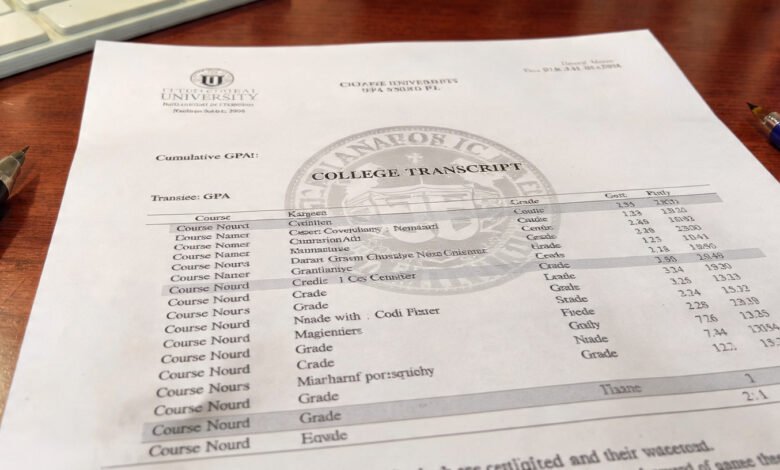
A college transcript tells a story most students never think to read from the employer’s side of the desk. It’s not just a list of grades sitting in a file at the registrar’s office. For recent graduates especially, a college transcript can be one of the few objective records a hiring manager has to compare candidates who otherwise look similar on paper. That said, the way employers use transcripts has changed a lot over the past several years, and it’s not always in the direction people assume. GPA screening, once treated as a hard cutoff, has quietly lost ground to a broader look at coursework, consistency, and demonstrated skill.
Some employers barely glance at a transcript. Others, particularly in finance, engineering, healthcare, and education, still study it closely because licensing bodies or client-facing roles demand it. This article walks through what actually shows up on a hiring manager’s radar when they open your academic transcript, why certain details matter more than others, and how to present your record so it works in your favor instead of against you. If you’re a student, a recent grad, or someone helping others prepare for the job market, this breakdown should clear up a lot of the guesswork.
Why a College Transcript Still Matters in Hiring
It’s tempting to assume nobody reads transcripts anymore, especially with so much talk about skills-based hiring. That’s only half true. A college transcript still plays a role, just a smaller and more targeted one than it did a decade ago.
Employers generally use a transcript for three purposes:
- Verification. Confirming that you actually earned the degree, major, and honors you listed on your resume.
- Context. Understanding your course load, workload, and how your education lines up with the job requirements.
- Screening. In some industries, using it as an early filter before an interview is even offered.
The National Association of Colleges and Employers (NACE) has tracked this shift for years, and the data is pretty telling. According to NACE’s most recent Job Outlook survey, roughly 70% of employers now use some form of skills-based hiring, and the share of companies that screen candidates by GPA has dropped to under 40% for the third year running. You can read more about that shift directly from NACE’s research on skills-based hiring. That doesn’t mean your transcript is irrelevant. It means employers are reading it for different signals than they used to.
1. GPA, But Not the Way You Might Think
GPA is still the first thing most people assume employers care about on a college transcript, and it’s not entirely wrong. It’s just not the whole picture anymore.
The Shrinking Role of GPA Cutoffs
Back in 2019, nearly three-quarters of employers used GPA as a screening tool, often with a 3.0 minimum before a resume even got a second look. That number has fallen sharply since. Fewer than half of employers now use GPA to filter candidates, and the ones who still do usually apply it loosely rather than as a strict cutoff. Large employers, competitive finance and consulting firms, and organizations hiring for highly technical roles are the exceptions. If you’re applying to one of those, expect your GPA to get more scrutiny than average.


When a Strong GPA Still Helps
Even where GPA isn’t a formal filter, a strong one can still work in your favor, especially if you’re light on internships or work experience. A high GPA signals:
- Consistency and follow-through over a long stretch of time
- The ability to manage multiple demanding responsibilities at once
- Baseline competence in your field, particularly for technical majors
If your GPA is lower than you’d like, it’s rarely a dealbreaker on its own. Employers weigh it against everything else on your transcript and resume, including internships, projects, and references.
2. Course Rigor and Relevant Coursework
This is where a college transcript actually tells a more interesting story than a GPA number ever could. Two students can graduate with the same 3.4 GPA and look completely different once you see what they actually studied.
Hiring managers, especially for entry-level technical or specialized roles, look for:
- Whether you took the advanced or elective courses in your field, not just the required minimum
- Whether your coursework matches the specific skills listed in the job posting
- Whether you challenged yourself with harder classes even when an easier option was available
For example, an accounting recruiter reviewing an academic transcript wants to see auditing, tax, and cost accounting courses, not just the intro sequence. A software engineering employer wants to see data structures, systems design, or a capstone project relevant to the role. If your major doesn’t perfectly match the job, relevant electives on your transcript can help bridge that gap and show initiative.
3. Grade Trends Over Time
A single low grade rarely matters. A pattern does. Employers who take the time to actually read a college transcript, rather than just checking the cumulative GPA, are often looking at the trend line.
A transcript that shows steady or improving performance from freshman to senior year tells a different story than one that trends downward. Improvement suggests growth, adaptability, and maturity, all things employers value in someone stepping into their first full-time role. A downward trend, especially in courses tied directly to the job, can raise questions, though it’s rarely disqualifying on its own if you can explain it well in an interview.
4. Academic Honors and Distinctions
Honors listed on a transcript carry more weight than people expect, mainly because they’re independently verified rather than self-reported.
Things that stand out here include:
- Dean’s list or honor roll appearances across multiple semesters
- Latin honors at graduation (cum laude, magna cum laude, summa cum laude)
- Departmental awards or honors program completion
- Membership in academic honor societies noted on the transcript
These distinctions matter most for candidates with limited work experience, since they’re one of the few third-party signals available that you performed above average consistently, not just once.
5. Consistency Between Your Transcript and Your Resume
This is one of the quieter reasons employers pull a college transcript, and it has less to do with grades and more to do with trust.
Recruiters compare your transcript against your resume to check that:
- Your listed degree, major, and minor actually match what the school confirms
- Your graduation dates line up
- Any GPA you listed on your resume is accurate
Discrepancies here don’t automatically mean dishonesty, sometimes it’s a simple mistake, but they do prompt follow-up questions. In industries with formal background checks, like finance, healthcare, education, or government contracting, an inaccurate resume claim caught against an official transcript can end a candidacy fast. The safest approach is to only list what you can back up, and to request an official copy of your own transcript before applying so you know exactly what an employer will see.
6. Skills You Can Point to Through Coursework
With skills-based hiring on the rise, more employers are reading a transcript less like a report card and more like a skills inventory. NACE’s recent surveys found that internship experience is now the top deciding factor when two candidates look equally qualified, and coursework is increasingly evaluated the same way.
Ways your transcript can demonstrate skills directly:
- Technical courses that map to specific tools, languages, or methods named in the job description
- Group projects or capstones that show collaboration and applied problem-solving
- Quantitative coursework (statistics, calculus, data analysis) for roles that require analytical thinking
- Writing-intensive courses for roles built around communication
When you can connect a specific class on your academic transcript to a specific requirement in the job posting, you’re doing the employer’s work for them. That’s a small thing that makes a real difference in a competitive applicant pool.
7. Red Flags Employers Notice on a Transcript
Not everything on a college transcript is neutral. A few patterns tend to catch a reviewer’s eye, and it helps to know what they are so you can address them proactively if asked.
Common flags include:
- A cluster of withdrawals or incompletes in a short window
- Repeated courses in your major, especially foundational ones
- A big, unexplained gap between semesters
- A steep, unexplained drop in grades for one term
None of these are automatically disqualifying. Life happens, and most hiring managers understand that. What matters is being ready to explain it briefly and honestly if it comes up, rather than hoping it goes unnoticed. A short, confident explanation almost always lands better than silence.
How to Present Your Transcript Well
If you know your college transcript is going to be part of the hiring process, a little preparation goes a long way.
- Request an official copy early. Processing times vary by school, and some employers want it sealed and sent directly from the registrar.
- Review it yourself first. Know exactly what’s on there before an employer sees it, including any surprises.
- Be ready to explain gaps or dips. A short, factual explanation is far more effective than avoiding the topic.
- Highlight relevant coursework separately. A short “Relevant Coursework” section on your resume can draw attention to the parts of your transcript that matter most for the role.
- Keep your resume accurate. Make sure your listed GPA, dates, and degree exactly match your official record.
For a broader look at how transcript expectations shift depending on how far along you are in your career, CollegeVine’s overview of transcripts in job interviews is a solid additional resource.
Industry Differences: Where Transcripts Carry More Weight
Not every employer treats a college transcript the same way, and it helps to know where you land on that spectrum before you apply.
Fields where transcripts get closer scrutiny:
- Finance and consulting. These industries still lean on academic performance more than most, particularly for candidates without much prior work experience. A strong GPA, along with coursework in statistics, economics, or finance, can carry real weight here.
- Engineering and technical fields. Employers often check that you’ve completed the specific coursework required for licensure or certification down the line, not just a general degree.
- Healthcare and education. These fields frequently require an official transcript as part of licensing or credentialing, so accuracy matters more than presentation.
- Government and regulated industries. Formal background checks often include transcript verification as a standard step, which means any discrepancy between your resume and your academic record is more likely to surface.
Fields where transcripts matter less:
- Sales, marketing, and creative roles. Portfolios, prior results, and interview performance usually carry far more weight than a GPA.
- Roles that emphasize experience over credentials. Once you have a couple of years of relevant work behind you, most employers stop asking for a transcript altogether.
Knowing where your target industry falls on this spectrum can help you decide how much energy to put into explaining or contextualizing your academic transcript during the application process.
Common Questions Job Seekers Have About Transcripts
Do employers verify transcripts directly with the school? Some do, though it’s not universal. Verification is more common for regulated industries or larger companies with formal background check processes. Smaller employers often take your word for it and only request an official transcript if something doesn’t add up.
Should I include my GPA on my resume if it’s not great? There’s no universal rule here. If your GPA is a genuine strength, include it. If it isn’t, you’re not obligated to list it, and most employers won’t hold the omission against you, especially once you’re a year or two out of school. Just make sure whatever you do list matches your college transcript exactly.
Does a transcript matter less the longer I’ve been out of school? Generally, yes. Once you have a track record of paid work experience, your transcript becomes far less central to a hiring decision. Most employers stop requesting one after your first or second job.
Can a single bad semester ruin my chances? Rarely. One rough term, especially if it’s early in your college career, is common and easy to explain. What matters more is the overall trend across your transcript, not one isolated dip.
Conclusion
A college transcript hasn’t disappeared from the hiring process, but its role has shifted from a blunt screening tool to a more nuanced piece of evidence. Employers are less fixated on a single GPA number and more interested in what your coursework, grade trends, honors, and consistency between your transcript and resume actually say about you as a candidate. Course rigor and relevant classes can demonstrate real skill, academic honors can serve as independent proof of strong performance, and an accurate, well-prepared transcript builds trust before you’ve even sat down for an interview.
Whether you’re a current student planning your course load or a recent grad preparing for job applications, understanding what employers actually look for on a college transcript gives you a real advantage. It’s not about chasing a perfect GPA. It’s about making sure your academic transcript tells an honest, coherent story that supports everything else in your application.