Career Counseling for Students: 7 Proven Ways It Helps Choose the Right Path
Career counseling for students turns confusion into direction using assessments, mentoring, and goal planning that match strengths to future careers.
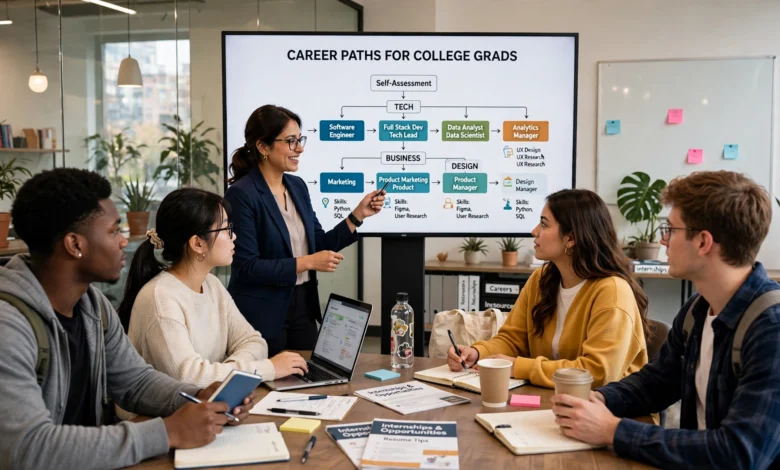
Career counseling for students is a structured process in which trained professionals help young people understand their strengths, interests, and values, then connect those traits to realistic educational and professional options. For many teenagers and university students, the question “What do you want to be?” arrives long before they have the information to answer it. Parents offer opinions, friends choose popular majors, and social media highlights only a few glamorous jobs. The result is often confusion, stress, and expensive mistakes.
A skilled counselor changes that picture. Instead of pushing a single option, career guidance gives students evidence: results from an aptitude test, honest conversations about motivation, labor market data, and a step-by-step plan. A student who once felt lost can compare fields side by side, test assumptions, and make a confident decision.
The stakes are real. Choosing the wrong degree can mean lost tuition, lost time, and years of low job satisfaction. Choosing well can shape income, health, and happiness for decades. That is why schools, colleges, and families increasingly treat career counseling for students as essential support rather than a luxury.
What Is Career Counseling for Students?
Career counseling for students is a professional support service that guides learners through self-assessment, exploration, decision-making, and planning. Unlike casual advice, it follows a method. A counselor gathers information about the student, introduces relevant options, and helps the student weigh them against personal goals and real-world demand.
Career Counseling vs. Career Guidance vs. Academic Advising
These terms overlap, but they are not identical:
- Academic advising focuses on courses, credits, and graduation requirements.
- Career guidance is a broader term for information and advice about occupations and pathways.
- Career counseling adds a personal, one-on-one element, addressing emotions, beliefs, family pressure, and self-doubt alongside practical planning.
A strong program blends all three. A student may meet an academic advisor to confirm prerequisites, then a school counselor to explore which fields suit them.


Who Provides It?
Counseling is delivered by school counselors, university career centers, licensed career coaches, and private practitioners. The American School Counselor Association publishes standards describing how school counselors support students’ academic, career, and social-emotional development, which makes it a useful reference for families judging quality.
Why Choosing a Career Is So Difficult for Students
Before looking at how counseling helps, it is worth understanding what students are up against.
Limited Self-Awareness
Most teenagers have not yet had many chances to test their abilities in real settings. A student may say they love biology when they actually enjoy one inspiring teacher. Without reflection tools, interests and talents blur together.
Information Overload
Thousands of occupations exist, and new ones appear every year. Students typically know a dozen: doctor, engineer, teacher, lawyer. Careers in data analysis, user experience design, renewable energy, or logistics planning remain invisible to them.
Family and Peer Pressure
Parents often mean well but may steer students toward familiar or high-status professions. Peer influence adds another layer. Career counseling for students gives families a neutral third party who can hear everyone and keep the focus on the student’s fit.
Fear of Making the Wrong Choice
Perfectionism and fear of failure can freeze decision-making. Counselors normalize uncertainty and show that careers are built in stages, not chosen once and locked forever.
7 Proven Ways Career Counseling Helps Students Choose the Right Career
Here are the seven main benefits, each explained in detail.
1. It Builds Honest Self-Awareness
The first job of a counselor is helping the student understand who they are. Through interviews, reflection exercises, and structured questionnaires, students identify:
- Interests: the activities that hold their attention
- Strengths and skills: what they do well, with or without effort
- Values: what matters most, such as stability, creativity, service, or independence
- Personality preferences: whether they thrive in teams, alone, in fast-paced settings, or in structured routines
This stage is the foundation of career counseling for students. Without it, even the best labor market data cannot be applied.
2. It Uses Scientific Career Assessments
A good counselor does not rely on gut feeling. Standardized career assessment tools give students an objective mirror. Common categories include:
- Interest inventories, which match preferences to occupational groups
- Aptitude tests, which measure verbal, numerical, spatial, and logical reasoning
- Personality profiles, which describe work style and communication preferences
- Values questionnaires, which rank what a student wants from work
Results are never destiny. A counselor interprets them in context, discusses surprises, and treats them as conversation starters rather than verdicts.
3. It Opens the Door to Careers Students Never Knew Existed
Exposure is one of the most underrated benefits of career guidance. Counselors introduce students to emerging and lesser-known professions, explain what daily work looks like, and show typical education routes. Resources such as the U.S. Bureau of Labor Statistics’ Occupational Outlook Handbook describe job duties, required education, pay, and projected growth for hundreds of occupations. Counselors use tools like this to ground conversations in facts.
A student who believed engineering meant only civil or mechanical may discover biomedical engineering, environmental engineering, or robotics.
4. It Aligns Education Choices with Career Goals
Many students pick subjects without checking where they lead. Career counseling for students works backward from realistic goals to subject selection, entrance requirements, and degree choices. A counselor can answer practical questions:
- Which high school subjects are required for this field?
- Is a university degree necessary, or would a diploma, apprenticeship, or certification work?
- What entrance exams or portfolios are involved?
- How long will training take, and what will it cost?
This prevents the common mistake of discovering, too late, that a desired career requires a prerequisite the student skipped.
5. It Reduces Stress and Decision Anxiety
Choosing a career can feel like a single high-pressure moment. Counselors break it into small, manageable steps. Students learn decision-making frameworks such as listing options, scoring them against personal criteria, and testing the top choices through research or shadowing.
Because counseling also includes emotional support, students can express fears without judgment. Studies and practitioner experience consistently show that students who feel supported make clearer, calmer decisions.
6. It Improves Family Communication
When parents and students disagree, conversations often stall. A counselor can host a joint session, explain assessment results, share market data, and help each side understand the other. Parents gain confidence that the plan is realistic, and students feel heard. This mediation role makes career counseling for students valuable for the whole household.
7. It Creates an Actionable Career Plan
The final deliverable is a written plan, not just a conversation. A good plan includes:
- A primary career goal and two or three backup options
- Required education and timelines
- Skills to build, such as coding, public speaking, or lab techniques
- Extracurriculars, volunteering, or internships to pursue
- Scholarship and financial aid options
- Checkpoints to review progress every term or year
A plan turns vague ambition into specific actions and gives students something to revisit as they grow.
How Career Counseling Works at Different Education Stages
The questions a 13-year-old asks differ from those of a final-year graduate. Effective career counseling for students adapts to each stage.
Middle School: Awareness and Exploration
At this age, the goal is curiosity, not commitment. Counselors run career days, interest surveys, and classroom activities that connect subjects to jobs. Students begin to see how math relates to architecture or how writing relates to marketing.
High School: Narrowing Options and Choosing Pathways
High school is where career counseling for students often has the greatest impact. Decisions about subject streams, advanced courses, vocational tracks, and college applications are made here. Counselors help students:
- Choose subject combinations that keep doors open
- Compare university programs, vocational routes, and gap-year options
- Prepare for entrance exams and applications
- Write personal statements that reflect real strengths
University and College: Skills, Internships, and Job Readiness
University students need help linking degrees to employment. Campus career centers offer resume reviews, mock interviews, networking events, and internship placement. Students who doubt their major can explore alternatives before too many credits are spent.
Graduates and Early Professionals: Transitions
Even after graduation, counseling helps with first-job decisions, further study, career changes, and relocating for work. The O*NET Resource Center offers detailed occupational profiles, skills lists, and interest-based search tools that counselors and graduates use to compare roles.
Tools and Techniques Counselors Use
Understanding the toolkit helps families judge whether a service is thorough.
Psychometric and Aptitude Testing
Reliable aptitude tests measure reasoning, problem-solving, and learning potential. Combined with interest inventories, they reveal patterns that a student may not notice alone.
One-on-One Interviews
Conversation remains the heart of counseling. Counselors ask open questions about favorite subjects, proudest achievements, and activities that make time disappear. The student’s own words often reveal more than a test score.
Job Shadowing and Informational Interviews
Seeing a profession up close can confirm or dispel assumptions. A student who dreams of being a veterinarian might spend a day at a clinic and realize they enjoy the science but dislike the emotional intensity, a discovery that saves years.
Labor Market Analysis
Counselors review salary ranges, demand trends, and regional job availability. This keeps ambition grounded in reality without crushing it. Students learn to weigh passion against practicality and look for the overlap.
Goal-Setting Frameworks
Techniques such as SMART goals (specific, measurable, achievable, relevant, time-bound) help convert dreams into milestones. A goal like “become a software developer” becomes “complete an introductory programming course this semester and build two small projects by next summer.”
Signs a Student Needs Career Counseling
Not every student asks for help directly. Watch for these signals:
- The student cannot name a single subject or activity they enjoy
- They change their mind about the future every few weeks
- They feel anxious or avoid discussing life after school
- They choose a path only to please parents or follow friends
- They are unsure which subjects, degree, or program to select
- Their grades or motivation have dropped without a clear cause
- They are already in college but regret the major
If several apply, scheduling a session is a smart move. Earlier is better, since career counseling for students is most effective before costly commitments are made.
How to Choose the Right Career Counselor
Quality varies, so families should ask careful questions.
Check Qualifications
Look for counselors with relevant degrees, certifications, or membership in recognized professional bodies. School counselors typically hold a master’s degree and state credentials, while private practitioners may hold career development certifications.
Ask About Methods
A trustworthy provider explains which assessments they use, how results are interpreted, and what the student receives afterward. Be cautious of anyone who promises a perfect match after a single test.
Look for Neutrality
A counselor should not be tied to selling a particular course, college, or overseas program. The goal of career counseling for students is the student’s best fit, not enrollment targets.
Prioritize Rapport
Students speak openly only when they feel respected. Many counselors offer a short introductory meeting. Use it to check whether your child feels comfortable.
Confirm Follow-Up Support
Career decisions evolve. Ask whether the counselor offers review sessions, support during applications, or resources for later stages.
How Students and Parents Can Prepare for a Counseling Session
Preparation makes sessions more productive.
For students:
- List subjects and activities you enjoy and those you avoid
- Note achievements, hobbies, and volunteer work
- Write down careers you are curious about, even if they seem unrealistic
- Bring recent report cards or transcripts
- Prepare questions and concerns
For parents:
- Share observations about your child’s strengths without insisting on a particular path
- Be open about financial limits and family expectations
- Listen more than you speak during joint meetings
- Agree in advance to consider options you have not thought of
Common Myths About Career Counseling
Myth 1: “A test will tell me exactly what to do.”
No assessment gives a single answer. Results suggest directions, and the counselor helps interpret them.
Myth 2: “Only students who are struggling need counseling.”
High achievers often benefit most, because they have many options and face pressure to choose the most prestigious one.
Myth 3: “It’s too early to think about careers.”
Early exploration is not about committing. It builds awareness and prevents rushed decisions later.
Myth 4: “Counselors will choose my career for me.”
Good counselors guide the process, but the student makes the decision.
Myth 5: “Once I choose, I can never change.”
Modern careers are flexible. Skills transfer, and many professionals change direction several times. Counseling teaches adaptability along with decision-making.
The Long-Term Benefits of Career Counseling for Students
The value of career counseling for students extends well past the first decision.
- Higher satisfaction: Students who choose fields matching their interests and strengths tend to stay engaged and perform better.
- Reduced dropout and course changes: Clear goals lower the chance of switching majors repeatedly, saving money and time.
- Stronger employability: Planning for skills, internships, and networking builds a competitive profile.
- Better financial decisions: Understanding costs, earnings, and funding options prevents unnecessary debt.
- Lifelong decision skills: Students learn a process they can reuse at every career turning point.
Frequently Asked Questions
At what age should a student start career counseling?
Light exploration can begin in middle school, but structured sessions are most useful from grades 9 to 12 and during the first years of university.
How many sessions are usually needed?
Many students benefit from three to six sessions covering assessment, exploration, planning, and follow-up. Needs vary.
Is online career counseling effective?
Yes, provided the counselor uses validated tools and offers real interaction. Many students find virtual sessions convenient and comfortable.
Can counseling help if I already picked a major?
Absolutely. Counselors can confirm your choice, identify related careers, or help you pivot with minimal lost time.
Conclusion
Career counseling for students replaces guesswork with a structured, supportive process that builds self-awareness, introduces real options through assessments and labor market research, aligns education with goals, eases anxiety, strengthens family communication, and ends with practical plan.
When students begin early, choose a qualified and neutral counselor, and take part openly, they gain not just a career decision but the confidence and skills to adapt as their interests, the job market, and their lives change.