How to Effectively Integrate Educational Technology into Modern Classrooms
Integrate educational technology into modern classrooms with proven strategies, tools, and best practices that boost student engagement and improve learning outcomes.
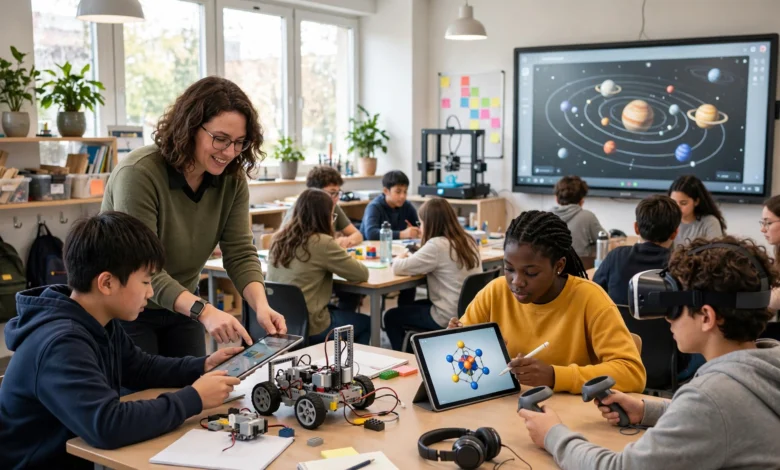
Integrating educational technology into modern classrooms is no longer something schools can afford to treat as optional. We are past the point where a projector on the wall counts as “going digital.” Today, students are arriving in classrooms already fluent in smartphones, apps, and on-demand content. The question for educators is not whether to use technology but how to use it in a way that actually improves learning rather than just adding noise.
The challenge is real. Many teachers feel pressure to adopt new tools without getting the support, training, or time they need to do it well. Some schools rush into buying tablets or interactive whiteboards and then wonder why test scores have not moved. The answer is almost always the same: the tool was introduced, but the strategy was not.
This article breaks down what effective edtech integration actually looks like in practice. We cover the frameworks that experienced educators use, the tools worth your attention, the mistakes that slow everything down, and how to build a classroom environment where technology supports learning instead of distracting from it. Whether you are a first-year teacher trying to figure out where to start or a department head redesigning your school’s digital strategy, what follows gives you a clear, practical roadmap.
Why Integrating Educational Technology into Modern Classrooms Matters
Before getting into tactics, it helps to understand what the research actually says about educational technology and student outcomes.
When done right, technology integration in education produces measurable benefits. Students who learn in tech-enhanced environments tend to show stronger engagement, better retention of complex material, and improved collaboration skills. A report from the U.S. Department of Education’s 2024 National Educational Technology Plan highlighted that technology, when aligned with strong pedagogy, helps close achievement gaps and gives students access to personalized learning experiences that traditional classrooms simply cannot deliver at scale.
According to the Department for Education, 64% of schools have introduced, upgraded, or expanded their technology use, and 80% of schools are now embracing a balanced approach that combines innovative digital tools with established instructional methods.
That balance is the key phrase. Technology is not a replacement for good teaching. It is a force multiplier when the teaching is already solid.
The Shift from “Using Tech” to “Integrating Tech”
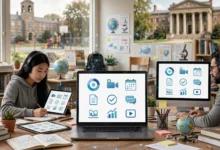
There is a meaningful difference between using technology and integrating it. Using technology means occasionally showing a YouTube video or having students type up an essay. Integrating it means embedding digital tools into the structure of how learning is designed, delivered, and assessed — consistently and intentionally.
Effective technology integration in education involves seamlessly incorporating digital tools and resources into teaching methods to improve student engagement and achievement, and it demands a thoughtful approach that aligns with curriculum goals and pedagogical strategies.
This distinction matters because it changes how you evaluate success. The question is not “did we use technology today?” It is “did technology help students learn something better today than they would have without it?”
Start with a Clear Framework for Technology Integration
One of the most reliable tools educators have for thinking about technology integration is the SAMR model — Substitution, Augmentation, Modification, and Redefinition. It was developed by Dr. Ruben Puentedura and gives teachers a practical way to assess how meaningfully they are using tech in their lessons.
- Substitution: Technology does the same job a non-tech tool would do (e.g., typing instead of handwriting).
- Augmentation: Technology does the same task but with some functional improvement (e.g., using spell-check and formatting tools while typing).
- Modification: Technology allows for significant task redesign (e.g., students collaborating on a shared Google Doc in real time with teacher feedback built in).
- Redefinition: Technology enables tasks that were previously impossible (e.g., a class in Pakistan doing a live collaborative project with a class in Finland).
Most schools spend the majority of their time at the substitution and augmentation levels. The real gains in student learning outcomes come when educators push into modification and redefinition. That is where technology stops being a fancier pencil and starts being a genuinely different kind of learning experience.
The TPACK Framework: Why Teachers Need More Than Just Tech Skills
Another framework worth knowing is TPACK — Technological Pedagogical Content Knowledge. It makes a simple but important argument: knowing how to use a tool is not enough. Teachers need to understand how technology interacts with their specific subject matter and with their teaching methods.
A math teacher who knows how Desmos works but does not understand how to use it to teach conceptual understanding of functions is not getting full value out of the tool. TPACK pushes educators to develop knowledge across all three areas at once — the technology, the pedagogy, and the content. Schools that build professional development around TPACK tend to see stronger, more sustainable edtech adoption than those that just run one-day software training sessions.
7 Proven Strategies to Effectively Integrate Educational Technology
1. Align Technology to Learning Goals First
The single biggest mistake in classroom technology integration is starting with the tool. A school gets excited about virtual reality headsets or a new learning management system and then tries to figure out where to use them. This approach almost always leads to wasted resources and frustrated teachers.
Start from the other direction. Identify a specific learning goal — say, students need to understand the water cycle — and then ask what technology, if any, would help them reach it better than existing approaches. Sometimes the answer is a simulation tool. Sometimes it is a short video followed by a class discussion. Sometimes it is no technology at all.
Technology integrations succeed only when they are intuitive and align with the curriculum, and the right tools must reduce complexity for teachers rather than add to it.
2. Choose the Right Digital Tools for Your Classroom
The edtech market is enormous. There are thousands of apps, platforms, and tools competing for classroom attention. Sorting through them is one of the most time-consuming parts of technology integration, which is why having a short list of trusted categories helps.
Learning Management Systems (LMS) are the backbone of most modern digital classrooms. Platforms like Google Classroom, Canvas, Schoology, and Moodle give teachers a central place to post assignments, communicate with students, organize resources, and track progress. These platforms provide a centralized space that streamlines the management of assignments, grading, and communication, and also support collaborative projects that allow students to work together regardless of location.
Formative assessment tools like Kahoot, Quizlet, Nearpod, and Formative let teachers check understanding in real time without waiting for a test. This is particularly valuable because it allows teachers to adjust their instruction during a lesson rather than discovering two weeks later that the class missed a concept.
Collaboration platforms like Microsoft Teams, Padlet, and Jamboard support peer-to-peer learning and group work. These tools are especially useful for project-based learning, where students need to share ideas, give feedback, and build on each other’s work.
AI-powered tutoring and adaptive learning tools like Khan Academy, DreamBox, and newer AI-driven platforms adjust to each student’s current level and pace. Artificial intelligence and machine learning are now being integrated into educational platforms, providing adaptive learning experiences tailored to individual student needs.
3. Invest Seriously in Teacher Professional Development
This is the strategy that gets skipped most often and causes the most damage. Schools buy technology and run a half-day training session before the school year starts. Teachers leave feeling overwhelmed, the tools go underused, and administrators wonder why adoption rates are low.
Even the best educational technology falls short without confident teachers, and ongoing professional development and IT support are essential for sustainable adoption — institutions that invest in training create empowered educators capable of leading technology-driven classrooms.
Effective teacher professional development for technology integration has a few defining characteristics:
- It is ongoing, not a one-time event.
- It is practical and tied to actual classroom scenarios, not abstract software demos.
- It includes time for teachers to practice with the tools before using them with students.
- It builds in peer coaching and collaboration so teachers can learn from each other.
- It is differentiated based on each teacher’s current comfort level with technology.
Peer-led teacher communities are emerging as valuable spaces for sharing best practices and learning collaboratively about EdTech platforms and developing tech-enhanced lessons.
Schools that treat professional development as an investment rather than a budget line to cut tend to see dramatically better outcomes from their technology spending.
4. Use Blended Learning to Combine the Best of Both Worlds
Blended learning is one of the most effective models for integrating technology without abandoning what works about traditional instruction. In a blended model, students rotate between direct teacher instruction, collaborative small-group work, and independent online learning — often within the same class period.
The “station rotation” model is a popular version of this. A teacher might divide the class into three groups: one works with the teacher on a new concept, one practices with an adaptive digital learning tool, and one collaborates on a problem-solving task. Each group rotates every 20 minutes.
This approach works because it puts technology in a supporting role rather than a leading one. The teacher is still the most important person in the room. Technology handles practice, feedback, and differentiation while the teacher focuses on instruction and relationship-building.
Modern teaching practices such as blended learning, project-based learning, and inquiry-based learning engage students more deeply, foster critical thinking, and allow students to practice collaboration skills — and educational technology helps power all three.
5. Address the Digital Equity Gap Proactively
Digital equity is not a side issue. It is central to whether technology integration actually works for all students or only some of them.
Common challenges in classroom technology integration include limited funding, inadequate internet infrastructure, insufficient teacher training, and equity issues — and schools that tackle these proactively through grants, partnerships, infrastructure advocacy, and device-lending programs tend to see more equitable outcomes.
In practical terms, this means:
- Conducting a needs assessment before rolling out new technology to understand which students lack reliable internet or devices at home.
- Setting up device lending programs so that students without home access can still complete digital assignments.
- Designing technology-integrated lessons with offline fallback options so that connectivity problems do not leave students behind.
- Advocating for expanded broadband access in underserved communities as part of a broader school technology strategy.
Technology that only works for students with good home internet and the latest devices is not truly integrated. It creates a two-tier classroom, which is worse than no technology at all.
6. Teach Students Digital Literacy Alongside Content
One of the least discussed but most important aspects of educational technology integration is that it creates a responsibility to teach students how to use technology wisely, critically, and safely — not just efficiently.
Digital literacy includes skills like evaluating online sources, understanding how algorithms curate information, protecting personal data, and communicating professionally in digital spaces. These are not subjects separate from math or history. They should be woven into how technology is used across all subjects.
When a student is researching a topic for a history class using online sources, that is also an opportunity to teach source credibility and media literacy. When students collaborate on a shared document, that is an opportunity to teach digital communication norms. Today’s students need more than subject knowledge — they must develop digital literacy, problem-solving skills, and collaboration strategies to thrive in tomorrow’s workforce.
The International Society for Technology in Education (ISTE) has published widely used standards for student digital literacy that many schools use as a foundation for this work.
7. Measure Impact and Adjust Continuously
Good technology integration is not a one-time implementation. It is an ongoing cycle of trying something, measuring whether it is working, and adjusting accordingly.
This does not require elaborate research studies. It can be as simple as:
- Comparing student performance on a concept taught with a new digital tool versus the same concept taught the previous year without it.
- Collecting student feedback about which tools they find most and least useful.
- Analyzing engagement data from your LMS — which assignments get completed on time, which ones students skip.
- Having teachers share what is and is not working in weekly team meetings.
Monitoring the quality of use, tracking classroom integration progress, and including coaching cycles that redesign tasks for higher-order learning are essential practices for schools that want to ensure technology is improving rather than just accompanying instruction.
Common Tools Worth Using in Your Classroom Right Now
Here is a practical breakdown of classroom technology tools organized by function:
For Lesson Delivery and Engagement:
- Nearpod — Interactive presentations with built-in formative checks
- Pear Deck — Google Slides add-on that makes slides interactive
- Flip (formerly Flipgrid) — Video discussion tool great for student voice and expression
For Collaboration:
- Google Workspace for Education — Docs, Slides, and Sheets with real-time collaboration
- Microsoft Teams for Education — Strong option for schools already using Microsoft products
- Padlet — Visual, flexible space for brainstorming and idea-sharing
For Personalized Learning and Practice:
- Khan Academy — Free, comprehensive, and adaptive across subjects
- DreamBox — Strong math-specific adaptive learning tool
- Duolingo for Schools — Language learning with gamification and teacher dashboards
For Assessment:
- Kahoot — Game-based review and assessment
- Quizizz — Similar to Kahoot but students move at their own pace
- Google Forms — Simple, flexible, and integrates with Google Classroom
For Creative Projects:
- Canva for Education — Design tool that students actually enjoy using
- Book Creator — Multi-media book creation for all ages
- Scratch — MIT’s platform for learning coding through creative projects
Challenges That Get in the Way of Effective Technology Integration
Even the best-planned edtech strategy runs into real-world obstacles. Here are the most common ones and how schools address them:
Insufficient Training and Support
Teachers who feel unsupported with new technology do one of two things: they avoid using it, or they use it badly. Both outcomes waste resources. The fix is sustained, job-embedded professional learning rather than isolated training events.
Screen Time and Student Attention
More screens does not automatically mean more learning. Teachers must strike a balance, integrating technology in a way that enhances learning without replacing traditional, hands-on experiences, and should be mindful of screen fatigue in students. Practical strategies include time-boxing screen use, alternating digital and non-digital activities, and making sure students are actively doing something with technology rather than passively consuming it.
Privacy and Data Security
When schools use digital platforms, they are entrusting student data to third-party companies. This requires careful vetting of any tool before adoption. Check whether the tool complies with COPPA (for students under 13), FERPA, and your district’s data privacy policies. Many districts now maintain approved tool lists that have been vetted by legal and IT teams.
The Equity Gap in Access
Already addressed above, but worth repeating: any technology strategy that does not account for students without reliable home internet is incomplete. The pandemic made this clearer than ever, and many schools are still working through the implications.
The Role of AI in Modern Classroom Technology Integration
Artificial intelligence in education deserves its own conversation because the pace of change here is faster than in almost any other area of edtech.
AI tools are now being used for:
- Personalized learning paths that adjust content difficulty based on student performance in real time.
- Automated feedback on writing and assignments that gives students faster, more specific input than teachers can deliver on their own.
- Lesson planning support that helps teachers generate differentiated materials, assessments, and discussion questions.
- Early warning systems that flag students at risk of falling behind based on engagement and performance patterns.
Other apps harness the power of artificial intelligence for lesson planning and content creation, immerse students in virtual reality, and enhance learning with AI-driven tutors.
The caution here is important: AI tools need to be adopted thoughtfully. Questions about academic integrity, data privacy, algorithmic bias, and over-reliance on AI-generated content all need to be part of the conversation before schools roll out new AI tools at scale.
According to UNESCO’s guidelines on AI in education, effective AI integration in schools requires clear ethical frameworks, teacher capacity building, and policies that keep human educators at the center of learning decisions.
Building a School-Wide Culture That Supports Educational Technology
Individual teachers integrating technology on their own is valuable, but the biggest gains come when the whole school is aligned. Here is what a supportive school culture for edtech integration looks like:
- Leadership that models and champions technology use, not just mandates it.
- Dedicated time for teachers to plan, experiment, and share what they are learning about digital tools.
- A clear, school-wide technology vision that connects to broader educational goals rather than just listing tools everyone is supposed to use.
- Student voice in the process — students know which tools work for them and which ones feel like busywork.
- Transparent communication with parents about how and why technology is being used, including what student data is being collected and how it is protected.
Schools that have all of these pieces in place tend to report higher teacher satisfaction with technology, higher student engagement, and better long-term outcomes from their technology investments.
Conclusion
Effectively integrating educational technology into modern classrooms comes down to one core principle: technology should serve learning, not the other way around. The schools getting the best results from edtech are not necessarily the ones with the biggest budgets or the newest devices. They are the ones that start with clear learning goals, choose tools that align with those goals, invest seriously in teacher development, build for equity from the start, and continuously measure and adjust what they are doing. From the SAMR model and TPACK framework to blended learning strategies, AI-powered personalization, and digital literacy instruction, the tools and approaches covered in this article give educators a practical foundation to build on — because when technology is integrated thoughtfully and consistently, classrooms become more engaging, more equitable, and more effective for every student in the room.