The Role of Virtual Reality in Education
The Role of Virtual Reality in Education is very cruicial. It is one of the most exciting technologies changing modern education.
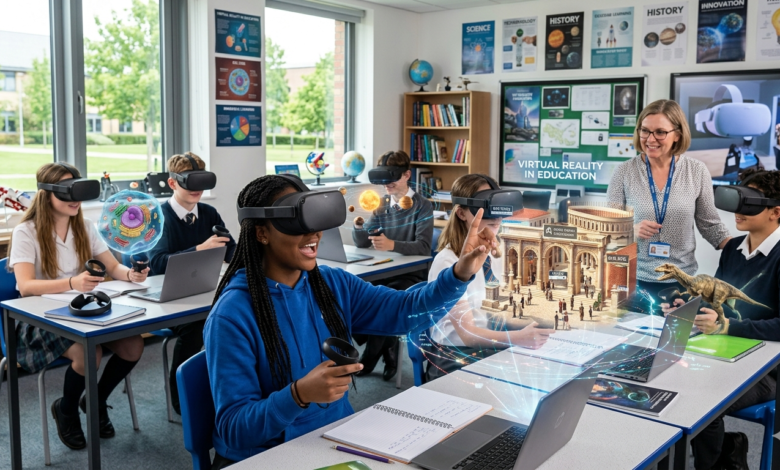
Virtual Reality (VR) is one of the most exciting technologies changing modern education. It creates a computer-generated environment where students can interact with objects and experiences as if they were real. Instead of only reading books or listening to lectures, learners can explore, practice, and experience things in a virtual world. According to educational research, VR is becoming an important tool because it offers immersive and interactive learning experiences that improve understanding and engagement.
This article explains in simple and easy words the role of virtual reality in education, including its uses, benefits, challenges, and future importance.
Introduction to Virtual Reality in Education
Virtual Reality is a technology that uses devices like headsets and computers to create a 3D virtual environment. In education, VR allows students to enter a digital world where they can see, hear, and interact with learning content.
Research shows that VR provides immersive learning, meaning students feel like they are inside the lesson instead of just watching it. This helps them understand concepts better and makes learning more interesting.
For example, students can:
- Visit historical places
- Explore the human body
- Perform science experiments
- Travel to space
These experiences are often impossible in real classrooms.
How Virtual Reality Works in Education
Virtual Reality works by combining computer graphics, sensors, and interactive tools. Students wear VR headsets and use controllers to move and interact in a virtual space.
According to research, VR allows learners to explore environments and situations that are difficult or impossible to access in real life, such as outer space or dangerous locations.
Teachers can design virtual lessons where students:
- Observe objects in 3D
- Practice skills safely
- Interact with virtual models
This makes learning more active instead of passive.
Importance of Virtual Reality in Modern Education
Virtual Reality plays an important role in improving the quality of education. It changes traditional teaching methods by making learning more engaging and practical.
Studies show that VR supports hands-on learning and improves understanding, especially in subjects that require visualization and practice.
It is especially useful in:
- Science and technology
- Medical education
- Engineering training
- History and geography
Because of this, many schools and universities are starting to use VR tools.
Benefits of Virtual Reality in Education
1. Immersive Learning Experience
VR creates a realistic environment where students feel part of the lesson. This increases interest and helps them focus better. Research shows that immersive environments improve learning experiences and engagement.
2. Better Understanding of Complex Concepts
Some topics are difficult to understand through books alone. VR helps students visualize and interact with concepts, making them easier to learn. For example, students can see 3D models of molecules or planets.
3. Safe Practice Environment
VR allows students to practice skills in a safe environment. For example, medical students can perform virtual surgeries without risk. This improves confidence and practical knowledge.
4. Increased Student Engagement
Interactive VR activities keep students interested in learning. Research shows that VR can improve motivation and learning outcomes by making lessons more enjoyable.
5. Virtual Field Trips
Students can visit places like museums, historical sites, or even other planets without leaving the classroom. This makes learning more exciting and meaningful.
6. Support for Different Learning Styles
VR supports visual, auditory, and hands-on learners. This makes education more inclusive and effective for different types of students.
7. Skill Development
VR helps students develop problem-solving, critical thinking, and technical skills. It also prepares them for real-world situations and future careers.
Challenges of Virtual Reality in Education
1. High Cost of Equipment
VR devices such as headsets and software can be expensive. Many schools, especially in developing countries, cannot afford this technology.
2. Technical Issues
VR requires good hardware, software, and internet connection. Technical problems can interrupt learning and make it difficult to use effectively.
3. Lack of Teacher Training
Teachers need proper training to use VR tools. Without training, they may not be able to use the technology effectively in classrooms.
4. Limited Content Availability
There is still limited educational content available for VR. Not all subjects have high-quality virtual learning materials.
5. Health Concerns
Using VR for long periods may cause eye strain, headaches, or discomfort. Students need to use it carefully and for limited time.
6. Accessibility Issues
Not all students have equal access to VR technology. This creates a digital divide between students who can use it and those who cannot.
Applications of Virtual Reality in Education
Virtual Reality is used in many areas of education:
1. Medical Education
Students practice surgeries and learn human anatomy through virtual simulations.
2. Science and Engineering
VR allows students to perform experiments and understand complex systems safely.
3. History and Geography
Students can explore historical events and places in a virtual environment.4. Special Education
VR helps students with special needs by providing personalized learning experiences.
Future of Virtual Reality in Education
The future of VR in education looks very promising. As technology becomes more affordable and advanced, more schools will adopt it.
Research shows that VR is expected to grow in both schools and universities, improving teaching methods and learning outcomes.
In the future:
- VR classrooms may become common
- Students may attend virtual schools
- Learning will become more interactive and personalized
Conclusion
Virtual Reality is playing a powerful role in modern education. It is changing the way students learn by making education more interactive, engaging, and practical. It helps students understand complex concepts, practice skills safely, and explore new environments.
However, challenges such as high cost, technical issues, and lack of access must be solved. Research clearly shows that VR is not a replacement for traditional education but a strong support tool that improves learning outcomes.
In simple words, Virtual Reality is making education more exciting, effective, and future-ready.
Short Answer Questions (30–45 words each)
1. What is virtual reality in education?
Virtual reality in education is the use of computer technology to create a simulated environment where students can interact with learning content. It allows learners to experience lessons in a more engaging and realistic way.
2. How does virtual reality improve learning?
Virtual reality improves learning by providing immersive and interactive experiences. Students can explore concepts in a 3D environment, which helps them understand difficult topics better and increases their interest and attention in lessons.
3. What is one major benefit of virtual reality in education?
One major benefit of virtual reality is that it provides a safe environment for practice. Students can perform experiments or training activities without real risks, which helps them gain confidence and practical skills.
4. How does VR help in understanding complex subjects?
VR helps students visualize complex ideas through 3D models and simulations. This makes difficult subjects like science and mathematics easier to understand because students can see and interact with concepts instead of just reading about them.
5. What are virtual field trips?
Virtual field trips allow students to visit places like museums, historical sites, or planets through VR technology. These trips provide real-like experiences and make learning more interesting and informative without physical travel.
6. What is one challenge of using VR in education?
One major challenge of VR is its high cost. The equipment and software required for virtual reality are expensive, making it difficult for many schools and institutions to use this technology widely.
7. Why do teachers need training for VR?
Teachers need training to use VR tools effectively in classrooms. Without proper knowledge, they may not be able to create useful lessons or guide students properly in virtual learning environments.
8. How does VR increase student engagement?
VR increases engagement by making lessons interactive and exciting. Students become more involved because they can explore and experience content, which improves their motivation and interest in learning.
9. What health problems can VR cause?
Using VR for long periods may cause eye strain, headaches, and discomfort. Students need to use VR carefully and take breaks to avoid health problems related to extended screen time.
10. What is the future of virtual reality in education?
The future of VR in education is promising as technology becomes more advanced and affordable. It is expected to play a major role in classrooms, making learning more interactive, accessible, and effective for students worldwide.