Student Falling Behind? 9 Proven Ways to Help Without Shaming
Help a student falling behind without shame. Use nine practical, respectful strategies that rebuild confidence, close gaps, and bring back motivation.
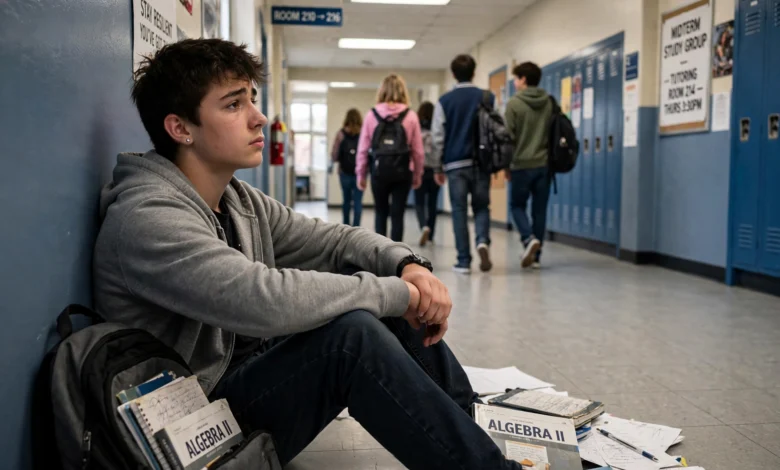
A student falling behind rarely announces it. The signs arrive quietly: a homework folder that stays closed, a shrug when grades come up, a sudden interest in anything except school. Adults notice the gap in marks, but the child feels something heavier, the suspicion that everyone else understands something they missed. That feeling is shame, and it is the biggest obstacle to catching up. Shame tells a learner to hide, avoid, and stop trying, which widens the very gap everyone wants to close.
The good news is that a struggling learner can recover, and the adult’s response matters more than most people assume. When you help a student who is behind with patience, specificity, and respect, the learner starts to treat the problem as something solvable rather than a verdict on their worth. This guide walks parents, teachers, tutors, and mentors through nine practical ways to support a learner who has slipped, from spotting early warning signs to rebuilding routines and celebrating small wins. Each section explains why the approach works, what to say, and what to avoid, so you can act with confidence tomorrow morning. Whether the gap involves a single subject or an entire semester, the principles stay the same: protect dignity first, diagnose carefully, shrink the task, and keep the relationship intact.
Why Shame Pushes a Student Falling Behind Even Further
Before choosing a strategy, it helps to understand what is happening inside a learner who is behind. Falling behind is not only an academic event. It is an emotional one, and the emotional layer often drives the academic outcome.
The shame-avoidance cycle
Most struggling students follow a predictable loop. They feel unsure about a topic, so they avoid the work. Avoidance produces missing assignments and weak test results. Poor results trigger criticism, comparison, or lectures, and the student feels worse about their ability. Feeling worse makes avoidance more attractive. Every turn of the loop adds more missed content and more embarrassment.
Public or personal shaming accelerates this cycle. Comments such as “Why can’t you just try harder?” or “Your cousin never had this problem” do not motivate. They teach the child that mistakes are dangerous and that asking for help invites judgment.
What safety does for learning
A calm learner can think, ask questions, and take risks. An anxious or humiliated learner spends mental energy on self-protection instead of the lesson. Education reporting has made the same point: teachers are encouraged to build a classroom where students feel comfortable asking for help and making mistakes without fear of mockery, as described in Education Week’s coverage of supporting struggling readers who feel ashamed. Although that report centers on reading, the principle applies to every subject: psychological safety comes first, skill-building second.
Early Warning Signs of a Student Falling Behind
Students rarely fall behind overnight. Catching the pattern early keeps the gap small and the conversation gentle. Look for clusters of signs rather than a single bad test.


Academic signals
- Missing or late assignments that were once handed in on time
- Grades that drop even though the student reports studying
- Difficulty finishing homework, or homework that takes far longer than expected
- Weak performance on cumulative work, which suggests missing foundations
- Reading, writing, or math errors that repeat in the same way
Emotional and behavioral signals
- Increased anxiety, irritability, or avoidance around schoolwork
- Vague complaints such as stomachaches before school
- Withdrawal from friends, clubs, or sports they used to enjoy
- Jokes that put themselves down, such as “I’m just stupid at math”
- Sudden perfectionism, where the student refuses to start unless the result will be flawless
No single sign proves a problem. Together, though, they tell you a student who is falling behind needs support, not punishment.
9 Ways to Help a Student Falling Behind Without Shame
The following strategies work best when combined. You do not need to start at number one and finish at nine; choose the two or three that fit your situation, then add others as trust grows.
1. Start With a Private, Calm Conversation
Where and how you raise the topic shapes everything that follows. Choose a private moment when neither of you is rushed or frustrated. Avoid starting right after a bad report card, in front of siblings, or in the hallway between classes.
Open with an observation rather than an accusation. For example: “I’ve noticed school has felt harder lately. I’m on your side, and I’d like to help us figure it out.” That sentence names the problem without assigning blame, and it signals an alliance. Then stop talking and listen. Teachers and parents often rush to fix before the student has been heard, which makes the child feel managed rather than understood.
2. Find the Root Cause Before Offering Solutions
A student falling behind is a symptom, not a diagnosis. The cause decides the cure, so investigate before prescribing. Common causes include:
- Skill gaps: an earlier concept was never fully learned, and new lessons pile on top of it.
- Executive function difficulties: trouble with planning, time management, organization, or starting tasks.
- Learning differences: dyslexia, ADHD, language-processing issues, or other needs that may be undiagnosed.
- Emotional factors: anxiety, low mood, grief, bullying, or family stress.
- Practical barriers: missed school, poor sleep, hunger, a noisy home, or limited internet access.
Ask open questions such as “Which part feels most confusing?” or “What happens when you sit down to start?” The answers often reveal that the problem is narrower than it looked. Reputable resources such as Understood.org offer guidance on recognizing learning and thinking differences, which can help families decide whether an evaluation is worth requesting.
3. Replace Judgment With Curiosity
Tone is half the message. Compare these two reactions to a failed quiz:
- Judgment: “How did you fail this? You obviously didn’t study.”
- Curiosity: “Walk me through how you prepared. Where did the questions start to feel unfamiliar?”
The second approach treats the learner as a capable person with useful information. It also teaches reflection, a habit that supports long-term achievement. Practice phrases such as “Help me understand,” “What would make this easier?” and “What have you already tried?” If you catch yourself lecturing, pause and return to a question.
4. Shrink the Goal Into Small, Winnable Steps
A mountain of missing work paralyzes a discouraged learner. Breaking it down restores a sense of control and creates early wins. Try this process:
- List every missing task or weak topic together.
- Sort them by urgency and by importance for upcoming grades.
- Pick one small task that can be finished in 20 to 30 minutes.
- Complete it, then mark it done where the student can see it.
- Repeat the next day, adding one more task only when the first feels manageable.
Progress that is visible builds momentum. A simple checklist on a whiteboard or notebook works better than a long speech about catching up. Remember that the goal is not to erase the entire backlog in a weekend; the goal is to show the student that forward motion is possible.
5. Teach the Missing Skills, Not Just the Missing Assignments
Completing overdue worksheets does not fix a weak foundation. If a student cannot manipulate fractions, handing over more algebra will not help. Identify the earliest concept that is shaky and rebuild from there.
Some education specialists recommend acceleration over endless review, which means introducing new material alongside targeted support so students do not feel punished by a remedial track. Whatever model you use, keep the explanation short, use examples, and ask the student to teach the idea back to you. Teaching back reveals gaps quickly and gives the learner a role of competence rather than helplessness.
6. Build Simple Routines and Support Executive Function
Many learners who fall behind are not lacking intelligence; they lack systems. Routines reduce the daily decisions that drain willpower. Helpful structures include:
- A consistent homework time and a quiet, clutter-free workspace
- A single planner or digital calendar where every deadline lives
- A weekly planning session, such as a Sunday check-in, to review what is due
- A start ritual, such as filling a water bottle and opening the first assignment, to make beginning easier
- Phone-free study blocks with short breaks built in
Parents can act as coaches rather than managers. Tutoring organizations such as K12 suggest short weekly check-ins that ask what went well, what felt hard, and one goal for the week, as outlined in their guide to strategies to help high school students get back on track. Keeping these conversations brief prevents them from feeling like interrogations.
7. Praise Effort, Strategy, and Progress
Generous praise is not the same as helpful praise. Telling a discouraged student “You’re so smart” can backfire because it implies that struggle means they are not. Instead, point to specific actions: “You stayed with that problem even when it got tricky,” or “Your essay outline is much clearer than last week.”
This approach supports a growth mindset, the belief that abilities improve with effort and good strategies. Remind the learner of earlier challenges they overcame, in or out of school. Learning to ride a bike, mastering a video game level, or memorizing a song all involve the same cycle of confusion, practice, and improvement. Evidence that they have succeeded before makes today’s struggle feel temporary.
8. Partner With Teachers and School Staff Early
Teachers usually notice a student falling behind before families do, but they cannot solve the problem alone. Contact the teacher with a collaborative message, such as “I’d like to understand where the gaps are and how we can support at home.” Ask:
- Which specific skills or assignments matter most right now?
- Is there a chance to resubmit work or earn partial credit?
- Are there office hours, tutoring programs, or small-group sessions available?
- Would the school counselor or learning-support team be appropriate to involve?
Encourage the student to join these conversations when possible. Learning to speak up, whether by emailing a teacher or asking for clarification, is a life skill. Offer scripts: “I’m behind on chapter four, and I have a plan to finish it by Friday. Could you look at my first draft?” A student who arrives with a plan is far more likely to receive flexibility, and they feel like an agent in their own recovery rather than a case to be handled.
Teachers can also protect dignity inside the classroom. Never announce grades aloud, post public lists of missing work, or compare learners. Quiet check-ins at the desk, private notes, and flexible deadlines send a message of belief rather than exposure.
9. Consider Tutoring and Professional Support
Sometimes families and teachers have done their best, and a student still needs more targeted help. One-on-one tutoring can fill specific gaps, reinforce confidence, and provide a judgment-free relationship outside the classroom. Choose a tutor who diagnoses before teaching, communicates progress, and treats mistakes as normal.
Also consider professional evaluation when you see persistent signs such as reading difficulties that do not improve, extreme distractibility, or ongoing anxiety. A pediatrician, school psychologist, or licensed counselor can recommend accommodations, an individualized plan, or therapy. Requesting help is not an admission of failure; it is a way of removing barriers that effort alone cannot overcome.
Words That Help vs. Words That Hurt
Language can protect or damage a learner’s sense of self. Use this quick reference when you talk with a student who is falling behind.
Try saying:
- “It sounds like this has been really hard. Thanks for telling me.”
- “We’ll work on this together, one step at a time.”
- “Mistakes show us where to focus next.”
- “I believe you can learn this, and I’ll help you find a way.”
- “What support would be most useful this week?”
Avoid saying:
- “You’re just lazy.”
- “Why can’t you be more like your sister?”
- “If you don’t fix this, you’ll never get anywhere.”
- “I’m so disappointed in you.”
- “This is easy; anyone can do it.”
The difference lies in whether the sentence attacks the person or addresses the problem. Keep the focus on behaviors, strategies, and next steps, and keep the relationship out of the line of fire.
Common Mistakes Adults Make When a Student Is Behind
Even well-meaning adults slip into habits that increase pressure. Watch for these patterns:
- Waiting too long. Hoping the problem will fix itself lets gaps widen. Early, gentle action is easier than late, urgent action.
- Taking over. Doing the work for the student, or hovering constantly, builds dependence and undermines confidence.
- Punishing with removal. Taking away every enjoyable activity, including sports or hobbies, strips away the very things that give a learner energy and identity.
- Overloading the schedule. Piling on extra classes, tutoring, and homework time can lead to burnout. Balance support with rest.
- Ignoring emotional health. Focusing only on grades misses anxiety, sleep problems, or sadness that may sit underneath.
- Comparing. Measuring a learner against siblings or classmates communicates that they are lacking, not growing.
If you recognize yourself in this list, take heart. Adjusting your approach at any point can shift the relationship, and most students respond quickly to a sincere change in tone.
How to Keep Motivation Alive Over the Long Term
Catching up is a marathon, not a sprint. Sustained motivation depends on a few steady habits:
- Connect work to something the student cares about. Link math to game design, writing to a favorite sport, or science to a hobby.
- Celebrate small milestones. A finished chapter, an improved quiz score, or a week of on-time work deserves acknowledgment, even if only a high-five or a favorite meal.
- Offer choice. Let the learner choose the order of tasks or the study location so they feel ownership.
- Protect sleep, nutrition, and movement. Tired, hungry, or sedentary brains learn poorly.
- Review progress together. Every few weeks, look at what has improved and what still needs attention, then adjust the plan.
Expect setbacks. A bad test after two good weeks does not erase progress. Treat dips as information and return to the plan without drama.
Supporting Different Age Groups
The principles stay constant, but the delivery changes with age.
Elementary students
Younger children need concrete, playful support. Use games, short sessions, and plenty of encouragement. Watch for early reading or math difficulties and ask the school about screening, since early intervention is typically more effective than later remediation.
Middle school students
Middle school is a transition where organization demands rise sharply. Focus on planners, backpack systems, and gradual independence. Keep communication open with several teachers, because a student can be failing one class and thriving in another.
High school students
Teenagers want autonomy and respect. Invite them to set goals, make choices, and take the lead in conversations with teachers. Discuss long-term consequences honestly, such as graduation requirements, without using fear as a weapon. Emotional check-ins matter at this stage, since stress and social pressure can be considerable.
College students
Adult learners often hide struggles out of embarrassment. Encourage them to use office hours, tutoring centers, and academic advising early. Reaching out in the first weeks of difficulty is far easier than rescuing a semester at the end.
When to Seek Extra Help Quickly
Most cases improve with steady support, but some warrant faster action. Contact a counselor, doctor, or school leader promptly if you notice:
- Talk of hopelessness, self-harm, or not wanting to go on
- Sudden, dramatic changes in sleep, appetite, or mood
- Refusal to attend school for an extended period
- Signs of bullying, abuse, or unsafe conditions
- Long-term reading or attention difficulties that persist despite support
In these situations, academic recovery comes second to safety and well-being. A supportive adult and a qualified professional can make a major difference.
Conclusion
Helping a student falling behind is less about pushing harder and more about removing fear so learning can restart. Shame feeds avoidance and widens the gap, while privacy, curiosity, and respect create the conditions for recovery. Notice early warning signs, open the conversation calmly, search for the true root cause, and break the backlog into small, winnable steps. Teach missing skills rather than only collecting overdue work, build routines that support executive function, and praise effort and strategy instead of fixed ability.
Work with teachers as partners, avoid comparison and punishment, and bring in tutoring or professional evaluation when needed. Above all, keep the relationship strong, because a learner who feels believed in will keep trying long after the lecture has been forgotten, and steady, dignified support turns falling behind into a temporary chapter rather than a lasting label.