The Pros and Cons of Year-Round Schooling
Year-round schooling changes how the academic calendar works. Here's a clear, research-based look at its real pros and cons.
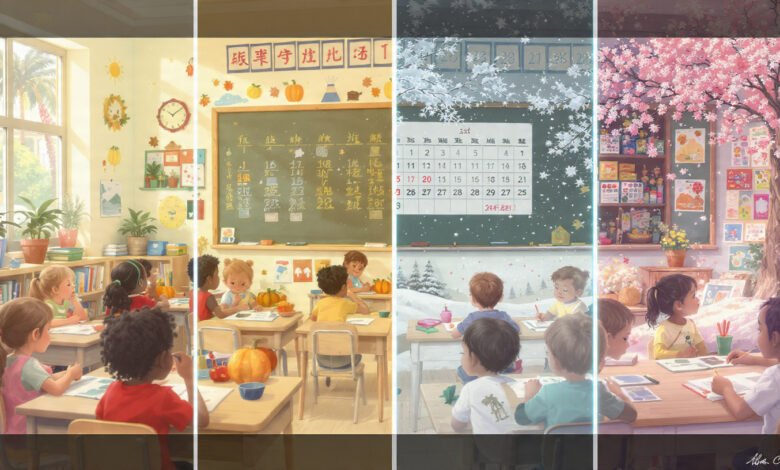
Year-round schooling has moved from a niche idea to a real conversation happening in school board meetings across the country. Parents hear the term and often picture kids trudging into class in the middle of July, but that’s not quite what it means. Most year-round school calendars still deliver the same 180 instructional days required by law. What changes is how those days are spread out. Instead of one long summer break, students get several shorter breaks scattered throughout the year.
The idea isn’t new. Some districts have run modified calendars since the 1970s, mostly to deal with overcrowding. But interest has picked up again, partly because of concerns about “summer learning loss” and partly because schools are still adjusting to the disruptions of the pandemic years. Districts in Texas, South Carolina, and California have all piloted or expanded balanced calendars in the past few years.
So is year-round schooling actually better for kids? The honest answer is: it depends. It depends on the child, the family’s schedule, the district’s resources, and even the specific calendar model a school chooses. This article walks through the real advantages and drawbacks of year-round education, based on research from education experts and recent reporting, so you can weigh the tradeoffs for your own family or community.
What Year-Round Schooling Actually Means
Before getting into the pros and cons, it helps to clear up a common misunderstanding. Year-round schooling does not mean more days in class. Students in a year-round program typically attend school for the same number of days as their peers on a traditional calendar. What’s different is the rhythm of the year.
Instead of a 9-to-10-month school year followed by a 10-to-12-week summer, a balanced calendar breaks the year into shorter chunks, often with three to four weeks off between terms. A few common models include:
- 45/15 schedule — 45 days of instruction followed by 15 days off
- 60/20 schedule — Longer instructional blocks with slightly longer breaks
- Single-track calendars — All students follow the same schedule
- Multi-track calendars — Students are split into groups with staggered breaks, often used to ease overcrowding
Roughly 3,000 to 3,200 schools in the U.S. currently run some version of a year-round calendar, according to the National Association for Year-Round Education. That’s still a small slice of the country’s roughly 130,000 K-12 schools, but the number has been growing steadily.
The Pros of Year-Round Schooling
1. It May Reduce Summer Learning Loss
The most commonly cited reason for switching to a year-round school calendar is the “summer slide.” Teachers often spend the first few weeks of a new school year reviewing material students forgot over summer break. With shorter breaks spread throughout the year, the thinking goes, students have less time to lose ground and less material to relearn.


Research on this point is genuinely mixed. Some studies point to real gains, especially in math and reading retention. But according to research covered by U.S. News & World Report, the picture is more complicated than it first appears. One researcher found that while students on a year-round calendar did retain more over the summer months, they tended to lose a bit more ground during the shorter breaks throughout the rest of the year, which evened things out compared to traditional calendars. In other words, the total amount of learning loss over a full year may not change much. It just gets redistributed.
2. More Frequent Breaks Can Ease Burnout
Ten weeks is a long stretch for both students and teachers to go without a real break, and it’s an equally long stretch for teachers to sustain a demanding pace before summer arrives. Supporters of year-round schooling argue that shorter, more frequent breaks give everyone a chance to recharge before exhaustion sets in.
According to reporting from education experts at the University of Texas at Arlington, distributing instruction more evenly across the calendar may support steadier learning and reduce the fatigue that builds up during a long, uninterrupted term. Teachers who’ve worked in year-round programs often describe the shorter breaks as a relief valve, a chance to rest without losing months of momentum.
3. It Can Support Working Families and Childcare Needs
A three-month summer break is a logistical headache for many working parents. Camps, childcare, and summer programs add up fast, and not every family can afford them or has family nearby to help fill the gap.
With a balanced calendar, breaks are shorter and more predictable throughout the year, which can make childcare planning more manageable for some families, even if it means adjusting to a different rhythm than the traditional summer.
4. It May Help Students Catch Up After Disruption
Year-round models have also been used as a tool for academic recovery. After the disruptions of remote and hybrid learning in 2020 and 2021, some districts leaned on year-round schooling as a way to give students more frequent opportunities to catch up through short “intersession” periods built into the calendar. These breaks can be used for targeted review, tutoring, or enrichment rather than sitting empty.
5. Facilities Get Used More Efficiently
For growing districts, multi-track year-round calendars allow more students to be served without building new schools. Because groups of students rotate through breaks at different times, a single school building can serve more students than it could under a traditional calendar where everyone is present or absent at the same time. This was actually one of the original reasons some districts adopted the model decades ago, well before “summer slide” became part of the conversation.
The Cons of Year-Round Schooling
1. It Disrupts Family Plans and Extracurriculars
This is probably the biggest practical objection to year-round schooling. Family vacations, summer camps, sports leagues, and family reunions are often built around the assumption of a long summer break. When a school switches to a balanced calendar, families with kids at different schools, or relatives in traditional-calendar districts, can end up with mismatched schedules that make coordinating time together much harder.
Extracurricular activities can be affected too. Many youth sports leagues, music programs, and camps run on a traditional summer schedule, and students on a year-round calendar may find themselves out of sync with those programs.
2. Costs Can Be Higher for Districts
Running a school year-round isn’t free. Buildings need air conditioning and staffing during months they’d otherwise sit empty. Transportation, food service, and custodial staff often need to work on a different schedule too. For districts already stretched thin, the added operating costs of a year-round school model can outweigh the potential academic benefits, especially if the achievement gains turn out to be modest.
3. Teacher Fatigue and Scheduling Challenges
While shorter breaks can help some teachers avoid burnout, others find the constant restart-and-adjust rhythm of a year-round calendar more draining, not less. Planning instruction around frequent intersessions takes extra coordination, and teachers who also want a long summer for their own family time, further education, or a second job may find a balanced calendar harder to work around than a traditional one.
4. Research on Academic Gains Is Inconsistent
It’s worth repeating: the evidence in favor of year-round schooling improving test scores or long-term achievement is not as strong as advocates sometimes suggest. According to reporting from U.S. News, much of the research showing strong benefits comes from small sample sizes and studies that were never peer-reviewed. Broader analyses, including work associated with the Brookings Institution, suggest that any academic gains tend to be modest and depend far more on the quality of instruction than on how the calendar itself is structured.
That doesn’t mean year-round schooling doesn’t work. It means the calendar alone isn’t a silver bullet. A well-run traditional school can outperform a poorly run year-round one, and vice versa.
5. Community and Social Disruption
Shifting an entire district to a year-round schedule affects more than just students and teachers. Local businesses that rely on summer tourism or seasonal employment, community summer programs, and even public libraries that run traditional summer reading programs can all be affected by a schedule change. In smaller towns especially, the ripple effects of switching calendars can be bigger than districts initially expect.
How to Decide If Year-Round Schooling Is Right for Your Family
There’s no universal right answer here, and the research reflects that. Whether year-round schooling makes sense really comes down to a few practical questions:
- Does your child struggle with retaining material after long breaks, or do they tend to bounce back quickly?
- Does your family rely on a long, predictable summer for childcare, travel, or work schedules?
- How does your local district structure its year-round calendar, and how does that compare to neighboring districts your kids might interact with?
- Are the district’s extracurricular and community programs built around a traditional or balanced calendar?
- What does your child’s teacher or school actually report about how the schedule affects student wellbeing and academics locally?
If you’re a parent facing this decision because your district is considering a change, it’s worth attending school board meetings or asking administrators directly what data they’re using to justify the switch. Calendar changes are disruptive, and a district should be able to explain clearly what problem the new calendar is meant to solve.
Frequently Asked Questions
Does year-round schooling mean more days in school? No. Most year-round school calendars still use the standard 180 instructional days. The difference is how those days are spread across the year, not how many there are.
Is year-round schooling more common now than it used to be? It’s still a small share of U.S. schools, roughly 3,000 out of about 130,000, but interest has grown since the pandemic as districts look for ways to address learning gaps and burnout.
Does year-round schooling actually improve test scores? The research is mixed. Some studies show modest gains, particularly for students at risk of learning loss, but broader research suggests the calendar itself matters less than the quality of instruction happening within it.
Are year-round schools harder on teachers? It varies by teacher. Some appreciate the more frequent breaks; others find the constant transitions between terms more tiring than a single long summer.
Conclusion
Year-round schooling isn’t a simple upgrade or downgrade from the traditional calendar, it’s a different way of organizing the same amount of instructional time, and it comes with real tradeoffs on both sides. The potential benefits, including reduced summer learning loss, more frequent breaks for students and teachers, and better facility use for growing districts, are genuine but not guaranteed.
The drawbacks, from disrupted family schedules to higher operating costs and inconsistent research on academic gains, are just as real. Whether a year-round school calendar is the right fit ultimately depends on the specific needs of a child, a family, and a community, and it’s a decision worth making with clear information rather than assumptions about what “year-round” actually means.