10 Career Development Strategies to Advance Your Career in the USA
Proven career development strategies to help you advance your career in the USA — from building your network to mastering in-demand skills and growing your professional brand.

Career development strategies are no longer optional in today’s competitive U.S. job market — they are essential. Whether you are fresh out of college, stuck in the same role for years, or eyeing a senior position you feel ready for, having a clear plan separates professionals who grow from those who plateau.
The average American spends around 90,000 hours at work over their lifetime. That is a staggering number, and it makes one thing clear: what you do with those hours matters more than most people realize. Yet many professionals drift through their careers without a deliberate roadmap, waiting for promotions to come to them or hoping someone will notice their hard work.
The U.S. labor market is dynamic. Industries shift, skills become obsolete, and new roles emerge faster than ever. Artificial intelligence alone is reshaping entire sectors. This means career advancement in the USA today requires more than just showing up and doing good work — it requires intentional, strategic effort.
This article walks you through 10 proven career development strategies that working professionals across industries are using right now to climb the ladder, increase their earning potential, and build careers they are proud of. Each strategy is practical, actionable, and backed by real-world application — not vague advice about “staying positive.”
Let’s get into it.
1. Define Clear Career Goals with a SMART Framework
The first and most foundational career development strategy is knowing exactly where you want to go. This sounds obvious, but the majority of professionals operate without a written, structured career plan. They have vague ideas — “I want to be a manager someday” or “I’d like to make more money” — but nothing concrete enough to act on.
SMART goals change that. SMART stands for Specific, Measurable, Achievable, Relevant, and Time-bound. Instead of saying “I want a promotion,” a SMART career goal looks like: “I want to move from Senior Analyst to Manager at my current company within 18 months by completing one leadership training program and leading two cross-functional projects.”


How to Set Career Goals That Stick
- Write down your long-term professional aspirations — where do you want to be in five and ten years?
- Break those into annual milestones
- Identify the skills, credentials, or experiences you are missing
- Review your goals every quarter and adjust based on what you learn
One important thing: align your goals with your values. A promotion that requires 80-hour weeks might not be worth it if work-life balance matters to you. Career advancement looks different for everyone, and knowing what success means to you is the starting point for every other strategy on this list.
2. Build and Actively Nurture Your Professional Network
If there is one career advancement strategy that consistently separates people who get ahead from those who don’t, it is networking — done well. Not the awkward handshake-and-business-card kind, but genuine relationship building that creates mutual value.
Your professional network is one of your most valuable career assets. People in your network can connect you with job opportunities before they are posted publicly, give you honest feedback about companies you are considering, and advocate for you when you are not in the room.
In the USA, a significant percentage of jobs are filled through referrals and personal connections — some estimates put this figure above 70%. This means the quality of your network directly impacts your career trajectory.
Practical Ways to Expand Your Network
- Attend industry conferences and events — in-person connection still outperforms digital networking for relationship depth
- Join professional associations relevant to your field (e.g., SHRM for HR professionals, PMI for project managers, AMA for marketers)
- Use LinkedIn intentionally — not just to apply for jobs, but to engage with content, comment thoughtfully, and reach out with personalized messages
- Conduct informational interviews with people whose careers you admire — ask for 20 minutes to learn about their path, not to ask for a job
- Reconnect with former colleagues — these relationships are underutilized and often lead to unexpected opportunities
Networking is not about collecting contacts. It is about building relationships where you give as much as you get. Share useful articles, make introductions, and celebrate others’ wins publicly. The professionals who are most well-networked are often the most generous.
3. Commit to Continuous Learning and Skill Development
The U.S. job market is evolving faster than at any point in recent history. Skills that were in high demand five years ago can already be commoditized or automated. Continuous learning is no longer a nice-to-have — it is a core career development strategy for anyone who wants to stay competitive.
According to the World Economic Forum’s Future of Jobs Report, more than half of all employees will need significant reskilling by 2025 due to automation and technological change. That number keeps climbing as AI capabilities expand.
High-Impact Ways to Keep Your Skills Sharp
- Take online courses through platforms like Coursera, LinkedIn Learning, or edX to build both technical and soft skills
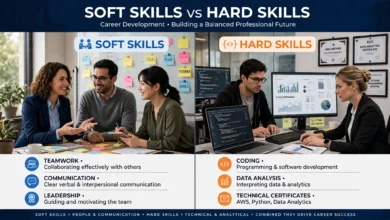
- Pursue relevant certifications — credentials like PMP, CPA, AWS certifications, or Google Analytics add credibility and signal commitment to your field
- Read widely — follow industry publications, newsletters, and thought leaders in your space
- Learn adjacent skills — if you are in marketing, pick up data analytics basics; if you are in finance, learn how to present data visually
- Apply learning immediately — skills stick when you use them, not just when you study them
Upskilling and reskilling are two terms you will hear often in career development circles. Upskilling means deepening existing expertise. Reskilling means building capabilities in a new area. Both matter, and knowing which one your career needs at any given point is part of strategic career management.
4. Find a Mentor — and Consider Being One
Mentorship is one of the most powerful and underutilized career development tools available to professionals in the USA. A good mentor does not just hand you advice — they share hard-won experience, warn you about pitfalls, introduce you to their network, and help you see your own blind spots.
Research consistently shows that professionals with mentors are promoted more often, earn higher salaries, and report greater job satisfaction. Yet many professionals never proactively seek one out, either because they do not know how to ask or assume mentors are only for people early in their careers.
How to Find and Approach a Mentor
- Identify two or three people whose career trajectory you admire — they do not have to be famous or unreachable
- Reach out with a specific, respectful ask: “I admire how you built your expertise in X. Would you be open to a 30-minute conversation about your career path?” is better than “Will you be my mentor?”
- Come to every conversation prepared with questions and something valuable to share
- Be consistent — mentorship compounds over time
It is also worth considering sponsorship, which goes a step further than mentorship. A sponsor is someone in a senior position who actively advocates for you in rooms you are not in. They recommend you for high-visibility projects, vouch for you to decision-makers, and push for your advancement. Sponsorship relationships take time to build, but they are enormously powerful for career acceleration — particularly for women and professionals of color who have historically had less access to these informal networks.
5. Develop Your Personal Brand and Online Presence
Personal branding is not about self-promotion for its own sake. It is about being clear on what you stand for professionally, what you are great at, and making sure the right people know it. In the USA, where the job market is competitive and hiring managers often research candidates online before making decisions, your digital presence matters.
Your LinkedIn profile is typically the first thing people see when they search your name. A profile with a professional photo, a compelling headline, a clear summary, and specific accomplishments — with numbers — works significantly harder for your career than a vague or outdated one.
Building a Strong Professional Brand
- Clarify your professional identity — what are you known for? What do you want to be known for?
- Optimize your LinkedIn profile with relevant keywords, quantified achievements, and a headline that goes beyond your job title
- Share your knowledge — write short posts, comment on industry news, or publish articles about what you are learning or working on
- Create a portfolio if your work is visual or project-based — writers, designers, marketers, and developers all benefit from showing, not just telling
- Be consistent — your brand is the intersection of what you say, what you do, and how others experience working with you
Being visible in your industry — whether through speaking at local events, contributing to trade publications, or simply being an active voice in professional communities — positions you as a thought leader and opens doors that cold applications rarely do.
6. Seek Out Leadership Opportunities Early
One of the fastest ways to accelerate your career growth in the USA is to take on leadership responsibilities before you have the title. Managers and executives notice people who step up, and they tend to promote those people when opportunities arise.
Leadership does not only mean managing a team. It can mean volunteering to lead a project, organizing a company initiative, mentoring a junior colleague, or being the person who takes ownership when something falls through the cracks.
Ways to Demonstrate Leadership Without a Title
- Volunteer to lead cross-functional projects that expose you to other departments
- Mentor newer employees — this shows initiative and builds your coaching skills
- Speak up in meetings with ideas and solutions, not just observations
- Take on tasks that are slightly outside your comfort zone or current job description
- Deliver on what you commit to — reliability is the foundation of leadership credibility
Companies in the USA increasingly look for employees with strong leadership development potential when filling senior roles. If you want to move into management or executive positions, the path is rarely about waiting — it is about showing you are already operating at the next level.
7. Ask for Feedback and Act on It
Most professionals wait for annual performance reviews to get feedback, and that is a missed opportunity. Regular, actionable feedback is one of the fastest ways to close skill gaps and improve your performance — which is what career advancement is built on.
The key word here is “actionable.” Feedback like “keep up the good work” is not useful. What you want is specific, honest input on what you are doing well and where you have room to grow.
How to Get Better Feedback
- Schedule regular check-ins with your manager — monthly or biweekly — where you explicitly ask about your performance
- Ask specific questions: “What is one thing I could do differently on projects like this?” works better than “How am I doing?”
- Seek feedback from peers and colleagues, not just managers — lateral feedback often surfaces blind spots that managers cannot see
- When you receive critical feedback, resist the urge to defend yourself. Ask clarifying questions, say thank you, and then go act on it
- Track your progress over time to see if the feedback you received is actually translating into improved performance
Professionals who actively seek and apply feedback move faster than those who wait for it to be delivered. It signals self-awareness and a growth mindset — two qualities that are highly valued by employers in the USA.
8. Leverage Your Company’s Internal Resources
Many professionals in the USA overlook one of the most accessible career development resources they already have: their current employer. Companies invest in employee development programs, tuition reimbursement, internal mobility, and training initiatives — and most of these resources go underutilized simply because employees do not know to ask about them.
Before spending money on outside courses or coaching, find out what your organization already offers.
Internal Resources Worth Exploring
- Tuition reimbursement programs — many large U.S. employers will pay for part or all of a graduate degree or certification if it aligns with your role
- Internal mentorship and leadership programs — these are often run by HR and can connect you with senior leaders you would not otherwise have access to
- Job shadowing and cross-departmental rotations — these build broader organizational knowledge and make you more versatile
- Professional development budgets — ask your manager if there is budget available for conferences, workshops, or online courses
- Internal job postings — internal mobility is often faster and less risky than changing companies, and hiring managers often prefer internal candidates who already understand the culture
Building a relationship with HR and expressing your career development goals clearly is also smart strategy. HR professionals often know about opportunities before they are posted, and they remember employees who are proactive about their growth.
9. Build Resilience and Embrace Strategic Risk-Taking
The career development strategies that move the needle most often involve some level of discomfort. Applying for a stretch role you are not fully qualified for. Leaving a stable job for a better opportunity. Raising your hand for a high-visibility, high-stakes project. These moves feel risky — and they are. But calculated risk is often the accelerant that straight-line career paths lack.
According to Indeed’s career research, the professionals who advance most rapidly are those who actively seek new challenges rather than waiting for them to be assigned.
Career resilience is the ability to adapt when things do not go as planned — and they rarely do, perfectly. A company restructures. A promotion goes to someone else. A project fails publicly. How you respond to these moments shapes your reputation and your trajectory more than the setbacks themselves.
How to Build Career Resilience
- Reframe setbacks as data — what can you learn from what went wrong?
- Diversify your skills so you are not entirely dependent on one industry or employer
- Build financial stability where possible — runway gives you the freedom to take risks
- Stay curious and opportunistic even when your plan changes
- Maintain relationships even when you are not job searching — your network is most valuable before you need it urgently
The professionals who advance furthest in the USA are often not the ones who executed a perfect plan. They are the ones who stayed adaptable when the plan evolved and used each challenge as a way to demonstrate capability beyond their current level.
10. Be Strategic About Your Career Moves
Not every job change or promotion is equally valuable for your long-term career growth. Being strategic means thinking about each move in terms of what skills it will build, what network it will give you access to, and how it positions you for the next step.
Some of the best career moves look counterintuitive in the short term. A lateral move to a different department can give you cross-functional expertise that makes you far more promotable two years later. Taking a role at a smaller company might mean a pay cut but give you far broader responsibilities that accelerate your development.
Questions to Ask Before Making a Career Move
- Will this role teach me something I do not already know?
- Will it expose me to people, industries, or challenges that expand my capabilities?
- Does this company or team have a track record of developing its people?
- Where do people typically go after leaving this role?
- Does this move align with my five-year professional development plan?
Job hopping without purpose can actually slow career advancement rather than accelerate it. The goal is intentional movement — each role building on the last, adding new dimensions to your expertise and expanding your professional reputation.
Conclusion
Career development strategies are not a one-time exercise — they are a continuous, evolving practice that compounds over time. The 10 strategies covered here — from setting SMART goals and building your network to seeking mentorship, developing your personal brand, and taking calculated risks — work best when applied as a system rather than in isolation. Start with two or three that address your current situation most directly, commit to them seriously for 90 days, and then build from there. The U.S. job market rewards professionals who are intentional, adaptable, and consistent in their growth — and with the right strategies in place, there is no ceiling on what your career can become.