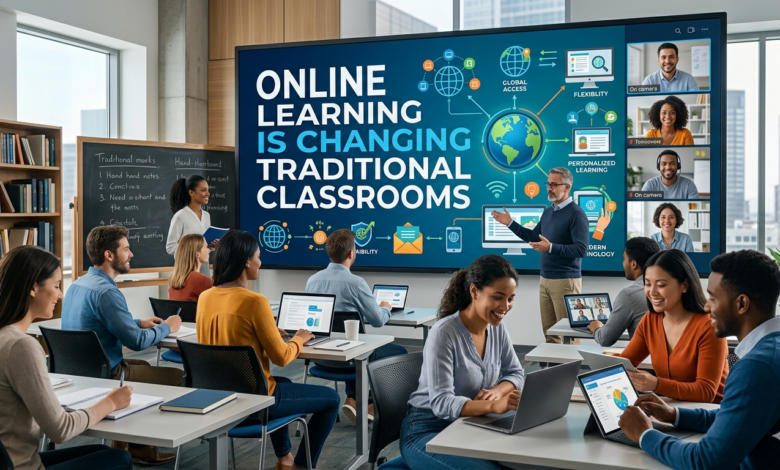
Online learning has become one of the most important developments in modern education. With the rapid growth of the internet, digital devices, and educational technology, the way students learn and teachers teach has changed significantly. Traditional classrooms, which were once the only method of education, are now being transformed by online learning systems. This change is not only affecting how knowledge is delivered but also how students interact, study, and succeed.
This article explains in detail how online learning is changing traditional classrooms, using simple and easy words, while covering all important aspects based on authentic research and studies.
1. Introduction to Online Learning and Traditional Classrooms
Online learning refers to education that takes place through the internet, where students and teachers are not physically present in the same place. It includes virtual classes, recorded lectures, digital assignments, and online discussions. Traditional classrooms, on the other hand, involve face-to-face teaching in schools, colleges, or universities.
According to research, online education is characterized by the use of computer networks, digital content, and communication tools that allow interaction between teachers and students even when they are physically separated . Over time, this new method has started to influence and reshape the traditional classroom system.
2. Increased Flexibility in Learning
One of the biggest changes brought by online learning is flexibility. In traditional classrooms, students must attend classes at fixed times and locations. However, online learning allows students to study anytime and anywhere.
Research shows that online education provides flexible schedules, making it easier for students to balance studies with work or personal responsibilities . Students can watch recorded lectures, pause them, and review difficult topics again. This flexibility was not possible in traditional classrooms.
As a result, traditional institutions are now adopting flexible learning systems, such as recorded lectures and hybrid schedules, to meet student needs.
3. Shift Toward Student-Centered Learning
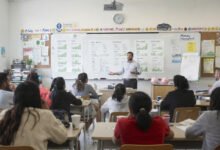
Traditional classrooms often follow a teacher-centered approach, where the teacher explains and students listen. Online learning has changed this model into a more student-centered approach.
Online platforms allow students to control their pace of learning. They can choose topics, explore additional resources, and learn according to their abilities. Studies show that online learning supports self-paced and personalized instruction, which improves understanding and satisfaction .
Because of this shift, traditional classrooms are also becoming more interactive, with teachers encouraging participation, discussions, and independent learning.
4. Use of Technology in Education
Technology is at the heart of online learning. Tools like video lectures, interactive quizzes, digital whiteboards, and learning management systems have changed the teaching process.
Online learning uses multimedia resources such as videos, animations, and simulations, which make learning more interesting and easier to understand. According to research, access to a wide range of digital materials enhances the learning experience and supports better outcomes .
Traditional classrooms are now adopting these tools as well. Many schools use smart boards, projectors, and online platforms to support classroom teaching. This integration of technology is called “digital pedagogy.”
5. Growth of Blended Learning
One of the most important impacts of online learning is the rise of blended learning. Blended learning combines online education with traditional classroom teaching.
Research suggests that neither online nor traditional learning is perfect on its own. Instead, combining both methods provides better results by using the strengths of each system .
For example:
- Students may attend physical classes for discussions and practical work
- They may use online platforms for lectures, homework, and revision
This blended model is becoming the future of education and is widely adopted by schools and universities.
6. Improved Access to Education
Online learning has made education more accessible to people around the world. Students who live in remote areas or cannot attend school due to financial or personal reasons can now study online.
Studies show that online education increases accessibility and allows more people to participate in learning, regardless of location .
This has forced traditional classrooms to expand their reach by offering online courses and distance learning programs.
7. Changes in the Role of Teachers
Online learning has also changed the role of teachers. In traditional classrooms, teachers mainly deliver lectures. However, in online learning, teachers act more as guides and facilitators.
They help students:
- Understand difficult concepts
- Use digital tools
- Participate in discussions
- Develop independent learning skills
Research highlights that teachers must adapt their teaching methods to suit online platforms and interactive tools .
As a result, traditional teachers are now being trained in digital skills and modern teaching techniques.
8. Impact on Student Engagement
Student engagement is different in online and traditional learning. Traditional classrooms offer face-to-face interaction, which helps students stay focused and motivated.
Studies show that traditional classrooms provide better real-time interaction and communication between students and teachers . However, online learning can sometimes reduce motivation due to lack of direct supervision.
To solve this problem, online platforms now include:
- Live classes
- Discussion forums
- Interactive quizzes
- Group activities
These features help improve engagement and make online learning more effective.
9. Development of Digital Skills
Online learning helps students develop important digital skills. These include:
- Using computers and software
- Searching for information online
- Communicating through digital platforms
- Managing time independently
These skills are very important in today’s modern world. Traditional classrooms are now including digital training in their curriculum to prepare students for future careers.
10. Challenges of Online Learning
Although online learning has many benefits, it also has some challenges.
- Online learning reduces face-to-face interaction with teachers and classmates.
- Students may feel lonely and isolated during online classes.
- It requires a strong internet connection, which is not available to everyone.
- Technical problems can interrupt learning.
- Students may lose focus easily at home.
- It needs good self-discipline, which some students do not have.
- Not all subjects can be taught effectively online, especially practical ones.
- Students may spend too much time on screens, which can harm their health.
- Communication between teachers and students may be less effective.
- Online exams can sometimes lead to cheating.
These challenges show that traditional classrooms still play an important role in education.
11. Changes in Assessment and Evaluation
Online learning has introduced new methods of assessment. Instead of only written exams, students are evaluated through:
- Online quizzes
- Assignments
- Presentations
- Projects
This makes assessment more continuous and comprehensive. Traditional classrooms are also adopting these modern evaluation methods.
12. Economic and Institutional Impact
Online learning has also affected educational institutions. Schools and universities are investing in digital platforms and online courses.
Research shows that the e-learning industry is growing rapidly and becoming a major part of the education system .
This has changed:
- How institutions operate
- How courses are delivered
- How students enroll and learn
Many institutions now offer fully online degrees or hybrid programs.
13. Future of Traditional Classrooms
Online learning is not replacing traditional classrooms completely. Instead, it is transforming them.
Experts believe that the future of education lies in a combination of both systems. Traditional classrooms will continue to provide:
- Social interaction
- Discipline
- Practical learning
While online learning will provide:
- Flexibility
- Accessibility
- Personalized education
Together, they create a more effective and modern learning system.
Conclusion
Online learning is bringing major changes to traditional classrooms. It has introduced flexibility, technology, personalized learning, and global access to education. At the same time, it has challenged traditional teaching methods and forced institutions to adapt.
However, both online and traditional learning have their strengths and weaknesses. Research clearly shows that a balanced approach, known as blended learning, is the best solution for the future .
In simple words, online learning is not destroying traditional classrooms—it is improving and reshaping them. Education is becoming more modern, inclusive, and effective because of this powerful combination.
Short Questions with Answers
1. What is online learning?
Online learning is a modern form of education that takes place through the internet. Students use computers or mobile devices to attend classes, watch lectures, complete assignments, and communicate with teachers without being physically present in a classroom.
2. What is a traditional classroom?
A traditional classroom is a physical learning environment where students and teachers meet face-to-face. Teaching happens through direct interaction, discussions, and activities inside a school or college, following a fixed schedule and structured routine.
3. How does online learning provide flexibility?
Online learning offers flexibility by allowing students to study at their own time and pace. They can access recorded lectures, complete tasks when convenient, and learn from any location, which helps them manage studies with other responsibilities.
4. What is student-centered learning?
Student-centered learning is an approach where students actively participate in their learning process. Instead of only listening to teachers, they explore topics, ask questions, and learn at their own speed, making education more engaging and effective.
5. How has technology improved education?
Technology has improved education by making learning more interactive and accessible. Tools like videos, animations, and online quizzes help students understand concepts better. It also allows easy access to information and supports communication between teachers and students.
6. What is blended learning?
Blended learning is a method that combines traditional classroom teaching with online learning. Students attend physical classes for discussions and practical work, while also using digital platforms for lectures, assignments, and revision.
7. How does online learning improve access to education?
Online learning improves access by allowing students from remote or underdeveloped areas to study without traveling. It removes barriers like distance and limited resources, enabling more people to receive education through internet-based platforms.
8. What is the new role of teachers in online learning?
In online learning, teachers act as guides and facilitators instead of only delivering lectures. They support students, provide feedback, encourage participation, and help them use digital tools effectively for better understanding and independent learning.
9. How does online learning affect student engagement?
Online learning can sometimes reduce engagement due to lack of direct interaction. However, features like live classes, quizzes, and discussions help keep students involved. Proper use of technology can improve attention and participation in lessons.
10. What digital skills do students learn through online education?
Students learn important digital skills such as using computers, navigating online platforms, communicating through emails or chats, and searching for information. These skills are essential for academic success and future careers in a technology-based world.
11. What is one major challenge of online learning?
One major challenge of online learning is the lack of social interaction. Students may feel isolated because they do not meet classmates regularly, which can affect their motivation, communication skills, and overall learning experience.
12. How do technical problems affect online learning?
Technical problems like slow internet, power outages, or device issues can interrupt online classes. These problems make it difficult for students to attend lectures, submit assignments, and stay connected with teachers and classmates.
13. How are students assessed in online learning?
In online learning, students are assessed through quizzes, assignments, projects, and presentations. These methods allow continuous evaluation of student performance and help teachers understand their progress and areas that need improvement.
14. Why is self-discipline important in online learning?
Self-discipline is important because students must manage their own time and stay focused without direct supervision. They need to complete tasks on time, avoid distractions, and take responsibility for their own learning progress.
15. How are traditional classrooms changing?
Traditional classrooms are changing by using modern technology like smart boards, projectors, and online platforms. Teachers are also adopting interactive methods, making learning more engaging and combining digital tools with face-to-face teaching.
16. What is one advantage of traditional classrooms?
One advantage of traditional classrooms is direct interaction between teachers and students. This allows immediate feedback, better communication, and stronger relationships, which help students understand concepts more clearly and stay motivated.
17. What is one advantage of online learning?
One advantage of online learning is flexibility. Students can learn at their own pace, revisit lessons, and study from anywhere. This makes it easier for them to manage their time and understand difficult topics more effectively.
18. How has online learning impacted educational institutions?
Online learning has encouraged institutions to adopt digital systems and offer online courses. Schools and universities are investing in technology, expanding access to education, and creating new learning models such as hybrid and distance education programs.
19. Can online learning fully replace traditional classrooms?
Online learning cannot fully replace traditional classrooms because face-to-face interaction is still important. Both methods have strengths, and combining them provides a more balanced and effective learning experience for students.
20. What is the future of education?
The future of education lies in combining online and traditional learning methods. This approach provides flexibility, accessibility, and interaction, creating a modern system that meets the needs of students in a rapidly changing world.