Rebuild Confidence After Failing an Exam: 9 Powerful Steps to Bounce Back Stronger
Rebuild confidence after failing an exam with nine practical strategies to overcome self-doubt, strengthen motivation, and achieve academic success.
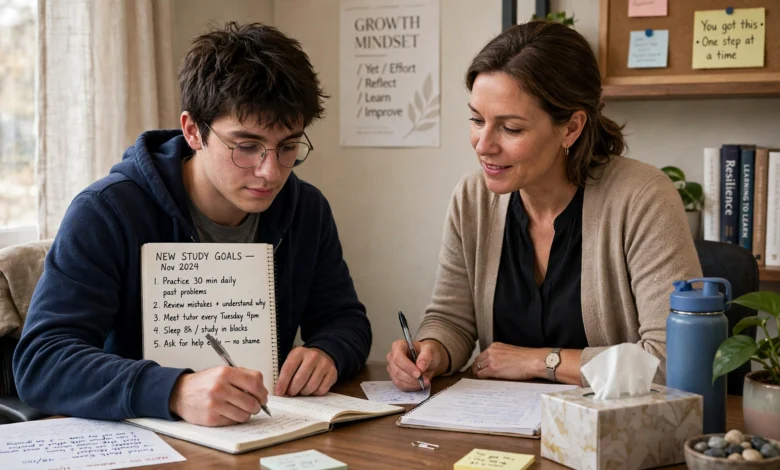
However, one unsuccessful examination does not determine your potential or decide your future. It is simply an experience that can teach you valuable lessons about preparation, patience, and personal growth.
Learning how to rebuild confidence after failing an exam is essential because your mindset influences how you approach future challenges. Instead of allowing disappointment to control your thoughts, you can use this experience as an opportunity to understand your weaknesses, improve your study habits, and develop stronger academic skills. Confidence does not return overnight, but small, consistent actions can gradually restore your belief in yourself.
Whether you failed a school examination, university assessment, professional certification, or competitive entrance test, there are practical ways to recover emotionally and academically. This guide explains nine effective strategies to overcome disappointment, manage negative thoughts, regain motivation, and prepare confidently for your next examination. Remember, your result is part of your academic journey, not the final definition of your abilities.


1. Accept Your Failure Without Judging Yourself
The first step toward rebuilding your confidence is accepting what happened. Many students struggle emotionally after receiving disappointing examination results because they cannot immediately accept the situation. They repeatedly question their performance, imagine different outcomes, and blame themselves for every mistake.
Although these reactions are understandable, continuously criticizing yourself will not change your result. Instead, it can damage your self-esteem and make future examinations feel even more frightening.
Understand That Failure Does Not Define Your Intelligence
An examination measures your performance under particular conditions. It may reflect your understanding of a subject, preparation methods, time management, or ability to handle pressure. However, it cannot measure your complete intelligence, creativity, determination, or future potential.
Many successful individuals have experienced academic disappointments before achieving their goals. Their experiences demonstrate that temporary setbacks do not have to become permanent limitations.
Whenever negative thoughts appear, remind yourself:
- I made a mistake, but I am not a mistake.
- One examination cannot determine my entire future.
- I can improve my knowledge through consistent effort.
- My current performance does not represent my full potential.
- I deserve patience while learning and improving.
Allow Yourself to Experience Your Emotions
You do not need to pretend that everything is fine immediately after failing an important exam. Feeling disappointed, sad, or frustrated is a natural response.
Give yourself time to process these emotions instead of suppressing them. You can talk to someone you trust, write your thoughts in a journal, or spend some time doing an activity that helps you relax.
The important thing is to avoid turning temporary disappointment into permanent self-criticism.
Remember: Accepting failure is not surrendering to it. It is recognizing reality so you can begin making better decisions.
2. Stop Comparing Yourself With Other Students
Comparison is one of the biggest reasons students lose confidence after an unsuccessful examination. When classmates receive excellent grades, it can make your own result feel even more disappointing.
You might wonder why someone who studied less performed better or why your friends seem to understand difficult subjects more quickly.
However, comparing your academic journey with someone else’s is rarely helpful.
Everyone Has a Different Learning Journey
Students have different educational backgrounds, learning abilities, preparation schedules, personal responsibilities, and access to academic resources.
Someone who achieves a high score may have spent years developing knowledge in that subject. Another student may be dealing with personal challenges that others cannot see.
Your progress should be measured against your previous performance rather than another person’s achievements.
For example, if you previously struggled to complete practice questions but can now solve most of them correctly, that is meaningful improvement.
Focus on Personal Progress
Instead of asking why another student performed better, ask yourself what you can improve before your next examination.
Try these practical habits:
- Reduce unnecessary comparisons on social media.
- Celebrate your personal academic improvements.
- Set goals based on your current abilities.
- Learn from successful students without feeling inferior.
- Appreciate the effort you are making toward improvement.
Building self-confidence after failing becomes easier when you stop treating another person’s success as evidence of your own inadequacy.
Your academic journey is personal. Give yourself the opportunity to improve at your own pace.
3. Identify the Real Reasons Behind Your Exam Failure
If you want to perform better in your next examination, you must understand what went wrong.
Simply promising yourself that you will study harder may not produce different results. If the underlying problem remains unchanged, you might experience the same difficulties again.
Take an honest but constructive look at your preparation and examination performance.
Evaluate Your Study Habits
Think about how you prepared before the examination.
Did you begin studying early enough? Did you understand the material, or did you mainly memorize information? Were you consistent with revision?
Consider these common reasons for examination failure:
1. Poor time management: You may have spent too much time on certain subjects and neglected important topics.
2. Inconsistent preparation: Studying occasionally instead of following a regular schedule can create knowledge gaps.
3. Lack of practice: Reading textbooks without attempting questions may leave you unprepared for the actual examination.
4. Examination anxiety: Excessive nervousness can make it difficult to concentrate and recall information.
5. Weak understanding of concepts: Memorizing answers without understanding their meaning can create difficulties when questions are presented differently.
6. Personal distractions: Family responsibilities, financial concerns, health difficulties, or other challenges may have affected your preparation.
Review Your Examination Performance
If your examination paper is available, review it carefully. Identify the questions you answered incorrectly and determine why you lost marks.
You can divide your mistakes into three categories:
| Mistake category | What happened? | Possible improvement |
|---|---|---|
| Knowledge gaps | You did not understand certain topics | Review concepts and ask questions |
| Time management | You could not complete the paper | Practise timed examinations |
| Careless mistakes | You misunderstood or misread questions | Develop a checking routine |
If possible, ask your teacher or instructor to explain your weaknesses.
The goal is not to find reasons to blame yourself. It is to identify specific areas that need improvement.
According to the approach recommended in ETH Zurich’s guidance on learning from examination failure, reviewing mistakes and recognizing what went well can help students develop a more effective strategy for future examinations.
4. Develop a Positive Mindset and Challenge Negative Thoughts
Your thoughts can significantly influence your confidence, motivation, and willingness to try again.
After failing an important examination, negative thinking can become a habit. You might repeatedly tell yourself that you are not intelligent enough, that you will never succeed, or that your previous efforts were pointless.
These thoughts can make studying feel exhausting before you even begin.
Developing a positive mindset does not mean ignoring your mistakes. It means recognizing that your abilities can improve through learning, practice, and appropriate support.
Replace Negative Self-Talk With Constructive Thinking
Pay attention to the language you use when discussing your academic performance.
For example:
| Negative thinking | Constructive thinking |
|---|---|
| I am not intelligent enough. | I need to improve my understanding. |
| I will fail again. | I can prepare differently next time. |
| I am worse than everyone else. | I have my own learning journey. |
| I cannot understand this subject. | I can learn it step by step. |
| My future is ruined. | I still have opportunities to improve. |
These changes may seem small, but they encourage a healthier relationship with learning.
Develop a Growth Mindset
A growth mindset is the belief that abilities and knowledge can develop through effort, effective strategies, and learning from experience.
Students with this mindset are more likely to treat mistakes as opportunities for improvement rather than permanent evidence of inadequacy.
You can develop this mindset by:
- Viewing difficult topics as opportunities to learn.
- Asking questions when something is unclear.
- Accepting constructive feedback.
- Recognizing effort and progress.
- Remaining patient when improvement takes time.
The University of Washington’s guidance on coping with academic setbacks provides useful advice on grounding yourself, changing your perspective, developing an action plan, and making progress after disappointment.
A positive mindset does not guarantee an excellent examination result, but it can help you approach preparation with greater confidence and resilience.
5. Set Small and Achievable Academic Goals
One reason students struggle to regain confidence is that they create unrealistic expectations immediately after failing.
They may decide to study ten hours every day, complete an entire syllabus within a week, or achieve the highest possible grade in their next examination.
Although ambitious goals can be motivating, unrealistic expectations often create unnecessary pressure.
A better approach is to establish small, achievable academic goals that gradually rebuild your confidence.
Break Large Goals Into Smaller Tasks
Suppose you failed a mathematics examination because you struggled with algebra, equations, and problem-solving.
Instead of trying to master everything immediately, divide your preparation into manageable activities.
For example:
- Monday: Review basic algebraic concepts.
- Tuesday: Practise simple algebra questions.
- Wednesday: Study equations and formulas.
- Thursday: Solve more challenging problems.
- Friday: Review previous mistakes.
- Saturday: Complete a timed practice exercise.
- Sunday: Evaluate your progress and revise difficult topics.
This approach makes studying more manageable and gives you opportunities to recognize your improvement.
Celebrate Small Achievements
Every completed task provides evidence that you are making progress.
Celebrate achievements such as:
- Understanding a difficult concept.
- Completing a challenging assignment.
- Improving your practice test score.
- Studying consistently for an entire week.
- Answering questions without assistance.
You do not need to wait until you pass an examination to feel proud of your efforts.
These small achievements help restore your belief that improvement is possible.
6. Create a Better Study Plan for Your Next Examination
One of the most practical ways to rebuild confidence after failing an exam is to prepare differently for the next attempt.
If your previous study routine did not produce the desired results, repeating exactly the same approach may not be effective.
Your new preparation strategy should address your weaknesses while making the best use of your available time.
Use Active Learning Techniques
Passive studying often involves reading the same textbook pages repeatedly or highlighting large amounts of information.
Although these activities can support learning, they do not always demonstrate whether you can remember and apply the material independently.
Instead, use active learning methods.
Active recall: Close your textbook and try to remember important information without looking at your notes.
Practice testing: Complete questions from previous examinations to assess your understanding.
Spaced repetition: Review important concepts at increasing intervals rather than attempting to memorize everything in one session.
Teaching method: Explain difficult concepts in your own words as if you were teaching another student.
Mind mapping: Organize related ideas visually to understand how different concepts connect.
Follow a Consistent Study Schedule
A realistic study schedule helps you avoid last-minute pressure and encourages regular progress.
Here is an example of a daily routine:
| Time | Activity |
|---|---|
| 8:00–9:00 AM | Review difficult topics |
| 9:00–9:15 AM | Short break |
| 9:15–10:15 AM | Practise examination questions |
| 10:15–11:00 AM | Review mistakes |
| Afternoon | Attend classes or complete assignments |
| Evening | Revise previously studied material |
| Before bed | Prepare the next day’s study goals |
Adjust the schedule according to your personal responsibilities and energy levels.
Focus on Quality Rather Than Study Hours
Studying for several hours does not automatically mean you are learning effectively.
Concentrated study sessions, regular breaks, sufficient sleep, and repeated practice can make your preparation more productive.
The purpose of your new study plan is not simply to work harder. It is to work more effectively.
7. Manage Exam Anxiety and Rebuild Your Mental Strength
Sometimes students understand the subject well but perform poorly because of excessive examination anxiety.
Fear of failure can become particularly strong after an unsuccessful examination. You might worry about repeating the same mistakes, disappointing your family, or facing criticism from teachers.
These concerns can affect concentration and make preparation stressful.
Understand What Triggers Your Anxiety
Start by identifying the situations that make you nervous.
For example:
- Thinking about the previous examination result.
- Seeing classmates preparing for the next examination.
- Answering difficult practice questions.
- Entering an examination hall.
- Worrying about the consequences of another unsuccessful result.
Understanding your triggers helps you choose appropriate coping strategies.
Practise Simple Stress-Management Techniques
Consider incorporating these activities into your routine:
Deep breathing: Breathe slowly and comfortably to help yourself settle when you feel overwhelmed.
Physical activity: Walking, stretching, or participating in a sport can provide a healthy break from academic pressure.
Adequate sleep: Maintain a regular sleep schedule instead of sacrificing rest for excessive revision.
Mindfulness: Spend a few minutes focusing on the present moment rather than worrying about previous results or future outcomes.
Positive visualization: Imagine yourself entering the examination room calmly, reading questions carefully, and managing your time effectively.
Practise Under Examination Conditions
One of the best ways to reduce uncertainty is to become familiar with the examination environment.
Complete practice papers within the actual time limit. Avoid checking your notes while answering, and practise moving between questions efficiently.
After completing each practice examination, evaluate your performance.
Remember that confidence develops when you become familiar with the challenges you previously feared.
If examination anxiety becomes overwhelming or seriously affects your everyday life, consider speaking with a qualified counsellor or mental health professional.
8. Surround Yourself With Supportive People
Recovering from academic failure can feel lonely, especially when you believe that everyone expects you to succeed.
During this period, supportive relationships can make a significant difference.
You do not have to solve every academic or emotional difficulty independently.
Talk to Someone You Trust
Share your feelings with a supportive friend, family member, teacher, or academic adviser.
Talking about your experience can help you understand your emotions and reduce the pressure of keeping everything inside.
Choose people who encourage you to improve rather than those who constantly criticize or compare you with others.
Ask Teachers for Constructive Feedback
Your teachers can provide valuable information about your examination performance.
Instead of feeling embarrassed about asking for assistance, approach them with specific questions.
For example:
- Which topics should I revise first?
- What mistakes affected my marks?
- How can I improve my written answers?
- Which resources would you recommend?
- What should I change before my next examination?
Constructive feedback can turn an unclear problem into a practical improvement plan.
Consider Joining a Study Group
Studying with motivated classmates can improve your understanding and help you remain consistent.
A productive study group allows members to:
- Explain difficult concepts to one another.
- Share useful learning resources.
- Discuss previous examination questions.
- Identify gaps in understanding.
- Encourage one another during challenging periods.
However, choose study partners who support your learning goals. Avoid groups that spend more time comparing marks than discussing academic progress.
Remember: Asking for help is not a sign of weakness. It demonstrates that you are willing to take responsibility for your improvement.
9. Believe in Your Ability to Succeed Again
The final step in rebuilding confidence is developing trust in your ability to move forward.
After an important examination failure, you may become afraid of future challenges. Even when you prepare well, you might continue questioning whether your efforts will be enough.
This uncertainty is understandable, but it should not prevent you from pursuing your academic goals.
Recognize Your Previous Achievements
Think about the challenges you have already overcome.
Perhaps you completed a difficult assignment, improved your grades in another subject, learned a new skill, or successfully handled a challenging academic situation.
These experiences remind you that you are capable of learning and making progress.
Write down your achievements and review them whenever self-doubt becomes overwhelming.
Focus on Preparation Rather Than Perfection
You cannot control every aspect of an examination.
Questions may be difficult, unexpected circumstances may arise, and performance can sometimes be affected by factors outside your control.
However, you can control many aspects of your preparation.
Focus on:
- Completing your study schedule.
- Understanding important concepts.
- Practising examination questions.
- Managing your time effectively.
- Getting enough rest.
- Seeking assistance when necessary.
When you concentrate on controllable actions, you reduce unnecessary pressure and develop a healthier sense of confidence.
Treat Your Next Examination as a Fresh Opportunity
Your previous result does not have to determine your next result.
Approach your next examination with the knowledge you gained from your previous experience.
You now have a better understanding of your weaknesses, the challenges you faced, and the changes that may improve your performance.
You are not starting from the beginning. You are starting with experience.
A Practical 7-Day Confidence-Rebuilding Plan
If you are unsure where to begin, the following seven-day plan can help you take your first steps toward emotional recovery and academic improvement.
| Day | Main focus | Recommended activity |
|---|---|---|
| Day 1 | Emotional recovery | Accept your feelings and take a break |
| Day 2 | Self-reflection | Identify what went wrong |
| Day 3 | Positive mindset | Challenge negative thoughts |
| Day 4 | Goal setting | Create realistic academic goals |
| Day 5 | Study improvement | Develop a new study schedule |
| Day 6 | Academic support | Speak with a teacher or study partner |
| Day 7 | Building momentum | Complete a practice exercise and review your progress |
This is a starting framework, not a deadline for emotional recovery. Some students need more time to process disappointment, while others feel ready to resume studying sooner.
The important thing is to make gradual progress without putting unnecessary pressure on yourself.
Common Mistakes to Avoid After Failing an Important Exam
While working to regain confidence, it is equally important to avoid habits that can make academic recovery more difficult.
1. Blaming Yourself Constantly
Recognizing mistakes is useful, but repeatedly insulting yourself does not improve your knowledge or examination skills. Replace personal criticism with constructive reflection.
2. Giving Up on Your Academic Goals
One disappointing result does not mean you should abandon your ambitions. Before making major decisions, consider your options and speak with an academic adviser.
3. Studying Without a Proper Strategy
Spending long hours studying without identifying your weaknesses can waste valuable time. Use targeted revision, active recall, and practice examinations.
4. Ignoring Your Physical and Mental Well-Being
Skipping meals, sacrificing sleep, and avoiding social interaction can make academic stress more difficult to manage. Maintain healthy routines alongside your studies.
5. Expecting Immediate Results
Confidence and academic improvement develop gradually. Give yourself enough time to practise, make mistakes, and recognize progress.
6. Avoiding Future Examinations Because of Fear
Avoiding every challenging academic situation can strengthen your fear over time. Prepare gradually, practise under realistic conditions, and seek support when needed.
Frequently Asked Questions (FAQs)
1. How can I regain confidence after failing an important exam?
Start by accepting your result without judging your intelligence or personal worth. Identify the reasons behind your performance, establish realistic goals, improve your study methods, and celebrate small achievements. Consistent progress gradually helps restore self-confidence.
2. Is failing an exam a sign that I am not intelligent?
No. Examination results reflect performance in a particular assessment, not your complete intellectual abilities. Factors such as preparation, time management, subject understanding, and examination anxiety can influence your results.
3. How do I stop feeling embarrassed after failing an exam?
Remind yourself that academic setbacks are common and do not define your identity. Avoid unnecessary comparisons, talk to someone you trust, and focus on the improvements you can make. You do not need to explain or justify your result to everyone.
4. How can I stay motivated after failing an examination?
Set small academic goals, follow a realistic study schedule, and track your progress. Use your previous mistakes to improve your preparation rather than treating them as reasons to give up. Regular breaks and supportive relationships can also help maintain motivation.
5. Should I change my study routine after failing an exam?
If your previous approach did not produce satisfactory results, reviewing your study routine is a sensible decision. Consider using active recall, spaced repetition, timed practice papers, and regular revision. Focus particularly on the areas where you lost marks.
6. How long does it take to rebuild confidence after academic failure?
There is no fixed recovery period. Some students regain confidence within days, while others need several weeks or longer. Your recovery depends on personal circumstances, the importance of the examination, available support, and your approach to future preparation.
7. What should I do if I am afraid of failing my next examination?
Identify the source of your fear and prepare for it gradually. Practise examination questions, improve your understanding of difficult topics, and use relaxation techniques. Focus on preparation and the actions within your control instead of repeatedly imagining negative outcomes.
Conclusion
Rebuilding confidence after an unsuccessful examination requires patience, self-awareness, and consistent effort. Instead of allowing one disappointing result to damage your self-esteem, treat it as an opportunity to understand your weaknesses, improve your study habits, and develop a stronger mindset. Accept your emotions, stop comparing yourself with others, establish realistic goals, manage examination anxiety, and surround yourself with supportive people.
Most importantly, remember that academic success is not always a straight path, and temporary setbacks do not determine your future potential. Every mistake can provide valuable lessons when you approach it with the right attitude. Believe in your ability to improve, remain committed to your goals, and take small steps toward becoming a more confident and capable student.