How to Homeschool Legally in the USA: State-by-State Rules
How to homeschool legally in the USA: state requirements, notice rules, testing, and recordkeeping explained clearly for every family.
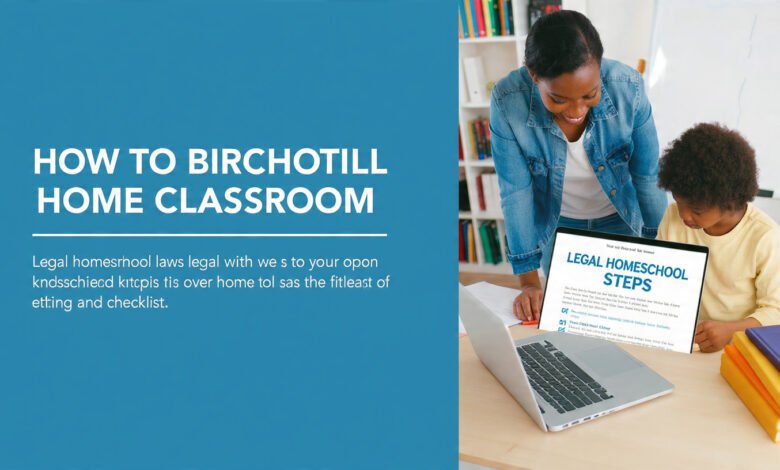
Figuring out how to homeschool legally can feel like reading a different rulebook for every zip code, because it basically is. The United States doesn’t have one national homeschool law. Instead, each of the 50 states writes its own rules about notice, testing, recordkeeping, and what counts as an acceptable education at home. A family in Texas can start homeschooling tomorrow with zero paperwork, while a family in New York has to file an individualized instruction plan and submit quarterly reports. Neither one is doing it wrong. They’re just following different state laws.
This guide walks through what homeschool laws by state actually require, broken into the four regulation tiers that most legal organizations use to categorize states. You’ll learn what “notice,” “portfolio review,” and “standardized testing” mean in practice, how to find your specific state’s requirements, what happens if you skip a step, and how to stay compliant if you move. Whether you’re pulling your child out of public school for the first time or just want to double check you’re covering your bases, this article gives you the framework to homeschool with confidence instead of guesswork. Let’s get into it.
Is Homeschooling Legal in All 50 States?
Yes. Homeschooling is legal in all 50 states, plus Washington D.C. and every U.S. territory. That wasn’t always the case. It took a wave of state-level legal battles through the 1980s to establish homeschooling as a protected educational option nationwide, and by 1993 every state had passed some form of homeschool statute. Today the question isn’t whether you’re allowed to homeschool. It’s what your specific state expects you to do to homeschool legally and stay in compliance.
That distinction matters. A parent can homeschool without following the correct legal process and technically be committing truancy, even though homeschooling itself is fully legal. So the real task isn’t asking permission to homeschool. It’s learning your state’s process and following it correctly.
The Four Tiers of Homeschool Regulation
Most legal resources, including the Home School Legal Defense Association, group state homeschool laws into four general categories based on how much oversight they require. Understanding these tiers gives you a quick mental map before you dig into your own state’s specifics.
1. No-Notice States
In these states, you don’t have to notify any government agency before you start homeschooling. Roughly a dozen states fall into this category, including Alaska, Idaho, Illinois, Indiana, Michigan, Missouri, New Jersey, Oklahoma, and Texas. You simply begin teaching your child at home.
Even in a no-notice state, it’s smart to:


- Keep basic attendance and work records in case your child re-enters public school later
- Save samples of completed work each year
- Understand that “no notice required” doesn’t mean “no standard expected.” If a truancy question ever comes up, being able to show consistent instruction protects you.
2. Low-Regulation States
These states require some form of notice of intent to homeschool, but not much beyond that. You typically file a one-time or annual notification with your local school district or state education department, and that’s largely the extent of the oversight. Kansas and Oklahoma are commonly cited examples, where families often register under a nonaccredited private school designation and provide instruction for roughly the same number of days as public school, without mandatory state testing.
3. Moderate-Regulation States
Moderate-regulation states ask for more than a simple notice. Depending on the state, you may need to:
- Submit an annual notice of intent with specific details about your homeschool
- Teach a defined list of required subjects
- Keep attendance records for a minimum number of instructional hours or days
- Have your child tested or evaluated periodically, though not always every single year
Kentucky and Louisiana are examples here, each with their own hour requirements, subject lists, and annual filing expectations.
4. High-Regulation States
This is the smallest group, but the one with the most paperwork. High-regulation states typically require:
- A formal notice of intent or an Individualized Home Instruction Plan (IHIP)
- A specific list of subjects that must be taught
- Standardized testing or a portfolio evaluation, often annually
- Quarterly or periodic progress reports submitted to the school district
Massachusetts, New York, Pennsylvania, Rhode Island, and Vermont are generally considered the most heavily regulated states. New York requires families to file an IHIP within a set window and submit quarterly reports plus an annual assessment. Pennsylvania requires an annual affidavit along with standardized testing at certain grade levels. Massachusetts stands out because it’s the only state where a family may need approval from the local school committee before withdrawing a child from public school to homeschool.
What Homeschool Laws Typically Cover
Regardless of tier, most state homeschool statutes address a handful of recurring categories. Knowing these categories helps you read your own state’s requirements faster, since you’ll already know what to look for.
Notice of Intent
This is the formal (or informal) act of telling a government body that you’re homeschooling. It might be a letter to your local superintendent, an online form through the state department of education, or, in no-notice states, nothing at all. Pay close attention to deadlines. Many states require notice within 14 or 30 days of starting homeschool or moving into the state.
Parent or Teacher Qualifications
Some states require the parent-teacher to hold a high school diploma or GED. A few ask for more, such as college coursework, particularly if a parent wants to teach at the high school level without outside supervision. Most states, however, place no formal qualification requirement on parents at all.
Required Subjects
States commonly list core subjects that must be covered, such as English/language arts, math, science, social studies or history, and sometimes health or civics. The law usually doesn’t dictate a curriculum or textbook, just the subject areas.
Instructional Time
Many states set a minimum number of instructional days or hours per year, often mirroring the public school calendar (roughly 180 days or 900–1,000 hours). Others leave this open-ended as long as the child receives an education “equivalent” to public school.
Assessment and Testing
This is where states vary the most. Options include:
- No testing required at all
- Parent-conducted evaluation, where the parent simply attests progress is being made
- Standardized testing, often required in specific grades, with results submitted or simply kept on file
- Portfolio review, where a certified teacher or evaluator reviews a sample of the student’s work annually
Recordkeeping
Even where the law doesn’t require it, keeping attendance logs, work samples, and a running list of completed coursework is one of the best habits a homeschooling family can build. It protects you if questions ever arise and makes transcripts easier to compile later.
How to Find Your State’s Exact Requirements
General tiers are a helpful starting point, but you should always verify the current rules directly, since state legislatures update homeschool statutes more often than people expect. Here’s a simple process:
- Start with your state’s department of education website. Search “[your state] homeschool requirements” and look for the .gov domain specifically.
- Cross-check with a nonprofit legal resource. The Home School Legal Defense Association maintains a state-by-state legal summary that’s regularly updated and free to access without membership.
- Confirm deadlines in writing. If your state requires a notice of intent, note the exact filing window, and file early rather than at the last minute.
- Ask your local homeschool co-op or support group. Experienced parents often know how local school officials actually interpret and enforce the law day to day, which can differ slightly from the statute’s plain text.
- Save copies of everything you submit. A dated copy of your notice of intent or portfolio review is your proof of compliance if a question ever comes up.
Step-by-Step: Starting to Homeschool Legally
Once you know your state’s tier and specific rules, the actual process of starting usually follows a similar sequence everywhere.
Step 1: Withdraw Your Child from Public or Private School (If Applicable)
If your child is currently enrolled, formally withdraw them in writing. Most states use the date of written withdrawal notice as the legal cutoff between enrollment and homeschooling.
Step 2: File Your Notice of Intent, If Required
Submit whatever documentation your state requires, whether that’s a simple form, a private school registration, or a full Individualized Home Instruction Plan. Keep a copy for your own records.
Step 3: Choose Your Curriculum and Plan Required Subjects
Build a plan that covers your state’s required subject areas. You don’t need state approval for your curriculum choice in the vast majority of states, but you do need to be able to show that required subjects are being taught.
Step 4: Set Up a Recordkeeping System
A simple binder or digital folder works fine. Track:
- Daily or weekly attendance
- Subjects covered and materials used
- Work samples, tests, and projects
- Any required evaluations or test results
Step 5: Meet Your State’s Assessment Requirements
If your state requires testing or a portfolio review, schedule it well before any deadline. Don’t wait until the last week of the school year.
Step 6: Renew Annually as Required
Many states require annual notice renewal, not just a one-time filing. Mark your calendar so you don’t accidentally lapse into noncompliance.
Homeschooling Across State Lines: What Changes When You Move
Moving is one of the most common reasons families run into compliance trouble, because the rules reset at the state line.
- Moving from a no-notice state to a moderate- or high-regulation state: You’ll likely need to file notice within a short window, often 14 to 30 days. Don’t assume that because you were homeschooling legally before, you’re automatically covered in your new state.
- Moving from a high-regulation state to a no-notice state: This transition is usually simpler, but keep your prior records anyway. They’re useful if your child later re-enters public school or applies to college.
- Moving mid-school-year: File in your new state as soon as possible, and keep documentation showing the exact date you withdrew from the old state’s requirements and began meeting the new state’s.
Common Myths About Legal Homeschooling
A few misconceptions come up again and again among new homeschool families, so it’s worth clearing them up directly.
- “My state doesn’t require notice, so I don’t need records.” Even in no-notice states, an “equivalent instruction” standard is often the implicit legal baseline. Keeping simple records protects you if that standard is ever questioned.
- “If my child struggles on a test, the state will pull them out of homeschool.” In most states, a single low score triggers a remediation period or additional support, not immediate removal from homeschooling.
- “I need a teaching certificate to homeschool.” Very few states require any formal teaching credential from parents.
- “Homeschool laws are the same everywhere.” As this guide shows, they’re not, and treating your neighbor state’s rules as your own is one of the fastest ways to fall out of compliance without realizing it.
Consequences of Not Following Homeschool Law
Skipping required steps, such as forgetting to file a notice of intent or missing an assessment deadline, doesn’t usually lead to something dramatic overnight. Most states begin with a warning letter or a request for missing documentation. Ignoring repeated requests, however, can eventually escalate to a truancy inquiry, since your child would technically not be enrolled in an approved educational setting. The fix is almost always straightforward: file the missing paperwork, catch up on the required evaluation, and communicate promptly with your school district or state education office. Compliance issues are far easier to resolve early than after they’ve been ignored for months.
Helpful Resources for Homeschool Families
Beyond your state’s own department of education, a few organizations are widely used by homeschooling families to stay current on legal requirements:
- Home School Legal Defense Association (HSLDA): State-by-state legal summaries, deadline trackers, and general homeschool law education, accessible without a paid membership.
- U.S. Department of Education: While it doesn’t regulate homeschooling directly (that authority sits with the states), its National Center for Education Statistics publishes data on homeschooling trends nationwide, which can be useful context for understanding how common and mainstream homeschooling has become.
- Local co-ops and support networks: Practical, on-the-ground insight into how your specific district handles notice filings, evaluations, and common questions.
Conclusion
Learning how to homeschool legally in the United States comes down to understanding which of the four regulation tiers your state falls into and following the specific notice, subject, testing, and recordkeeping requirements that come with it. No-notice states like Texas and Michigan ask for almost nothing on paper, while high-regulation states like New York and Pennsylvania require detailed instruction plans, defined subjects, and regular assessments.
Regardless of where you live, the safest approach is the same everywhere: verify your state’s current rules directly through its department of education or a resource like HSLDA, file any required notices on time, keep simple but consistent records, and renew or reassess as your state requires. Homeschooling is legal in every state in the country, and with the right paperwork in place, families can build an education that fits their child without ever second-guessing whether they’re doing it by the book.