Top Skills for the 2027 Job Market: 7 Essential Abilities You Need Now
Top skills for the 2027 job market: what employers will actually pay for, why it's shifting, and how to build the right ones now.
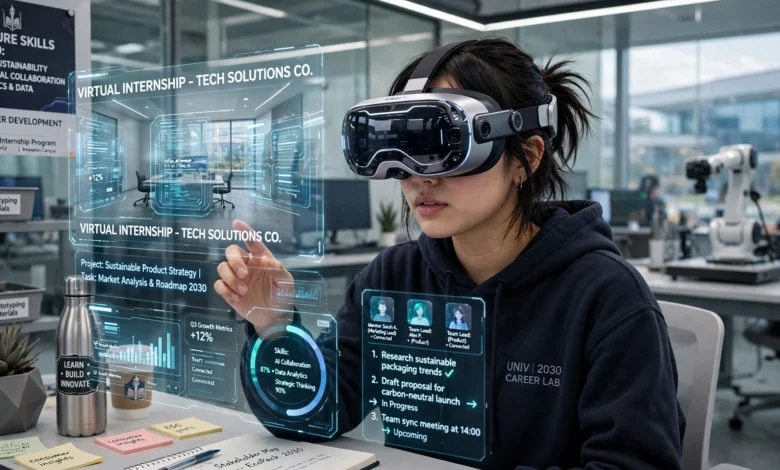
If you’ve felt uneasy about where your career is headed, you’re not imagining things. The top Skills for the 2027 Job Market that got you hired five years ago aren’t the ones that will get you promoted five years from now. Artificial intelligence has moved from a buzzword to a daily tool on millions of desks, remote work has permanently changed how teams collaborate, and entire job categories are being rewritten in real time. None of this means the workforce is shrinking. It means the skills that matter are shifting faster than most people expect.
By 2027, the gap between workers who adapted and those who didn’t will be obvious. Employers already say publicly that they’d rather hire someone with the right skills for the future than someone with the right degree but outdated capabilities. That’s not a scare tactic, it’s a hiring reality showing up in surveys from the World Economic Forum and LinkedIn’s own labor market research.
This article breaks down the specific future job skills worth investing your time in right now, why each one matters, and how you can start building them without quitting your job or going back to school. Whether you’re a recent graduate, a mid-career professional, or someone eyeing a pivot, the goal here is the same: give you a realistic, practical map of where things are going, not vague predictions dressed up as insight.
Why the Job Market Is Changing So Fast
Before getting into the list, it helps to understand what’s actually driving this shift. Three forces are doing most of the work.
Automation and AI adoption. Generative AI tools now handle tasks that used to require a junior employee’s full attention: drafting emails, summarizing reports, writing basic code, analyzing spreadsheets. According to the World Economic Forum’s Future of Jobs Report, a significant share of core job tasks will be reshaped by automation and augmentation over the next several years. That doesn’t eliminate jobs so much as it changes what humans are expected to do within them.
Remote and hybrid work becoming permanent. Companies figured out that talent doesn’t need to sit in a specific building. This opened hiring pools globally, which means competition for roles is no longer just local. It also means communication skills and self-management have become non-negotiable.
Faster skill decay. Technical skills that used to stay relevant for a decade now have a shelf life closer to two or three years. This is why continuous learning has quietly become one of the most valuable workplace skills 2027 employers are screening for, even if it doesn’t show up as a formal line on a job posting.


1. AI and Automation Literacy
You don’t need to become a machine learning engineer. But you do need to understand how to work alongside AI tools, not around them.
AI literacy now shows up in job postings across marketing, finance, healthcare, law, and logistics, not just tech. Employers want people who can:
- Use AI tools to speed up research, writing, and analysis
- Spot when AI output is wrong or biased and correct it
- Understand basic prompt structuring to get useful results
- Know where automation helps and where human judgment still matters
This is one of the clearest in-demand skills 2027 trends because it cuts across nearly every industry. A marketing coordinator who can use AI to draft ten campaign variations in an hour is simply more valuable than one who can’t, all else being equal.
How to Build It
Start small. Use AI tools in your actual daily work instead of treating them as a novelty. Learn the difference between generative AI, machine learning, and automation so you can speak about them accurately in interviews. You don’t need a certification to start, though many free ones exist if you want a structured path.
2. Data Fluency
Every department now runs on data, whether it’s a sales team tracking conversion rates or an HR team measuring retention. Data literacy doesn’t mean becoming a data scientist. It means being comfortable reading a dashboard, spotting a trend, and making a decision based on numbers instead of gut feeling.
Key parts of data fluency include:
- Reading and interpreting basic reports and dashboards
- Understanding what a metric actually measures, and its limits
- Using spreadsheet tools beyond entry level (pivot tables, basic formulas)
- Recognizing misleading statistics or cherry-picked numbers
This skill matters because decisions across nearly every function, from product to operations to marketing, are increasingly justified with data. If you can’t participate in that conversation, you’re sidelined from it.
3. Adaptive Communication
Communication has always mattered, but the way people communicate at work has changed. Teams are spread across time zones, async messaging has replaced a lot of meetings, and written clarity now carries more weight than it used to.
Communication skills for 2027 look different from the soft-skill checklists of the past. They include:
- Writing clearly and concisely in async formats like Slack, email, and shared docs
- Adjusting tone and detail level depending on the audience
- Giving and receiving feedback without defensiveness
- Presenting complex ideas simply, especially to non-experts
A person who can explain a technical problem to a non-technical stakeholder in two sentences is doing something genuinely rare and genuinely valuable.
4. Critical Thinking and Problem Solving
As routine tasks get automated, what’s left for humans is judgment. Critical thinking is consistently ranked near the top of skills employers want, and that ranking is only getting stronger.
This looks like:
- Breaking a messy, undefined problem into smaller parts
- Questioning assumptions instead of accepting the first answer
- Weighing tradeoffs when there’s no clearly “correct” choice
- Connecting information from different sources to reach a conclusion
The reason this matters more now, not less, is that AI tools are good at generating options but not great at judging which option is actually right for a specific situation. That judgment call still belongs to people.
5. Emotional Intelligence and Collaboration
Emotional intelligence sounds soft until you watch a team fall apart without it. As hybrid work spreads people across locations and cultures, the ability to manage relationships, read a room (even a virtual one), and handle conflict calmly has become a real differentiator.
Core components include:
- Self-awareness about how your behavior affects others
- Empathy, especially across cultural and generational differences
- Conflict resolution without escalation
- Building trust with people you rarely see in person
Managers consistently report that technical skills get people hired, but emotional intelligence is what gets them promoted. That pattern isn’t likely to reverse by 2027.
6. Digital and Cybersecurity Awareness
You don’t need to be an IT specialist to be expected to understand basic digital security skills. As more work happens through cloud platforms, shared drives, and remote logins, the average employee has become a frontline defense against data breaches and phishing attempts.
Baseline digital literacy now includes:
- Recognizing phishing attempts and suspicious links
- Understanding basic data privacy practices
- Using password managers and multi-factor authentication properly
- Knowing what not to share on public or unsecured networks
Cybersecurity threats are growing every year, and companies increasingly train and screen for this awareness at every level, not just in IT departments. Resources like the Cybersecurity and Infrastructure Security Agency (CISA) publish free, practical guidance that’s worth reviewing even if security isn’t your job title.
7. Adaptability and Continuous Learning
This is the meta-skill that makes all the others possible. Adaptability isn’t about being endlessly flexible for its own sake, it’s about staying functional and effective when the tools, processes, or expectations around you change, which they will.
Practical signs of adaptability include:
- Picking up new software or systems without needing extensive retraining
- Adjusting your approach when a project’s direction changes midstream
- Treating skill-building as an ongoing habit rather than a one-time event
- Staying curious about tools and trends outside your immediate role
Workers who treat learning as a continuous background process, rather than something that stops after school, are the ones who tend to stay employable through industry shifts.
How to Start Building These Skills Today
You don’t need to overhaul your career overnight. A few practical steps go a long way:
- Pick one skill from this list that feels most relevant to your field and focus there first, rather than trying to build all seven at once
- Use free or low-cost resources like LinkedIn Learning, Coursera, or YouTube tutorials before paying for expensive programs
- Practice inside your current job. Ask to sit in on a data review, volunteer for a cross-team project, or start using an AI tool for a task you already do weekly
- Ask for feedback from a manager or colleague on your communication or collaboration, since these are hard to self-assess accurately
- Track your progress informally, even a simple note of what you learned each month keeps momentum going
None of this requires quitting your job or enrolling in a two-year program. Most of these skills are built through repetition in real work situations, not classroom theory.
Frequently Asked Questions
Will technical skills still matter by 2027? Yes, but they’ll matter alongside these broader skills rather than instead of them. A software developer still needs to code, but the ones who also communicate clearly and think critically about tradeoffs will advance faster.
Do I need a certification to prove these skills? Not always. Certifications help in some fields, particularly for AI and data skills, but demonstrated experience through projects or work examples often carries more weight in interviews.
Which skill should I prioritize first? Start with whichever skill has the most immediate relevance to your current role. If your job already touches data or AI tools, build fluency there first since it compounds quickly.
Conclusion
The skills that will matter most in the job market by 2027 aren’t mysterious or out of reach. They center on working effectively with AI and data, communicating clearly across distances and formats, thinking critically when there’s no obvious right answer, managing relationships with real emotional intelligence, staying digitally aware, and treating learning as an ongoing habit rather than a finished task.
None of these require abandoning your current path. They require attention, consistent practice, and a willingness to update how you work as the tools around you keep changing. The people who start building these skills now, even in small ways, will be the ones who aren’t scrambling to catch up when 2027 actually arrives.